Tripo3D Launches Text to Motion and Multi-Stage Animation Chaining for 3D Characters
3D generative AI platform Tripo3D has introduced Text to Motion for 1-10s prompt-driven character animations, Multi-stage Motion combining up to 5 actions, and
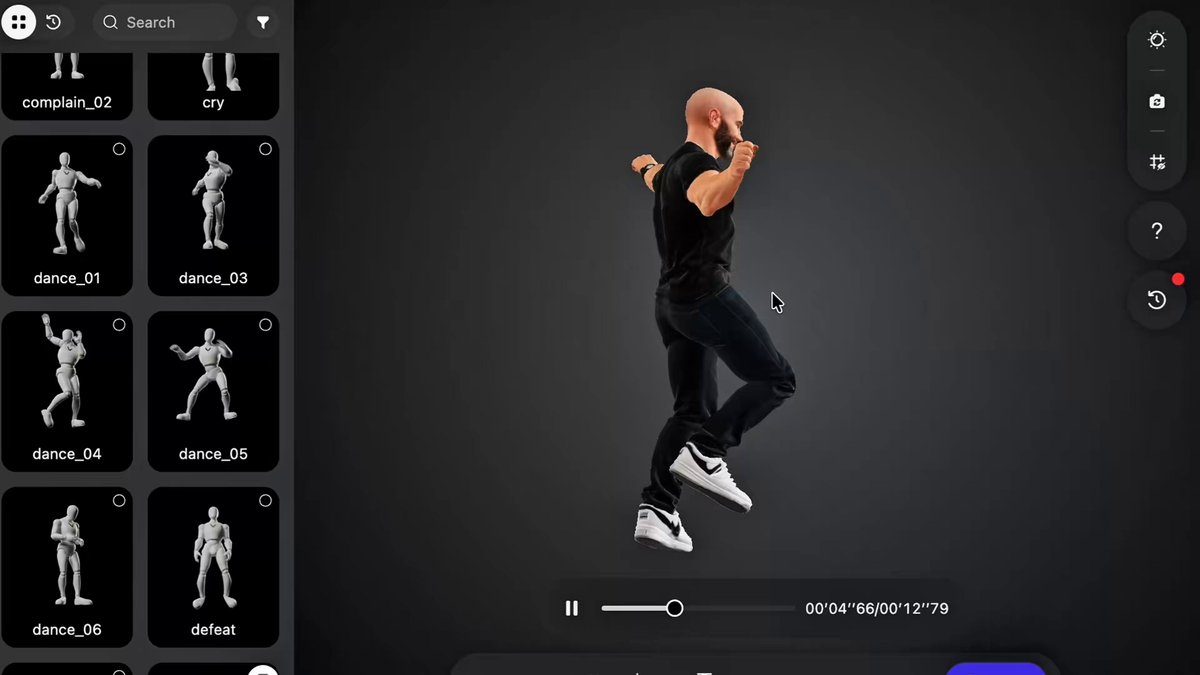
On October 3, 2026, 3D generative AI platform Tripo3D introduced a new set of character animation capabilities, featuring prompt-driven 'Text to Motion' generating 1 to 10-second character animations, 'Multi stage Motion' chaining up to five motion segments, and upgraded character rigging with hand bone support and engine-ready skeleton presets.
Image source: @justinryanio / Tripo3D
Expanding beyond static 3D mesh generation, this release focuses on automating the end-to-end 3D character pipeline—from prompt-driven action generation to automated skeletal rigging and multi-clip sequence assembly for game engines and interactive spatial media.
Text to Motion and Multi-Stage Sequence Chaining
The centerpiece of this update is 'Text to Motion', which generates 3D character animations directly from natural language prompts.
Entering a descriptive text prompt generates a custom 1 to 10-second 3D character animation. This enables creators to rapidly produce tailored character actions aligned with narrative context without relying solely on fixed preset libraries.
- Multi stage Motion Chaining: Up to five individual motion segments can be combined into a single, cohesive animation sequence. Creators can seamlessly blend distinct actions—such as idle, walking, jumping, and combat—into a continuous timeline.
- Game Engine Export Options: Generated animations can be exported in GLB and FBX formats, with support for in-place mode (removing root displacement) to integrate cleanly into game engine locomotion systems, as well as direct geometry baking.
Hand Bone Rigging and Multi-Engine Skeleton Presets
The character rigging system and skeleton compatibility layer have also been substantially upgraded for professional production pipelines.
The auto-rigging architecture now includes hand bone support, enabling articulated finger articulation and nuanced hand poses.
- Standard Engine Presets: Ready-to-use skeleton presets are provided for Unreal Engine (UE5 Mannequin), Unity, Mixamo, VRM, and ActorCore.
- Streamlined Retargeting Pipeline: By automatically aligning character meshes to standard engine skeleton hierarchies, the release significantly reduces the manual bone mapping and retargeting overhead typically required during DCC and game engine import.
Pipeline Considerations and Geometry Edit Constraints
Practical pipeline adoption requires attention to geometry processing order.
Tripo3D's mesh editing and remeshing operations reconstruct underlying model geometry and do not preserve skeletal rigging data (including bone structures and skin weights). Consequently, creators must finalize all geometry modifications and topology adjustments before initiating auto-rigging and Text to Motion generation to avoid workflow rework.
This feature set offers indie game developers, 3D animators, and previs creators an accelerated path to prototype interactive character assets without requiring extensive manual keyframing or complex optical motion capture setups.
Sources
- Justin Ryan on X (@justinryanio): 2026-10-03 Tripo3D New Animation Features Announcement
- Tripo Developers: Tripo Animation & Retargeting Guide