Baidu Unveils 280B MoE Open-Weight Model 'ERNIE 5.5 Flash Preview' Ahead of November 25 Weights Release
Baidu has introduced ERNIE 5.5 Flash Preview, an open-weight Mixture of Experts foundation model featuring a 1M token context window. Activating only 14B of its
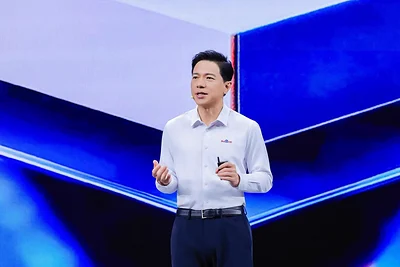
On November 12, 2026, Baidu officially unveiled its latest-generation foundation model, ERNIE 5.5 Flash Preview, at its annual technology showcase in Beijing. Built on a Mixture of Experts (MoE) architecture with 280 billion total parameters, the model activates only 14 billion (14B) parameters per token during inference, prioritizing fast decoding speeds and unit cost efficiency.
Baidu announced that it will open-source the model weights by November 25, 2026. This marks a strategic expansion from Baidu's historical focus on proprietary cloud hosting, positioning the company directly within the global open-weight foundation model ecosystem.
280B Total Architecture with 14B Active Parameters and a 1M Token Context Window
ERNIE 5.5 Flash Preview is engineered to balance high-level reasoning capabilities with production-grade inference efficiency.
While the overall neural network encompasses 280 billion parameters, the routing mechanism directs incoming tokens to specialized sub-networks, activating only 14 billion parameters—roughly 5% of the total network—per token. This MoE design allows the model to preserve the broad knowledge representation of a massive system while keeping computation overhead, memory bandwidth demands during execution, and per-token latency close to those of compact models.
The model supports a 1-million-token (1M) context window, accommodating extensive codebases, lengthy document collections, or technical manuals within a single prompt context. Baidu reported strong performance across coding, 3D modeling, technical knowledge synthesis, and complex content generation. On tool-use benchmarks such as Terminal-Bench and AutomationBench, ERNIE 5.5 Flash Preview achieved competitive accuracy scores alongside rapid token generation throughput.
To optimize the training and execution loop, Baidu applied ERNIE Evolve, its proprietary recursive self-improvement (RSI) framework. By letting the model iteratively refine outputs and incorporate structured feedback loops during post-training, the architecture achieves lower serving costs and sharper task completion rates.
Commercial API Pricing and Hosting Endpoints
Ahead of the November 25 open-source weight release, developers and enterprises can evaluate the model via hosted API infrastructure.
- Baidu AI Cloud Qianfan Platform: Hosted API pricing is set at RMB 1 per million input tokens and RMB 4 per million output tokens. For repeated prompt prefixes, cached input pricing drops significantly to RMB 0.04 per million tokens.
- OpenRouter Endpoint: Baidu has also made the model available via a free endpoint on OpenRouter (
baidu/ernie-5.5-flash-preview:free), allowing the global AI developer community to test and benchmark the model immediately without regional onboarding friction.
This pricing strategy targets current inference market benchmarks aggressively. By passing the hardware efficiency gains of sparse MoE routing directly into token pricing, Baidu is positioning the model as a cost-effective alternative for high-throughput enterprise pipelines.
Alongside ERNIE 5.5 Flash Preview, Baidu introduced two specialized application models on the Qianfan platform:
- ERNIE Wizshot Micro-Expression: A video creation model capable of processing text, images, and audio concurrently, supporting prompt inputs up to 4,000 Chinese characters for automated podcast and animated short-drama production.
- ERNIE Light Deep Thinking: A search-and-tool-calling model that pairs a rapid-response engine with a slow-thinking analytical loop, utilizing Baidu Sparse Attention (BSA) to compress historical memory during decoding without degrading retrieval accuracy.
Key Considerations and Verification Ahead of November 25
The release of ERNIE 5.5 Flash Preview signals an intensified competitive dynamic in the open-weight landscape, where players like Alibaba's Qwen and DeepSeek have built widespread developer adoption. By introducing a 280B MoE candidate, Baidu is seeking to establish an open-weight benchmark of its own.
However, technical teams planning evaluation or production integration should take note of several verified constraints:
- Deployment Scope Before November 25: Full on-premises serving and local weights execution are unavailable until the official repository release on November 25, 2026. Prior to that date, all access is limited to cloud endpoints on Qianfan and OpenRouter.
- Licensing and Commercial Restrictions: Teams will need to inspect the formal license terms accompanying the model repository once published. Key elements to monitor include commercial usage ceilings, monthly active user thresholds, and any regional or derived-model distribution terms.
From a hardware deployment perspective, an MoE model with 280 billion total parameters poses distinct serving requirements. While per-token compute corresponds to a 14B model, the complete parameter set must remain accessible in hardware memory. The feasibility of self-hosting on local workstation clusters versus dedicated multi-GPU nodes will depend heavily on the quantization formats and weight distribution tooling provided upon the November 25 release.
Sources
- PR Newswire: Baidu Unveils Latest ERNIE Models Amid Broader Full-Stack AI Lineup and Debuts Token Exchange to Power Intelligent Organizations
- OpenRouter Endpoint: Baidu ERNIE 5.5 Flash Preview (Free)
- Baidu AI Cloud Qianfan Platform: Qianfan Model Platform