TradingAgents: Open-Source Multi-AI Agent Stock Analysis and Backtesting Tool
An in-depth look at TradingAgents, TauricResearch's open-source CLI framework enabling multi-AI agent collaboration for financial asset analysis, backtesting, a
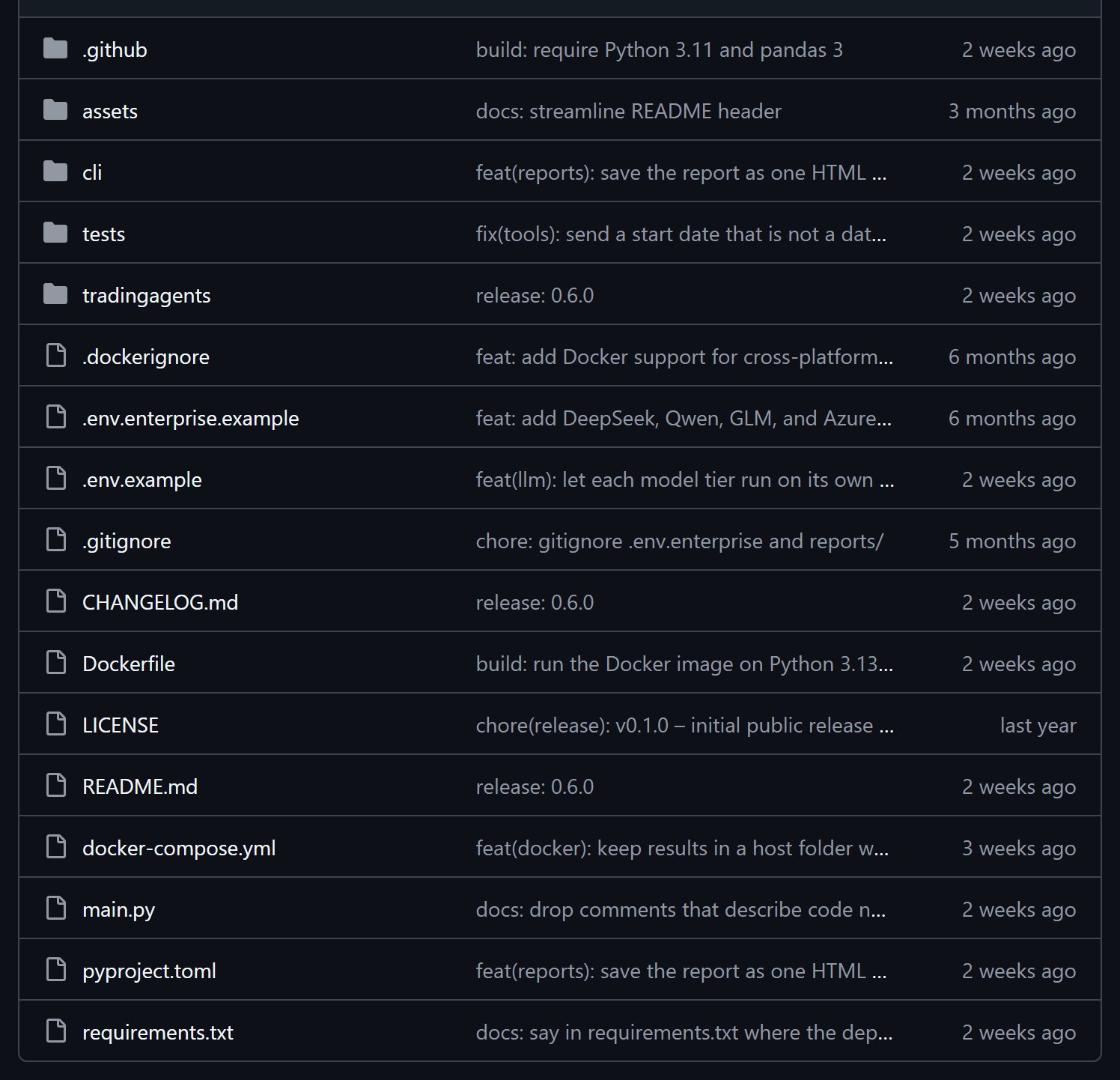
The open-source project 'TradingAgents', designed to apply collaborative multi-AI agent architectures to financial market analysis and algorithmic evaluation, is gaining traction across quantitative research and developer communities. Developed by TauricResearch and released under the Apache-2.0 license, the project provides an interactive terminal command-line interface (CLI) where specialized AI agents operate like a distributed trading desk, synthesizing multifaceted research and scoring predictive accuracy against historical market data.
Image source: @OopsUpdate / X
Moving beyond the constraints of single-prompt LLM evaluations, TradingAgents rolled out its v0.6.0 minor release on October 3, 2026, introducing visual HTML reporting alongside tiered LLM provider routing. Powered by Yahoo Finance integration, the tool covers a broad spectrum of global market assets and incorporates a dedicated backtesting framework that enables users to scrutinize agent performance before deploying real capital.
Multi-Agent Collaborative Analysis and v0.6.0 Enhancements
The architectural foundation of TradingAgents is built around orchestrating distinct, task-specialized AI agents whose collective deliberations converge into a unified analytical assessment.
- Broad Global Asset Coverage: Relying on data feeds supported by Yahoo Finance, users can analyze major US equities such as Apple (AAPL), international stocks listed across Tokyo, Hong Kong, and London exchanges, as well as cryptocurrencies including Bitcoin.
- HTML Analytical Reports: Starting with the v0.6.0 update, the tool extends beyond plain terminal text output to export comprehensive multi-agent findings, rationales, and supporting metrics as cleanly formatted HTML documents.
- Tiered LLM Provider Routing: Users can configure distinct LLM providers based on model performance tiers and task complexity. In addition to commercial cloud API providers, TradingAgents supports local model execution via Ollama, giving researchers direct sovereignty over private data and token expenditures.
Within the interactive terminal menu, operators can step through essential parameters, selecting target ticker symbols, analysis baseline dates, preferred LLM providers, and granular research depth settings.
Setup Requirements, Interactive CLI, and Backtesting Execution
Built as a lightweight Python CLI package, TradingAgents can be deployed locally using standard command-line procedures:
# 1) Clone the GitHub repository
git clone https://github.com/TauricResearch/TradingAgents

# 2) Navigate into the repository and set up a Python 3.11+ virtual environment
cd TradingAgents
python -m venv .venv
source .venv/bin/activate  # On Windows: .venv\Scripts\activate

# 3) Install package dependencies
pip install .

# 4) Configure LLM provider credentials (API keys or local Ollama setup)
Once installed, running tradingagents launches an interactive terminal prompt where users specify tickers, historical reference dates, and provider configurations for immediate multi-agent research passes.
To mitigate confirmation bias and test predictive durability, the framework includes a dedicated tradingagents backtest command. As highlighted in the project's documentation, isolated individual predictions provide insufficient signal regarding system efficacy. The backtesting routine systematically scores and grades agent judgments across multiple tickers and historical windows, establishing a critical verification step prior to real-world deployment.
Research-Framework Boundaries and Operational Caveats
Deploying TradingAgents in quantitative analysis requires clear awareness of the tool's structural boundaries and the inherent risks of algorithmic finance.
First, TauricResearch explicitly designates TradingAgents as a 'Research Purpose' framework. Under no circumstances should it be utilized as financial advisory software or automated live-trading execution infrastructure.
Second, large language model reasoning is fundamentally non-deterministic. Identical asset tickers and identical evaluation dates can yield varying agent interactions and differing analytical conclusions across separate execution runs.
Third, backtesting workflows face risks of social sentiment data contamination. While historical price series are strictly aligned to the target evaluation date, social media feeds—including news headlines, StockTwits streams, and Reddit discussions—may inadvertently introduce contemporaneous data, creating look-ahead bias that distorts historical backtest fidelity.
Fourth, recent academic research underscores fundamental limits in scaling AI reasoning for financial alpha. In a preprint published on September 25, 2026, researchers Jiayi Chen and Guiling Wang analyzed over 800,000 algorithmic predictions, finding that simply scaling up AI reasoning compute failed to produce stable, proportional improvements in net trading returns.
Furthermore, regulatory authorities, including the US Securities and Exchange Commission (SEC) and the Financial Industry Regulatory Authority (FINRA), have repeatedly cautioned that AI trading systems promising outsized returns represent major fraud indicators. Because all capital loss risks rest entirely on the individual operator, TradingAgents must be approached strictly as an exploratory research utility rather than a turnkey trading mechanism.
Sources
- TauricResearch GitHub Repository: TradingAgents Repository
- OopsUpdate X Post (@OopsUpdate): TradingAgents v0.6.0 Update and Tool Overview