THIS / THAT Model 1.0: 30.9ms Open-Source 2B Decision Model with Zero Output Tokens
Flock.io has released THIS / THAT Model 1.0, an open-source 2B typed decision model that extracts choices directly from hidden states in 30.9ms with zero output
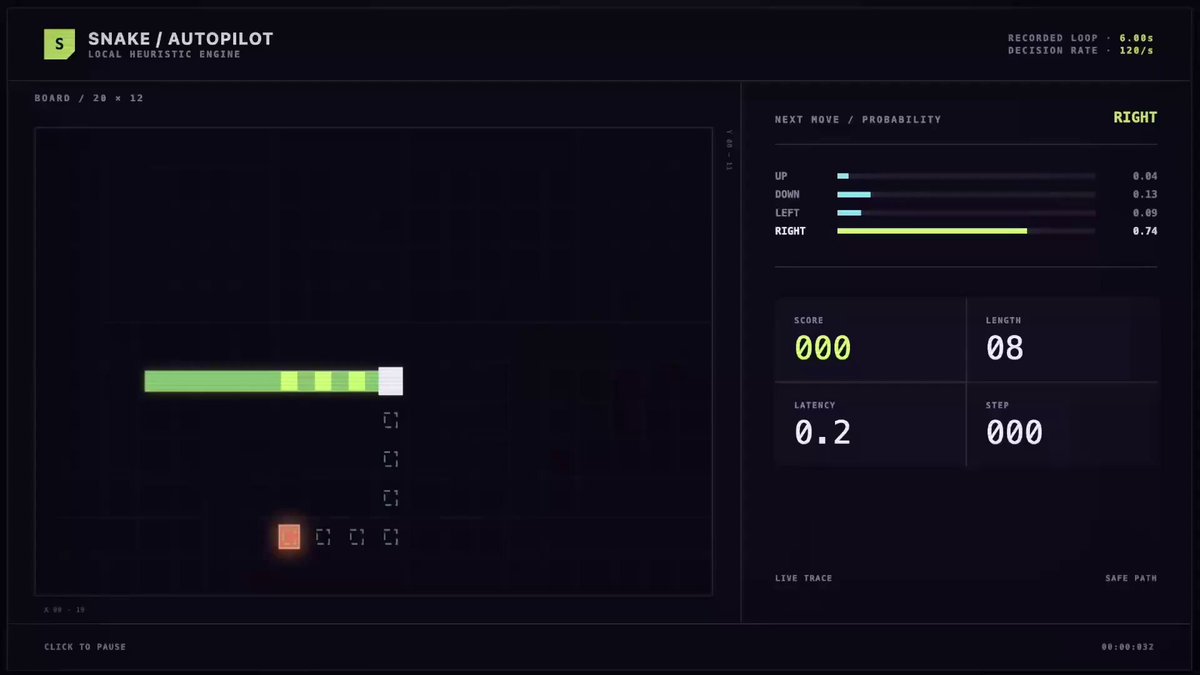
On September 23, 2026, Flock.io officially released THIS / THAT Model 1.0, a 2-billion parameter open-source model dedicated to typed decision-making. Distributed with open weights on Hugging Face, this release diverges from conventional autoregressive large language models that generate text tokens one by one. Instead, it introduces a local System 1 architecture that reads deterministic choices and calibrated probabilities directly from hidden states in a single forward pass, matching an explicit set of options declared by the caller.
Image source: govin.eth (@goan999999) / Flock.io
Direct Hidden-State Extraction and Zero Output Tokens
Conventional generative AI pipelines that handle classification or structured decisions must sequentially generate entire strings of formatted JSON or text labels. This autoregressive decoding cycle incurs substantial latency and carries an ongoing risk of producing malformed syntax or schema violations that break downstream applications.
Documented in the research paper (arXiv:2609.23886, "The smart if-statement"), THIS / THAT Model 1.0 bypasses text generation altogether. When given an input prompt, the model reads answers directly from hidden states at a designated position and restricts them to the option set declared by the caller.
- Zero Output Tokens: Because the model does not run autoregressive text generation, the output token count remains zero. By design, this eliminates parsing failures, syntax errors, and malformed JSON outputs.
- Single Forward Pass: All decision questions included in a single request are resolved within the same forward pass, immediately yielding structured selections and probability distributions.
- 30.9ms Latency: On a single consumer laptop GPU, the model completes decisions in approximately 30.9 milliseconds.
At roughly 30.9ms per decision, the execution cost aligns with a standard database index lookup or an in-memory cache check, contrasting sharply with multi-second hosted LLM API roundtrips.
High-Frequency Execution and System 1-System 2 Hybrid Workflows
Operating at 30.9 milliseconds with zero output tokens fundamentally alters where machine intelligence can be placed within software architectures. Rather than being confined to asynchronous background tasks, this model can run directly inside tight loops, retry branches, and inline request validators where traditional 8-second cloud API calls are completely impractical.
According to the research paper, the model sustains 32 decisions per second on a single consumer GPU without state ever leaving the machine. In an independent community demonstration, developer govin.eth showed the model guiding an interactive Snake game in real time, calculating per-step directional choices and collision avoidance locally with immediate responsiveness.
For autonomous agent architectures, this enables a clean operational separation between intuitive reflexes and deep multi-step reasoning:
- System 1 (THIS / THAT Model 1.0): Handles high-frequency, well-defined boundaries including incoming request triage, intent-based agent routing, tool selection, and policy safety checks in approximately 30 milliseconds.
- System 2 (Codex, GPT, and Frontier Reasoning Models): Reserved strictly for complex multi-hop reasoning, extensive codebase synthesis, and deep logic analysis.
This division of responsibilities sharply cuts end-to-end user latency while preventing expensive frontier models from burning unnecessary tokens on routine operational decisions.
Hardware Footprint, Hosted Testing, and Structural Limitations
Flock.io provides flexible adoption paths for engineers looking to integrate THIS / THAT Model 1.0 into existing software infrastructure.
The full model weights are freely available on Hugging Face (huggingface.co/flock-io/this-that-model-1.0). At 2B parameters, the model easily resides within the memory of modern consumer and laptop GPUs, provided sufficient VRAM is available to host the weights and active tensors.
For teams wishing to benchmark the model before provisioning local hardware, Flock.io hosts free evaluation tokens and an API endpoint on its official platform (platform.flock.io/models).
Adopting the model requires understanding its defined functional boundaries:
- Typed Decision Specialization: THIS / THAT Model 1.0 is not a general conversational LLM for writing prose, summarizing long documents, or engaging in open-ended chat. It is exclusively an evaluation engine that returns probabilities over predefined option sets.
- Explicit Decision Spaces: The engine achieves maximum precision and reliability when the caller provides structured, well-bounded categories rather than ambiguous queries.
Sources
- Hugging Face Repository: flock-io/this-that-model-1.0
- Research Paper: The smart if-statement (arXiv:2609.23886)
- Flock.io Official Platform: Flock.io Models
- govin.eth (@goan999999) Technical Overview: THIS / THAT Model 1.0 Demonstration