US Midterms Pass 97.5% of Data Center Curbs as OpenAI Rebrands Sites to 'Compute Campuses'
Voters passed 40 out of 41 local ballot initiatives curbing data centers during the 2026 US midterms, prompting OpenAI to rebrand facilities as 'compute campuse
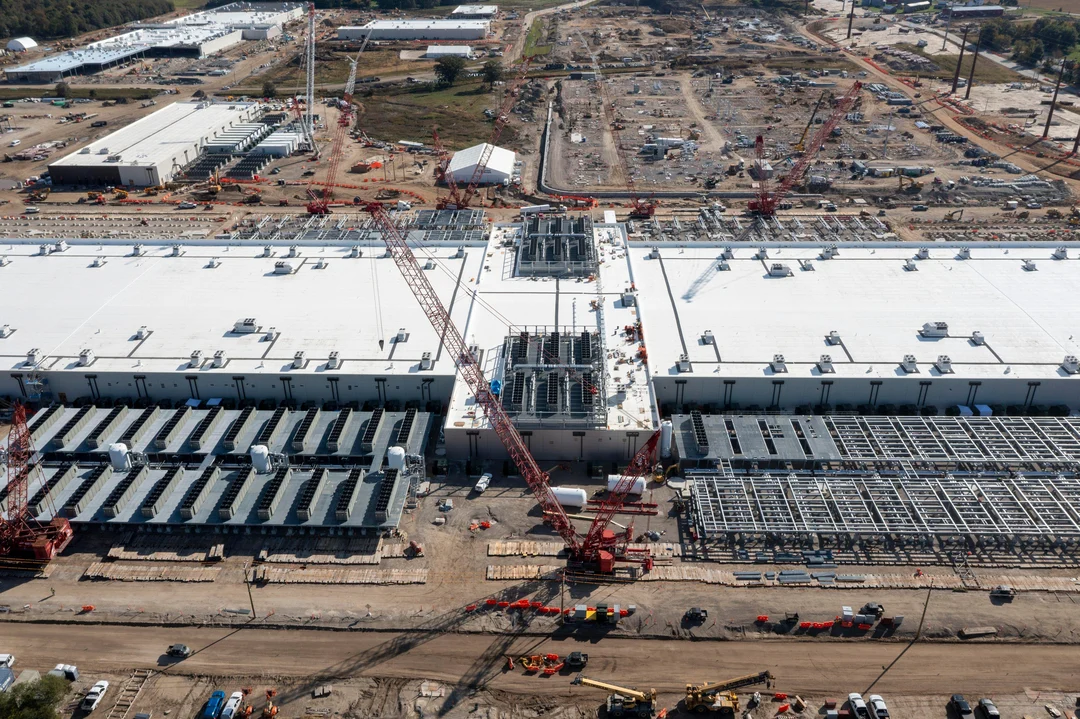
The 2026 US midterm elections delivered a decisive public backlash against artificial intelligence infrastructure, with voters approving nearly all local ballot measures aimed at curbing new and expanded data centers. In response to mounting public concerns over strained electrical grids and depleted water tables, OpenAI is moving to rebrand its facilities as "compute campuses" while committing to self-funded energy and closed-loop water cooling systems.
Image source: https://www.vox.com/podcasts/510722/openai-chris-lehane-data-center-rebrand-2026-midterms-regulation
Chris Lehane, Chief Global Affairs Officer at OpenAI, outlined the company's defensive shift in an interview on Vox's Today, Explained podcast published on November 13, 2026.
Voter Backlash in the Midterms: 40 of 41 Ballot Initiatives Pass
AI infrastructure expansion ran into a direct electoral wall during the midterms. Across the country, 40 out of 41 local ballot initiatives restricting data center buildouts were passed by voters—an approval rate of roughly 97.6 percent.
Public opposition has solidified across demographic lines, with surveys indicating that over 70 percent of US adults oppose new data center construction in their communities. Hostility has been fueled by concerns that massive utility demands will increase local residential electricity bills, while open-loop evaporative cooling threatens local groundwater supplies.
Lehane acknowledged the political bruising the sector sustained during this election cycle, noting that he was touring rural communities in Texas near a planned OpenAI facility to listen directly to resident grievances.
From Storage Box to 'Compute Campus'
OpenAI's primary communications response is a deliberate linguistic pivot away from the term "data center" toward "compute campus."
Lehane argued that conventional data centers built over the past two decades were essentially passive repositories—"an empty box in a pasture" used to store streaming media and cloud backups. In contrast, OpenAI contends that modern AI facilities generate compute—raw mathematical processing capacity required to train and run frontier models—while generating high-paying, six-figure jobs.
While OpenAI frames the rebrand as an accurate reflection of modern computing operations, critics view the shift as an attempt to soften public resistance without altering the immense resource footprint of gigawatt-scale sites.
Pledging Self-Funded Power and Closed-Loop Cooling
Alongside the linguistic shift, OpenAI outlined concrete operating baselines for the approximately six large-scale infrastructure projects it currently has underway across the United States:
- Self-Funded Electricity: OpenAI plans to fully absorb its own energy costs rather than allowing regional utilities to pass transmission upgrades and generation costs onto local ratepayer bills.
- Closed Water Loops: Facilities will implement sealed closed-loop cooling loops—comparable to large sealed automotive radiators—that fill once and recycle internal fluid, eliminating ongoing water withdrawal from community reservoirs.
The move illustrates how the physical bottleneck of AI compute has evolved into a political one, forcing frontier AI developers to balance aggressive infrastructure buildouts with defensive community compromises.