Automating Website Cancellation and Full Refund with AI Agent Muse: A Practical Guide
A practical guide to automating complex website exam cancellations and securing full 100% refunds using personal AI browsing agent Muse with human-in-the-loop s
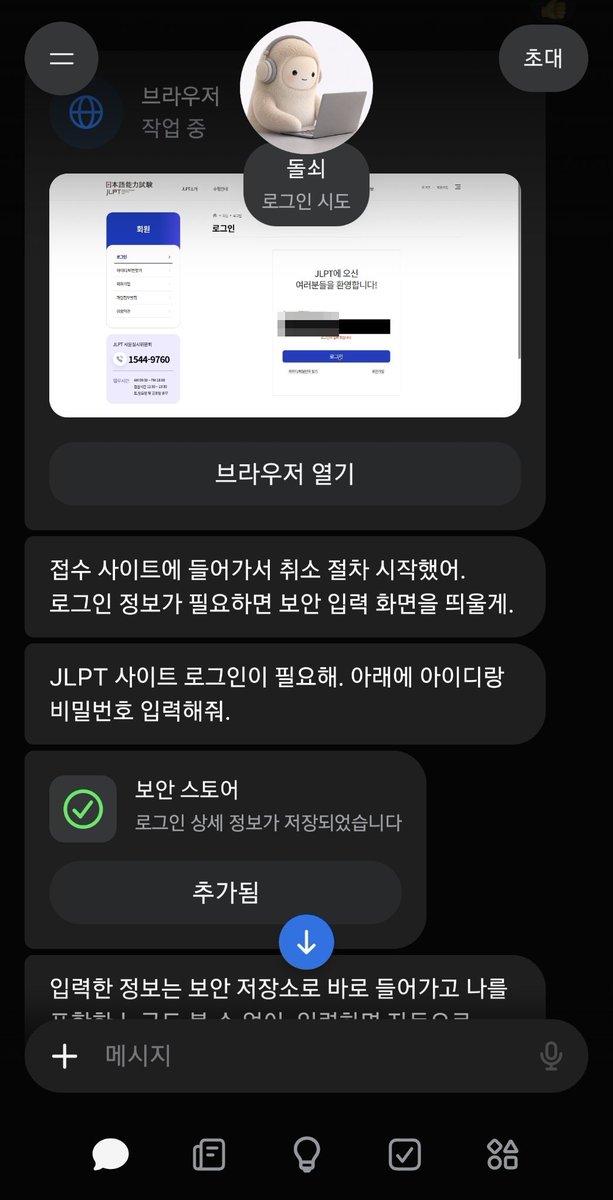
Practical workflows where autonomous AI browsing agents handle tedious real-world bureaucratic tasks are rapidly moving from developer prototypes into everyday utility. Tech creator and engineer Cognac (@supernovajunn) on X shared a concrete real-world walkthrough of utilizing personal AI agent Muse to cancel a JLPT N1 examination registration, successfully securing a full 75,000 KRW refund while minimizing manual intervention down to two critical safety checkpoints.
Image source: 꼬냑 (@supernovajunn) / X
1. Prioritizing Refund Deadlines Over Generic Instructions
When the user initially asked personal AI browsing agent Muse a simple conversational question—"Can I get a refund?"—the agent did not merely recite standard cancellation procedures or quote FAQ documentation. Instead, it proactively examined the exact deadline policy governing fee reimbursements.
Testing organizations and bureaucratic web platforms frequently apply tiered refund schedules based on strict calendar cutoffs. In this instance, full 100% refunds were available only until midnight the following day. Had the cancellation been submitted even a single day later, a 30% cancellation penalty would have applied, causing 22,500 KRW of the 75,000 KRW registration fee to evaporate.
By recognizing the financial stakes and evaluating the time-sensitive constraint before proceeding with procedural steps, the AI agent demonstrated proactive reasoning, ensuring the user acted within the highest-value window.
2. End-to-End Navigation with Two Critical Human-in-the-Loop Gates
After establishing refund eligibility and the urgent deadline, Muse executed the multi-step cancellation flow across the testing agency's website with minimal latency. The automated execution followed four coherent stages:
- Site Navigation and Discovery: Connecting to the exam agency portal and resolving the appropriate authentication and registration management routes.
- Session Authentication: Logging into the user's account and establishing an active authenticated session.
- Registration Lookup: Navigating through the user dashboard to pinpoint the active JLPT N1 test registration record.
- Cancellation Flow Execution: Traversal through sequential policy agreements and confirmation screens directly to the final cancellation submission page.
Crucially, throughout this end-to-end execution, the user was required to intervene in only two manual actions: re-entering their account password for security verification, and clicking the final 'Cancel' button to explicitly authorize the transaction.
This hybrid approach establishes an effective human-in-the-loop model for consumer agents. By delegating tedious multi-page navigation and form traversing to the agent while reserving credential confirmation and irrevocable destructive decisions for human validation, users obtain high productivity without relinquishing control.
3. Practical Implications for Web Automation and Legacy Services
Reflecting on the seamless execution, original author @supernovajunn noted that experiencing this level of frictionless execution as an everyday user signals an irreversible turning point: "There is no turning back now if everyday workflows become like this. Poorly secured or clunky shopping and booking portals will all be easily navigated by agents."
Previously, automating authenticated multi-step web transactions required inspecting DOM selectors, writing custom Playwright or Puppeteer scripts, and handling brittle session states. Modern multimodal and browsing agents have matured to the point where natural language intent suffices to inspect layouts, navigate dynamic workflows, and execute administrative cancellations reliably.
This advancement provides immediate leverage for eliminating routine personal bureaucracy while highlighting the necessity for service operators to harden legacy endpoints. For practitioners adopting AI agents for personal workflows, maintaining strict human-in-the-loop verification gates for credentials and irreversible submissions remains the foundational best practice.