A 27B Model for 12GB GPUs Generated a 1,005-Line 3D Hamster Sim
A measured demo in which the 2.4-bit Mirai S Qwen3.8-27B quantized model produced a 1,005-line single-HTML 3D hamster simulation from one prompt plus three foll
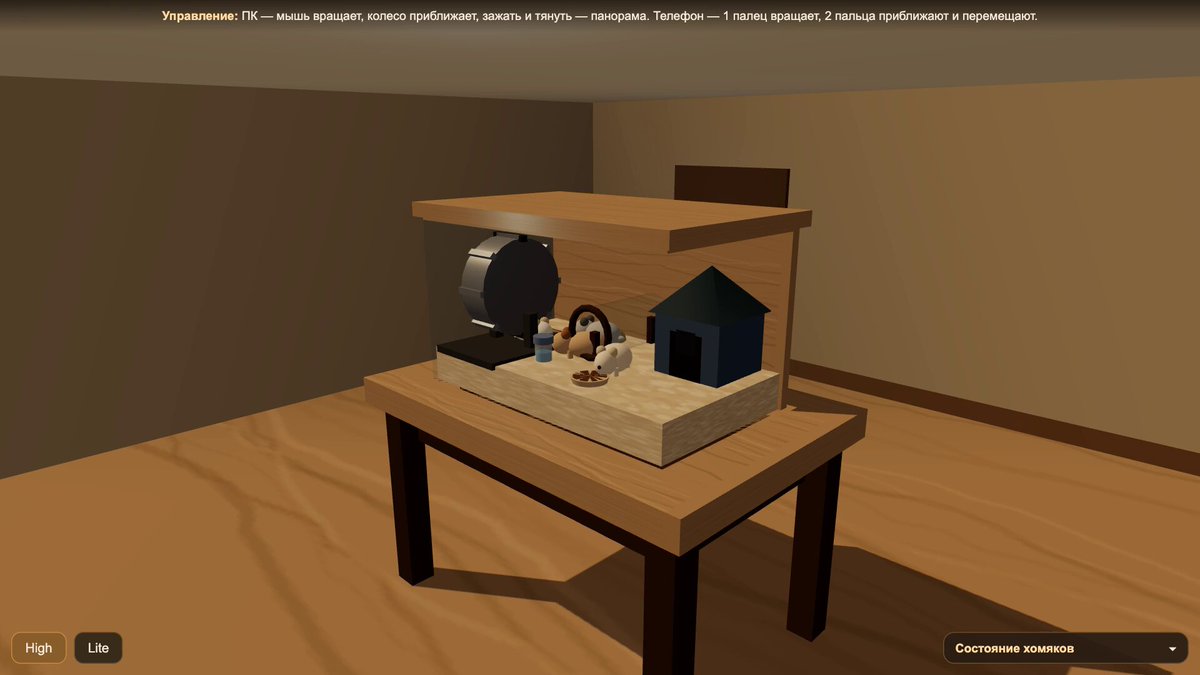
On October 8, 2026, Alexey Fateev (@superalesha) posted on X that the Mirai S Qwen3.8-27B model at 2.4 bits per weight, a file fitting on a single 12GB VRAM GPU, generated a 1,005-line single-HTML 3D hamster simulation. The output came from one prompt plus three follow-ups, and the author disclosed its imperfections alongside the result.
Image source: Alexey Fateev (@superalesha) on X
According to the original post, the weight file is about 11GB in the author's own notation, while the community GGUF page (alesha-pro/Qwen3.8-27B-S-mirai-GGUF) lists 11.2GB. These are notations from different sources and must be read separately, not merged. The author claims this setup runs on one 12GB VRAM GPU.
A 1,005-Line Single HTML File From One Prompt and Three Follow-Ups
The demo output's composition, as claimed by the author, is as follows.
- A 3D room with a hamster cage and 4 hamsters
- Six per-hamster stats: hunger, thirst, energy, sleepiness, curiosity, and comfort
- Autonomous eating, drinking, sleeping, chewing, and wheel behavior
- A live status panel for every hamster
- Mouse and touch camera controls
- Code-generated textures with 0 image files
- Loads with 0 errors
The author described it as "the hamsters just live in there." However, neither the full text of the original prompt nor the contents of the three follow-ups were disclosed, and the resulting HTML file itself was not published — so this composition list cannot serve as a fully reproducible recipe.
Limitations and Follow-Up Answers Stated by the Author
The author stated directly that the result is not perfect: the hamsters walk sideways, and the wheel does not actually spin. His point, as he put it, is that a 2.4-bit quantized model on a gaming-grade card produced a working artifact from one prompt plus three follow-ups.
Follow-up Q&A established the following scope.
- Loop lock-in (getting stuck repeating the same output) has not been observed yet within the author's own and nearby testers' range; hallucination is possible, he said.
- Asked about AMD GPU support, he answered "i dont know."
- Asked what fills the 11GB when 27B weights at 2.4 bits should be about 8GB, he answered "vision tower inside."
These answers are observations within the author's range, so they must not be generalized into guaranteed behavior of the model.
Compatibility Constraints to Check Before Running
This GGUF file adds four new ggml types, so it does not load in mainline llama.cpp, LM Studio, or Ollama. It requires the fork-family engines named by the HF page: mirai-s-ada or llama.cpp-mirai-s.
Figures that are easy to confuse are kept separate here. The 262,144 context figure from the cited HF page is a separate serving experiment on the same file (mirai-s-ada, q8_0 KV on a 12GB card), so it must not be combined with this hamster demo's output figures. The file-size notations — 11GB (author), 11.2GB (HF page), and 8.45GB (trymirai/Qwen3.8-27B-S-experimental) — are different variants and must not be merged either.
Sources
- Alexey Fateev (@superalesha) on X: 12GB VRAM hamster-sim demo original post (2026-10-08)
- Hugging Face: alesha-pro/Qwen3.8-27B-S-mirai-GGUF
- Hugging Face: trymirai/Qwen3.8-27B-S-experimental