Meta Announces Open-Source Hardware SDK 'Muse Gadgets' and 'Muse Home Link' Smart Home Dongle
Meta has officially open-sourced 'Muse Gadgets', an ESP32 firmware and Linux device SDK enabling developers to connect its Muse AI agent to DIY hardware and sma
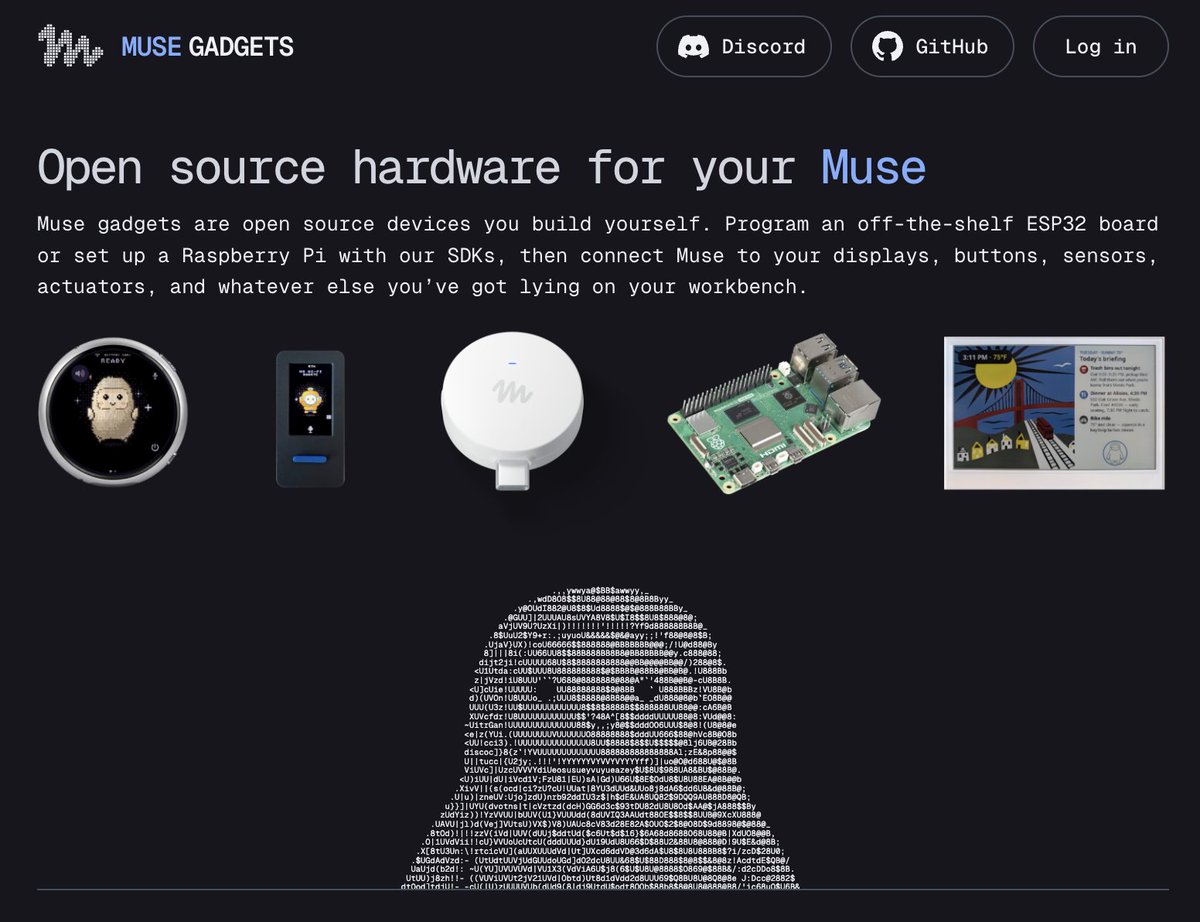
On October 2, 2026, Meta officially announced 'Muse Gadgets', an open-source firmware and device SDK suite designed to connect its Muse AI agent to physical DIY hardware and smart home appliances, accompanied by its own companion dongle, 'Muse Home Link'.
Image source: @alexandr_wang / Meta
The announcement was shared by Meta leadership, including Alexandr Wang and Nat Friedman, across their official channels. The release provides comprehensive open-source tools allowing developers and hardware hobbyists to build dedicated physical devices that interact directly with the Muse AI agent using off-the-shelf microcontroller boards and Linux computers.
Open-Source ESP32 Firmware and Linux Device SDK Ecosystem
'Muse Gadgets' delivers an open-source toolkit enabling developers to hook custom displays, buttons, sensors, and actuators into the Muse AI agent pipeline.
- ESP32 Firmware SDK: Provides open-source embedded firmware for popular ESP32 microcontroller boards to handle real-time audio input/output, display rendering, and button controls.
- Linux Device SDK: Converts single-board computers (SBCs) such as the Raspberry Pi into dedicated hardware bridges, integrating Muse with Home Assistant and local Linux services.
- Agent-Assisted Development: Builders can obtain an API token from the
gadgets.muse.aideveloper portal and point their preferred coding agents directly at the project repository to construct tailored device firmware.
This standardized architecture allows creators to deploy custom AI-powered hardware accessories without having to engineer custom cloud-to-device transport layers from scratch.
Smart Home Integration with 'Muse Home Link' on ESP32-C5
Alongside the open SDKs, Meta introduced 'Muse Home Link', a purpose-built physical hardware dongle that connects the Muse agent to local home networks and smart appliances.
Operating on the local Wi-Fi network, Home Link allows Muse to discover and issue commands to local smart devices—including TVs, speakers, and printers—or any custom device exposing a local HTTP API. Using community-developed skills, Muse can turn on lights, stream information to TV screens, or trigger print jobs.
- ESP32-C5 Hardware Architecture: Powered by Espressif's ESP32-C5 chip, supporting energy-efficient wireless connectivity.
- USB-C Power and BLE Setup: Powered via USB-C and paired to local Wi-Fi networks through Bluetooth Low Energy (BLE) within the Muse companion application.
- Cryptographically Signed Firmware: While the device design references the open-source ESP32 Device SDK, the production Muse Home Link runs official cryptographically signed firmware to safeguard local network security and cannot be reflashed by users.
Reference Hardware Lineup and Limited 5,000-Unit Free Distribution
To accelerate prototyping, Meta published project blueprints and source repositories for several popular commercial off-the-shelf boards:
- Raspberry Pi 5: A home automation hub bridging Muse with Home Assistant and Linux ecosystem tooling.
- Waveshare ESP32-S3-Touch-AMOLED-1.75C: A circular 1.75-inch AMOLED touchscreen form factor complete with a push-to-talk button, microphone, speaker, and integrated battery.
- Seeed reTerminal E1002: A color E-ink display designed for ambient morning briefings, schedule reminders, and persistent task lists.
- M5Stack StickS3: A pocketable color screen module showing Muse agent status with dedicated button triggers.
- Muse on your TV: An upcoming HDMI stick concept enabling Muse to display interactive outputs directly on television screens.
Meta manufactured an initial limited batch of 5,000 Muse Home Link dongles. The hardware is being offered free of charge to existing Muse subscribers while supplies last, with shipments scheduled to begin rolling out over the coming weeks.
Sources
- Alexandr Wang Official X (@alexandr_wang): 2026-10-03 Muse Gadgets and Home Link Announcement
- Muse Gadgets Official Portal: gadgets.muse.ai
- Muse Home Link Product Specification: Muse Home Link
- The Verge: Meta open sources code to let you make Muse AI gadgets