Massachusetts Ballot Petition Launched to Mandate Two-Thirds Local Vote for AI Data Centers
A grassroots Massachusetts campaign has officially launched Petition 26-08, seeking to mandate a two-thirds host community vote and 100% renewable energy requir
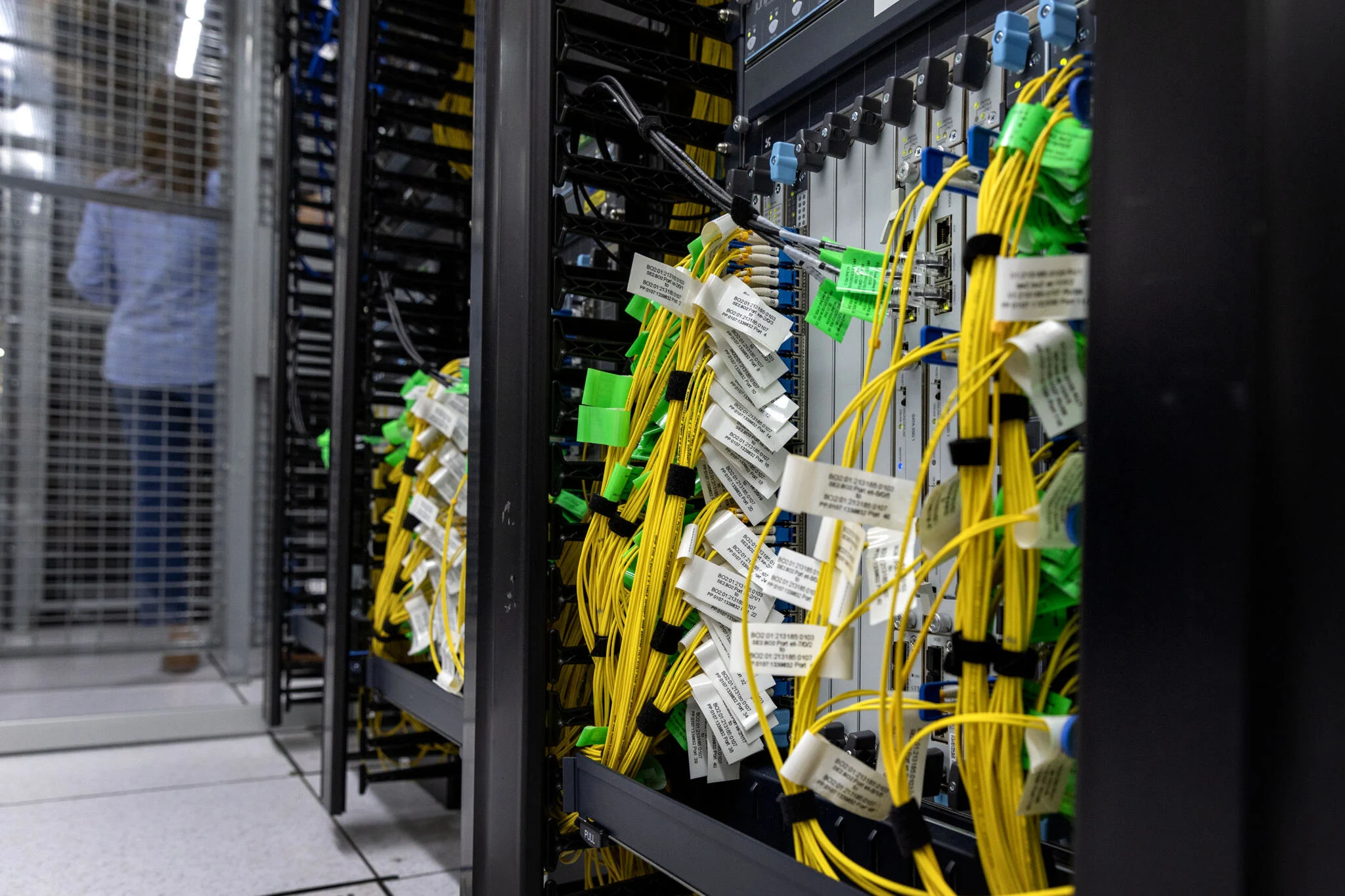
A citizen-led campaign to impose strict legal restrictions on artificial intelligence (AI) data centers officially launched in Massachusetts on November 13, 2026. The proposed ballot measure would require operators to secure a two-thirds majority vote from host communities and guarantee that all operational electricity comes from 100% renewable energy without shifting grid costs onto everyday ratepayers.
Image source: https://www.wbur.org/news/2026/11/13/data-center-restriction-ballot-question-sutton-kraft-ai
The grassroots effort was spurred by The Kraft Group's proposal to construct a massive $16 billion data center campus in the central Massachusetts town of Sutton. If built, the Sutton complex would rank as the fourth-largest data center in the United States. Facing pushback over electric grid strain, municipal water consumption, and industrial noise, the Committee to Restrict Data Centers filed a binding statutory proposal designated Petition 26-08 by the state attorney general's office.
Lower 5 MW Capacity Threshold and the Two-Thirds Voter Approval Mandate
Petition 26-08 targets both new constructions and facility expansions that carry an annual peak electrical demand of 5 megawatts (MW) or more. This relatively low capacity ceiling covers not only hyperscale campuses but also standard industrial-scale colocation and AI processing facilities.
The measure's most stringent barrier is its local democracy mandate. Under the proposal, a municipal permit cannot be granted unless the facility wins approval by a two-thirds (66.7%) supermajority in a municipal election within the host community. To ensure residents have adequate time to examine environmental and fiscal impacts, this vote can take place no earlier than 180 days after local authorities formally publish their preliminary permitting decision and release all associated engineering and zoning documents online.
The petition also ties municipal permitting to utility agreements. A data center cannot receive local permits unless its electricity supplier signs an agreement barring utility cost-shifting onto ordinary residential and commercial consumers. The utility must also verify that it will supply enough electricity from 100% renewable sources to satisfy the center's complete demand without cannibalizing renewable energy supplies allocated to other ratepayers. If an operator downsizes, breaches contracts, or ceases operations, it must provide binding legal guarantees to reimburse utilities for stranded infrastructure and transmission upgrade costs.
Municipal Water Protections, Drought Controls, and State Auditor Oversight
Addressing the cooling demands of dense server racks, Petition 26-08 establishes statutory safeguards for local aquifers and municipal reservoirs. Local water suppliers must officially certify that their existing infrastructure can comfortably handle the center's projected intake without materially diminishing service quality or availability for current customers in the host town and neighboring districts. Project operators must also formulate and file drought-contingency plans outlining mandatory cooling reduction schedules during water emergencies.
The measure introduces direct regulatory enforcement mechanisms. The Massachusetts State Auditor would be granted legal jurisdiction to audit data centers alongside their electricity and water suppliers. If an audit confirms violations of utility cost safeguards, renewable energy allocations, or resource thresholds, municipal authorities would be empowered to order immediate operational shutdowns until full compliance is restored.
The Committee to Restrict Data Centers is chaired by political consultant Jim Fleming, who operates a statewide petition management firm and has partnered with civic groups opposing data center initiatives in western Massachusetts cities such as Westfield and Holyoke. State Senator John Velis (D-Westfield) joined the campaign launch, noting that community groups across the commonwealth are organizing to halt or delay projects over power grid expenses, water security, and noise pollution. Emphasizing their community-first stance, organizers added an explicit disclaimer across the footer of their campaign portal: "No Ai was used on this site."
Contrast with Governor Healey's Executive Order and Path to the 2028 Ballot
Petition 26-08 goes significantly further than the executive order signed by Massachusetts Governor Maura Healey on September 8, 2026. Governor Healey's directive only applies to large installations exceeding 25 MW, instructing state agencies like the Department of Environmental Protection and the Energy Facilities Siting Board to draft administrative policies around clean energy procurement and ratepayer protections. The governor's order allows developer alternative compliance payments, relies on municipal guidance and voluntary community benefit agreements, and does not mandate a local voter referendum. Moreover, any executive order remains subject to modification or revocation by future governors.
By contrast, Petition 26-08 would become permanent statutory law if enacted. Massachusetts Attorney General Andrea Campbell's office certified the petition language in September.
Organizers have opted for a deliberate, multi-year campaign aimed at the November 2028 ballot. Rather than racing to submit the initial 74,574 valid voter signatures required by the November 2026 deadline—a figure equal to 3% of all votes cast in the 2022 gubernatorial election—the committee plans to collect signatures during the fall of 2027 based on the updated 2026 voter tallies.
This timeline provides room to build grassroots coalitions, refine proposal language, and apply pressure on Beacon Hill as state legislators convene in January. Under Massachusetts ballot procedure, if the initial signature threshold is verified by late 2027, the state legislature has until early May 2028 to pass equivalent legislation into law. Fleming stated that if lawmakers enact comprehensive statutory protections, the committee would conclude the campaign. If the legislature fails to act, organizers need only gather a second, smaller round of signatures by early July 2028 to secure a binding vote on the statewide November 2028 ballot.
The Massachusetts initiative reflects an accelerating nationwide backlash against unchecked data center expansion. Across the United States during the recent Election Day cycle, voters favored restrictions in 40 of 41 local ballot questions across Ohio, California, Florida, Kansas, Maine, Illinois, and Wisconsin. In Ohio, conservation advocates have filed a 2027 statewide ballot measure seeking an outright prohibition on data centers exceeding 25 MW. The Massachusetts petition signals that the debate over who finances the grid upgrades and environmental costs of AI infrastructure is increasingly moving from closed-door zoning boards to direct voter referendums.
Sources
- WBUR News: Opponents of AI data centers launch ballot campaign to restrict Massachusetts projects
- Official Campaign Website: Sign for Restricting Data Centers
- CBS News Boston: Kraft Group proposes massive data center campus in Sutton