LuaN1aoAgent v2: DeepSeek-Optimized Security Agent Built on TypeScript & Pi SDK
An overview of LuaN1aoAgent v2, an AI vulnerability analysis agent rebuilt from scratch with TypeScript and Pi SDK, featuring DeepSeek optimization and evidence
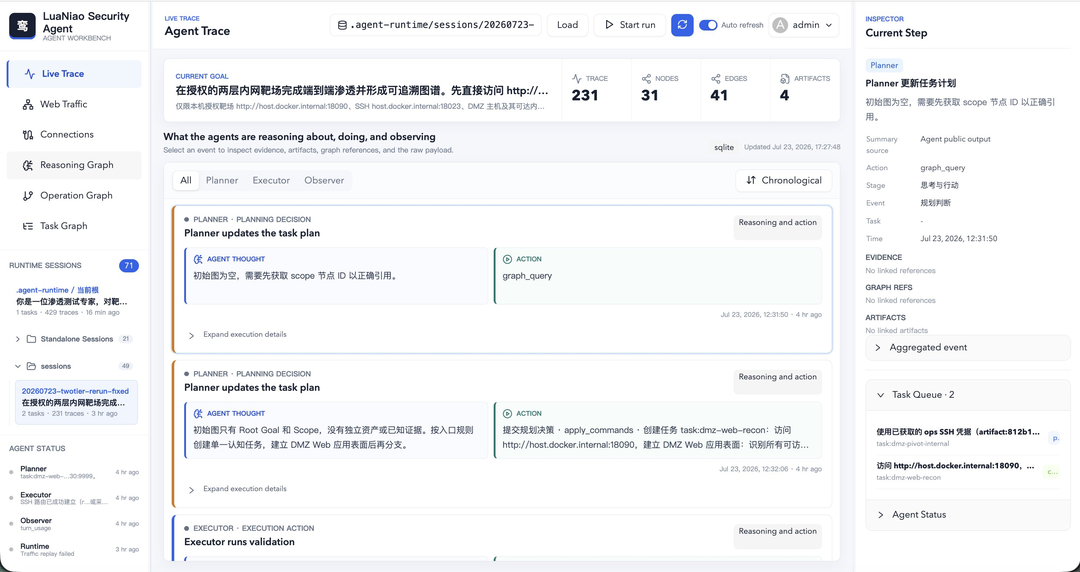
LuaN1aoAgent v2, an AI-powered security vulnerability analysis tool re-architected for autonomous and authorized security research, has been officially released. Announced on October 12, 2026, through security researcher channels (@ngnicky), this major v2 iteration preserves the cognitive-oriented foundation of the original project while completely rebuilding its core runtime engine from scratch using TypeScript and the Pi SDK.
As cybersecurity researchers increasingly turn to large language models (LLMs) to automate code auditing and vulnerability discovery, LuaN1aoAgent v2 positions itself as an explicit, verifiable testing platform. Optimized specifically for DeepSeek models, the v2 release introduces rigorous operational boundaries and evidence-based memory architectures to improve the reliability of automated security reviews.
Complete Runtime Rebuild on TypeScript and Pi SDK
The most fundamental architectural advancement in LuaN1aoAgent v2 is the shift in its underlying framework and runtime mechanics.
While preserving the cognitive-oriented direction of the original project, v2 rebuilds the runtime using TypeScript and the Pi SDK around concrete architectural safeguards:
- Explicit Agent Boundaries: Establishes defined operational boundaries and execution scope for the agent to ensure controlled, authorized execution during autonomous security research.
- Observable Tool Operations: Provides direct observability into tool actions and diagnostic behaviors throughout the assessment process.
This structural separation ensures that security analysts can inspect each stage of the agent's reasoning loop and tool execution, providing the transparency required to verify diagnostic behavior without blind execution risks.
Evidence-Based Graph Memory and Persistent Artifact Tracking
A common challenge in automated multi-step vulnerability research is context drift, where initial exploit clues or intermediate system states become diluted across long reasoning windows. LuaN1aoAgent v2 addresses this by overhauling its state persistence model.
The v2 runtime captures diagnostic findings as persistent events and artifacts. These are structured through an evidence-based graph memory system that supports reliable, repeatable analysis:
- Causal Lineage Tracking: Maps discovered vulnerabilities directly to their preceding conditions and exploration paths within a queryable graph structure.
- DeepSeek Model Optimization: Specifically optimizes reasoning and vulnerability analysis workflows for DeepSeek models.
Grounding the agent's reasoning in structured evidence nodes significantly reduces hallucinations and ensures that reported vulnerabilities can be reproduced through verifiable audit trails.
Authorized Research Boundaries and Real-World Verification Caveats
Given its autonomous diagnostic and verification capabilities, LuaN1aoAgent v2 requires disciplined operational procedures and strict environment isolation.
Because the tool actively scans for security weaknesses and formulates validation vectors, it must only be deployed within explicitly authorized staging sandboxes or owned target systems. Running automated penetration testing agents against external or unverified infrastructure carries substantial legal and operational liabilities.
Furthermore, as noted in practitioner discussions across the security community, automated vulnerability scanners inherently produce false positives. The primary engineering bottleneck in security operations is often not merely identifying potential weaknesses, but validating real-world exploitability and implementing robust patches. Security teams adopting LuaN1aoAgent v2 should treat its outputs as prioritized investigative leads that require human expert verification before remediation actions are finalized.
Sources
- @ngnicky on X: LuaN1aoAgent v2 Announcement Original Post
- LuaN1aoAgent Project Reference Short Link: LuaN1aoAgent Reference