Prompt Suffix Tip to Reduce LLM Hedging and Timid Answers
A practical prompt suffix shared by Theo to curb ambiguous hedging from AI models and elicit decisive, well-reasoned recommendations.
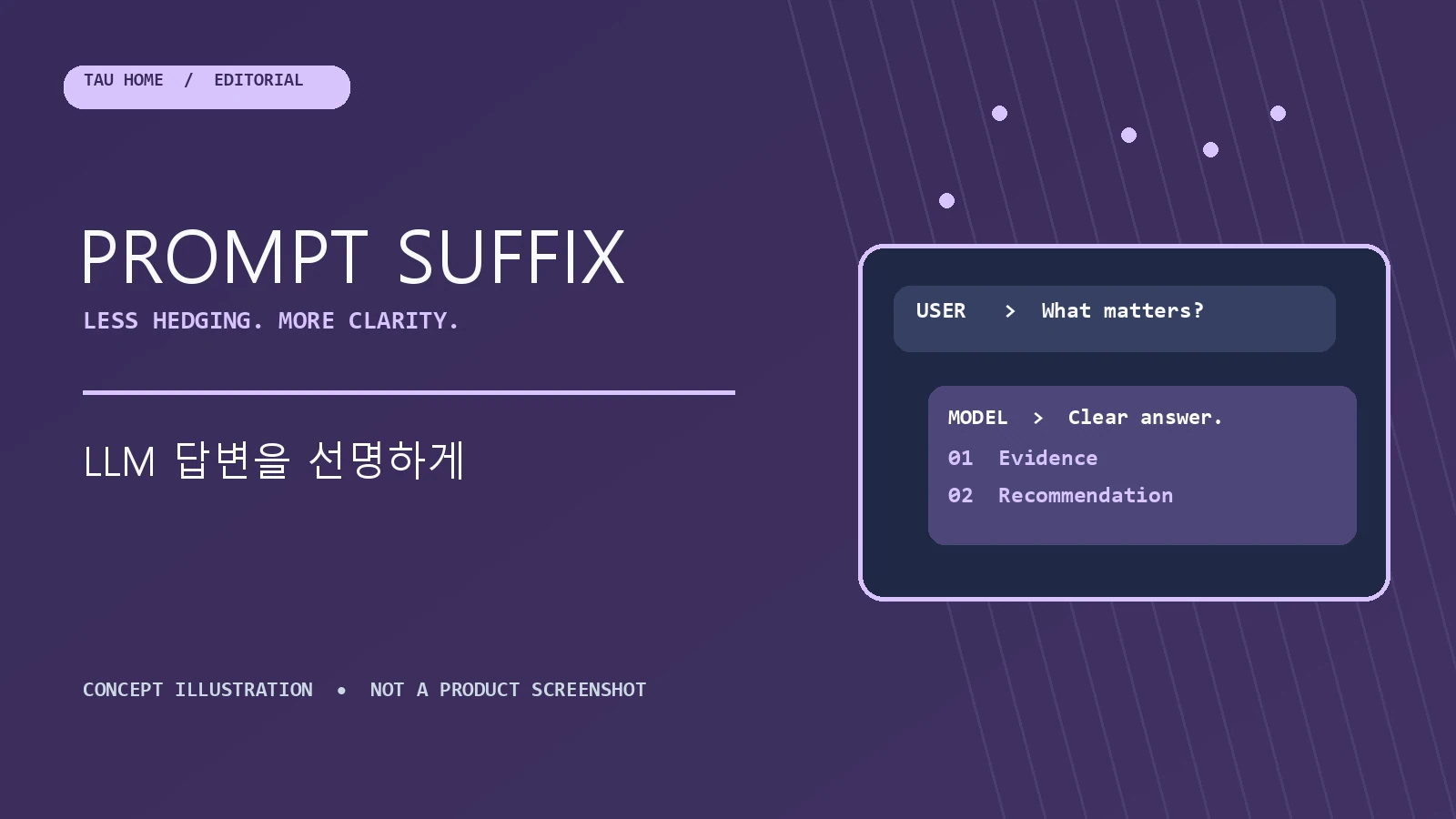
Developer and creator Theo (t3.gg, @theo) recently shared a concise prompt suffix he has found effective when prompting large language models.
Hero image: Original TAU HOME editorial concept illustration, not a product screenshot. When asking LLMs for architectural guidance or complex decisions, models frequently resort to non-committal answers or balance every trade-off without taking a stance. Theo shared a short suffix added to the end of a prompt that directly targets this behavior.
Core Prompt Phrase
The prompt suffix shared by Theo is straightforward:
Be thorough in your analysis and bold in your recommendations
Appending this single line directs the model to separate its investigative work from its concluding advice.
Contrast with 'Think Harder' Directives
In the replies, community members questioned how this differed from generic reasoning prompts:
- Question (@sin4ch): "You've mentioned severally that telling the model to 'think harder' is redundant, that they are usually thorough. What changed?"
- Answer (@theo): "I didn’t say 'think harder'"
Rather than demanding vague additional compute or unbounded chain-of-thought, the phrase bifurcates the behavioral expectations. The analytical phase must remain meticulous and complete, while the recommendation phase must avoid timid hedging and deliver an explicit, actionable verdict.
Practical Community Feedback
Community responses highlighted practical improvements across different domains. One practitioner noted that introducing a variant of this suffix into Claude film and design workflows stopped the model from hedging every answer, producing direct and useful critiques instead of watered-down balance statements.
This pattern proves particularly helpful in engineering reviews, architectural choices, and editorial drafts where an explicit recommendation carries far more value than a list of generic pros and cons.
Original source
- Theo (@theo / X): November 7, 2026 Post