Stanford Hazy Research Releases CLM-8B: System 1 Model Up to 9x Faster Than Jev
Stanford Hazy Research has open-sourced CLM-8B, an ultra-fast System 1 model using contrastive learning and dual caching to deliver up to 9x faster inference th
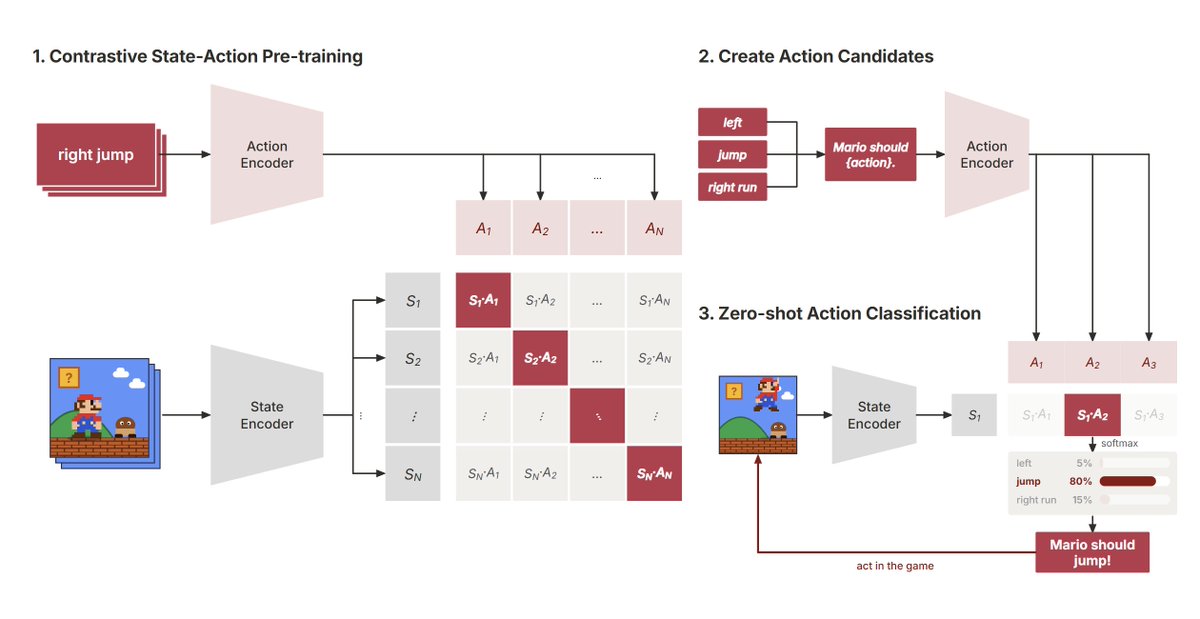
On September 24, 2026, researchers at Stanford University's Hazy Research lab, led by Jacky Kwok alongside Hangoo Kang, Tarun Suresh, Jon Saad-Falcon, Marco Pavone, and Azalia Mirhoseini, announced the Contrastive Language Model (CLM) and open-sourced the weights and code for its 8-billion parameter base model, CLM-8B. Designed as an ultra-fast System 1 decision model, CLM decouples state and action representations to dramatically cut latency in agentic workflows.
Image source: Jacky Kwok (@jackyk02) / Stanford Hazy Research / X
Dual-Encoder Architecture and Decoupled State-Action Embedding Caching
Modern autonomous agent pipelines frequently combine a heavy reasoning model (System 2) that handles high-level multi-step planning with a lightweight, ultra-low-latency model (System 1) dedicated to rapid micro-decisions such as tool routing and UI interactions. While TypeSafe's commercial Jev model popularized System 1 decision engines with support for state caching across turns, handling large candidate action sets in real-time has remained a computational bottleneck.
Hazy Research's CLM addresses this constraint by training a separate state encoder and action encoder on large-scale datasets using a contrastive InfoNCE learning objective. Under this formulation, each state embedding is pulled toward the ground-truth action embedding while being pushed away from all incorrect candidate actions. Once trained, the two encoders serve directly as a high-speed, zero-shot action classifier via simple vector similarity.
The primary architectural advantage of this dual-encoder design is the ability to independently cache and reuse action embeddings. In workloads with fixed or structured action spaces—such as operating system desktop navigation, web browser computer-use, and predetermined tool libraries—the embeddings for all possible candidate actions can be precomputed and stored in memory. When the environment state updates, the system only needs to encode the new state and perform a fast dot-product lookup against the cached action vectors.
9x Faster Zero-Shot Inference and SOTA Agentic Benchmarks
According to benchmark results published by the research team, CLM-8B matches Jev's accuracy in zero-shot evaluations across computer-use, gaming, and tool-calling tasks while running up to 9 times faster.
The speedup becomes even more pronounced as the candidate action space expands or when actions are frequently revisited across states. In the WikiRacing benchmark, where the model must evaluate approximately 1,000 potential hyperlink transitions per step, CLM demonstrated a 13-fold reduction in latency compared to Jev. Similar acceleration was observed in fast-paced real-time environments such as the Chrome T-Rex runner game, where a compact set of actions is repeatedly scored against incoming visual states.
The team also evaluated CLM on complex, long-horizon agentic benchmarks where verification capabilities are critical. The researchers observed that Jev degraded significantly when tasked with verifying long-horizon trajectories, falling below the random-selection Pass@1 baseline. In contrast, with lightweight fine-tuning, CLM achieved state-of-the-art results on demanding coding benchmarks, scoring 81.6% on DeepSWE and 87.6% on Terminal-Bench 2.1, while delivering inference 4 to 6 times faster than Jev.
Three-Stage Training Recipe, Open-Source Release, and Operational Limits
The training pipeline for CLM-8B relies on a three-stage curriculum. The model was pre-trained on 60 million Nemotron question-and-answer pairs, followed by a mid-training phase incorporating 30 million synthetic hard negatives to sharpen discriminative boundaries. Finally, post-training aligned the model on 1 million real-world agent execution trajectories. The researchers reported that test InfoNCE loss follows a predictable power law scaling with respect to training compute, dataset volume, and parameter count.
The model weights for CLM-8B are openly available on Hugging Face (Contrastive-LM/CLM-v0.1-8B), with training and inference code alongside an interactive playground hosted on GitHub (Contrastive-LM/CLM). The Hazy Research team also confirmed that a larger multimodal variant, CLM-35B, is currently in training and scheduled for release early next month.
For engineering teams evaluating CLM in production, several caveats should be noted. The top benchmark scores on DeepSWE (81.6%) and Terminal-Bench 2.1 (87.6%) reflect lightweight fine-tuning rather than out-of-the-box zero-shot performance. Furthermore, the 9x to 13x latency gains rely heavily on precomputed action embedding caching within fixed action candidate spaces; workloads with entirely unstructured, single-use, or dynamically generated actions may see lower speedup margins. Finally, because these comparisons originate from the authors' own internal benchmarks, independent third-party evaluations will be essential to verify performance across diverse enterprise deployments.
Sources
- Jacky Kwok on X (@jackyk02): CLM Official Announcement Thread
- Contrastive-LM GitHub Repository: Contrastive-LM/CLM
- Hugging Face Model Repository: Contrastive-LM/CLM-v0.1-8B