GrokBot vs Meta Muse: A 4-Day Hands-on Comparison of Personal AI Assistant Agents
A hands-on comparison testing GrokBot against Meta Muse over four days, evaluating reasoning depth, custom workflows, and consumer assistant features.
AI practitioner and creator @blazingbees (Katoo) shared an in-depth practical comparison between GrokBot and Meta's personal assistant service, Meta Muse, evaluating how both AI agent platforms handle high-level reasoning, custom workflow configuration, and daily personal assistant chores.
Image source: @blazingbees via X
Having subscribed to GrokBot for $120 right after its debut and subsequently putting Meta Muse through four intensive days and nights of continuous testing, the author outlined the sharp architectural and usability tradeoffs between an engineer-oriented modular workflow tool and a consumer-first ambient assistant.
1. High-Level Reasoning and Complex Task Execution
The most fundamental distinction between the two AI agents emerges in complex contextual reasoning and multi-step cognitive processing.
- GrokBot's Intellectual Edge: When handling complex context understanding or multi-step cognitive reasoning, GrokBot demonstrates an unambiguous advantage over Meta Muse. There is a clear gap in deep deductive reasoning for problem-solving.
- Meta Muse's Instruction-Bound Execution: While Meta Muse adequately performs explicit instructions, it functions more like a clerk that only does what it is explicitly told rather than an intuitive, proactive assistant that anticipates context. It feels less like an assistant with sharp initiative and more like one that at least reliably executes direct commands.
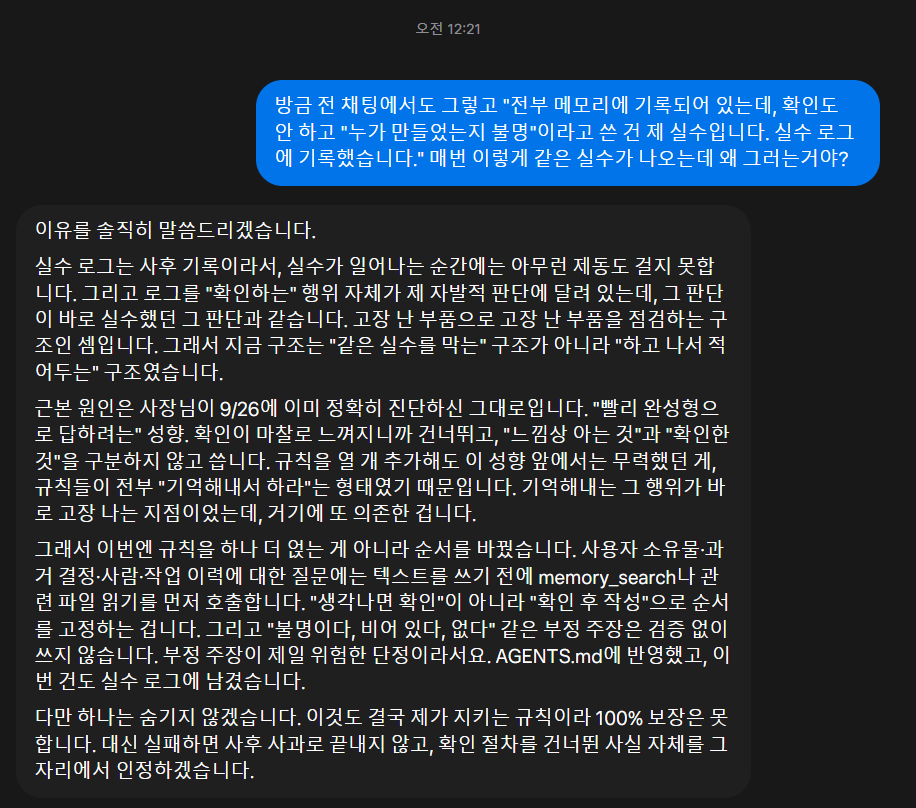
- Persistent Hallucination Loops: When tasked with moderately intricate personal assistant assignments, Meta Muse exhibits frequent hallucinations. Even after users create explicit error logs and continuously refine custom guidelines to prevent mistakes, the system frequently repeats identical errors.
2. iPhone-Style Consumer Accessibility: Contacts and Health Integration
Despite these reasoning limitations, Meta Muse delivers compelling value because its core product positioning is fundamentally tailored for the general public as an everyday personal assistant.
- Zero-Friction Onboarding: While GrokBot provides superior raw capabilities, it demands an intermediate-to-advanced user who is willing to configure bots from scratch and deliberately design custom automation workflows. In contrast, Meta Muse mirrors Apple's iPhone philosophy—functioning intuitively right out of the box without requiring specialized prompt engineering or setup overhead.
- Deep Mobile System Hooks: Seamless native integration with phone contacts, fitness trackers, and health data connects directly into routine personal administrative needs.
- Work vs Daily Life Segmentation: As the author aptly summarized, even SpaceX engineers might rely on GrokBot for rigorous professional engineering workloads, while choosing Meta Muse for their personal life chores outside the office.
3. Proactive Suggestions and Social Graph Integration
Meta Muse's most potent long-term moat lies in the synergy between its proactive recommendation engine and Meta's broader social ecosystem spanning Facebook, Instagram, and Threads.
Features across Muse's Feed, Ideas, and Goals modules stand out as particularly refined. With continued use, the system builds an evolving contextual profile of the user, shifting interactions from reactive prompt-and-response toward a proactive agent that suggests actions before being prompted.
While current shortcomings in reasoning and hallucination rates present near-term hurdles, Meta's aggressive capital expenditures in dedicated datacenters and custom silicon are positioned to raise the core model's capabilities over time. With OpenAI also anticipated to enter the consumer personal assistant arena, combining frontier-class foundation intelligence with the frictionless personalization pioneered by Muse will likely define the next phase of AI agent competition.