Prompt Formula for Historical Costume Layers and Exploded Views in GPT Image 2.5
A prompt formula and practical caveats for generating costume layers, pattern cutouts, and exploded structural views on a vertical (9:16) concept sheet in GPT I
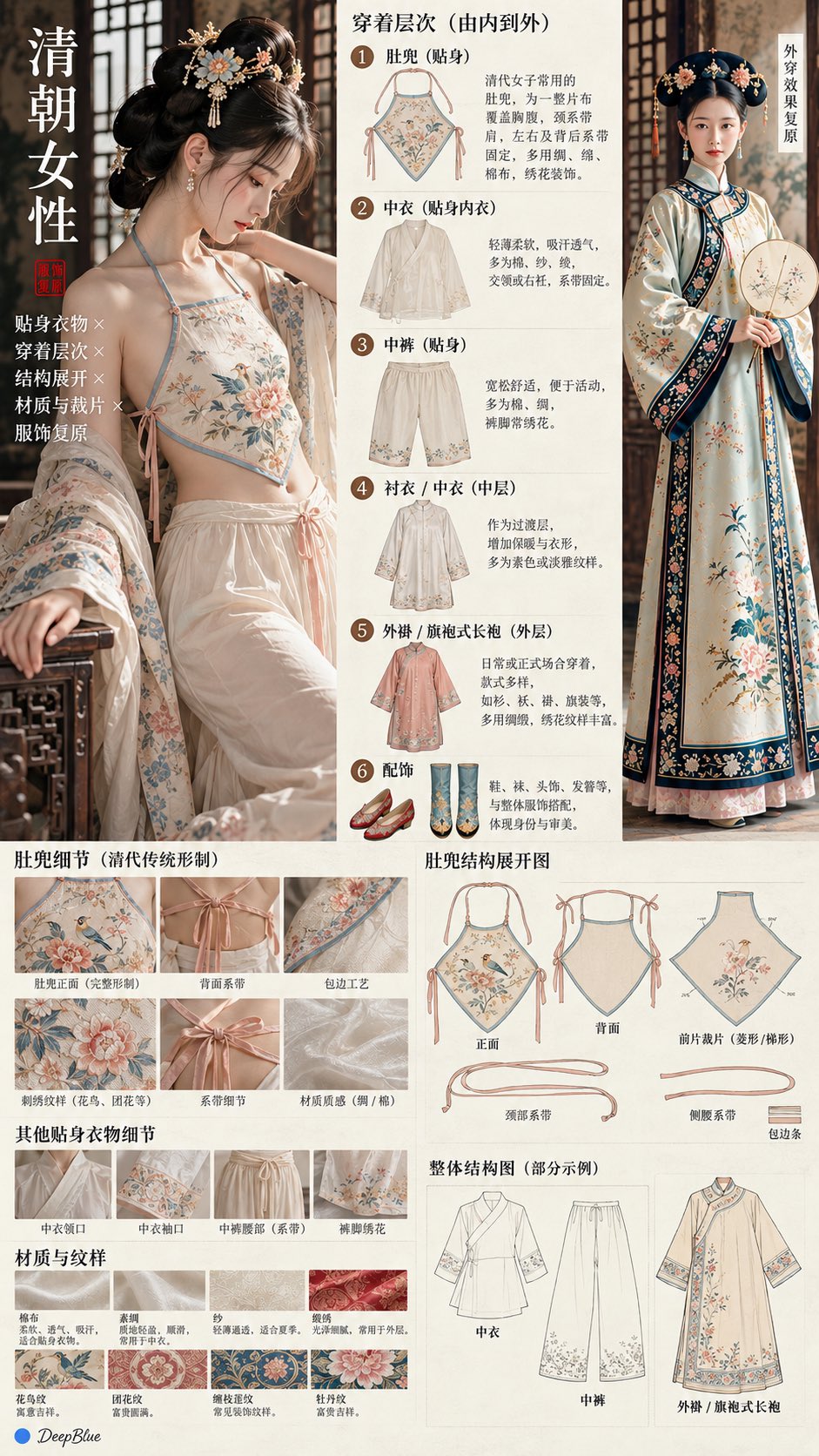
On October 5, 2026, AI prompt researcher DeepBlue (@DeepBlueX0) published a prompt formula for GPT Image 2.5 that generates complete concept design sheets breaking down complex historical costumes into step-by-step wearing layers, flat tailoring patterns, and exploded structural views in a vertical 9:16 aspect ratio.
Image source: @DeepBlueX0 / X
When designing characters for historical dramas, period fiction, or fantasy worlds, obtaining a single polished full-body illustration is relatively straightforward. However, breaking down how garments are layered from inner undergarments to outer robes, along with flat fabric patterns and garment construction, requires precise spatial understanding and multi-element layout coordination. By leveraging GPT Image 2.5's strengthened multimodal text comprehension and complex composition handling, DeepBlue demonstrated a modular prompt formula built around explicit layer sequences and exploded architectural layouts.
Core Formula: 7 Key Compositional Elements
The modular prompt template shared by DeepBlue is structured as follows:
[Dynasty / Era] Women's Inner Garments × Dressing Progression Layers × Exploded Structural View × Fabric Textures and Tailoring Cutouts × Historical Costume Reconstruction × Vertical 9:16
This formula connects seven functional components (six garment design elements plus the aspect ratio format) with multiplication signs (×) to guide the model across both historical styling and structural decomposition:
- Dynasty / Era (
[Dynasty]/ Chaodai): Specifies the target historical era or style inside brackets (e.g., Tang, Song, Ming, or custom fictional settings). - Inner Undergarments: Explicitly names foundational base layers (such as inner chest wraps, under-trousers, and chemises), prompting the model to render from the innermost layer outward.
- Wearing Layer Progression: Directs the model to sequence the dressing process step by step, from inner linings to robes, waistbands, sashes, and outer overcoats.
- Exploded Structural View: Requests a flat, disassembled breakdown diagram showing garment construction alongside the fully worn outfit.
- Material Textures and Tailoring Cutouts: Instructs the layout to display distinct textile patterns, fabric weaves (such as silk gauze, damask, or linen), and flat pattern pieces used in garment tailoring.
- Historical Costume Reconstruction: Weights the generation toward archaeological artifacts and verified historical research rather than generic modern cosplay.
- Vertical 9:16 Canvas: Enforces a tall vertical format ideal for presenting top-to-bottom dressing workflows and multi-panel component breakdowns cleanly.
Practical Adaptation and Prompt Variations
Creators can customize this core formula for specific historical periods, languages, and cultural aesthetics.
1. Song Dynasty Women's Attire Example
When focusing on Song Dynasty women's everyday and formal attire (such as the chest wrap moxiong, straight-collared beizi coat, and pleated silk skirt), the prompt can be expanded into detailed English:
Song Dynasty women's traditional inner garments and layered costume, wearing progression layers from inner undergarments to middle robes and outer beizi, structural exploded flat diagram, fabric textures and pattern cutouts, historical costume reconstruction, vertical 9:16 concept art sheet, museum display quality.
Alternatively, creators using direct keyword input can adapt the era tag while retaining the concise formula:
[Song Dynasty] Women's Inner Garments × Wearing Layer Progression × Exploded Structural View × Material Textures and Cutouts × Historical Costume Reconstruction × Vertical 9:16
2. Adapting to Other Cultural Eras and Fantasy Costumes
The underlying strength of this method lies in its exploded concept sheet syntax: base layer → dressing progression → structural breakdown → fabric pattern pieces. This framework adapts easily to other historical traditions:
- Joseon Dynasty Hanbok:
【Joseon Dynasty】 women's inner jeogori and sokchima × layering progression × structural pattern layout × silk texture and pattern cutouts × historical costume reconstruction × vertical 9:16 - Victorian Era Attire:
【Victorian Era】 women's corset and petticoat × dressing sequence layers × exploded garment construction × lace fabric and tailor pattern pieces × historical reproduction × vertical 9:16
Real-World Considerations and Community Q&A
Following the release of the prompt, creators in the AI design community raised practical questions regarding historical fidelity and the representation of multi-layered clothing. DeepBlue addressed these considerations directly in subsequent thread discussions:
1. Verifying Layer Accuracy vs. Model Hallucination
- User Question (@vipdecade): "How do you verify the dressing layers? Is there a risk that it looks visually impressive, but the actual layering sequence is entirely made up by the AI?"
- DeepBlue's Response (@DeepBlueX0): "Start with an opening line of keywords, and the rest is largely made up by the AI. However, currently GPT has the strongest ability to make it up [plausibly reconstruct it]."
- Practical Takeaway: While AI-generated exploded sheets serve as rapid visual concept aids and inspiration boards, they do not replace formal historical scholarship. For rigorous period productions, game asset pipelines, or historical webtoons, generated sheets should be cross-referenced with archaeological excavation reports, preserved textile catalogs, and museum references.
2. Historical Context and Preservation Bias
- User Question (@Sirilee2026): "In ancient times, ordinary people could never afford to wear so many layers—only the wealthy and noble dressed like this. Does this bias the output?"
- DeepBlue's Response (@DeepBlueX0): "Yes, exactly. But only items belonging to affluent and noble households had the chance to be preserved and survive as cultural relics."
- Practical Takeaway: Because preserved archaeological relics skew heavily toward elite households, AI training data tends to reflect aristocratic multi-layered clothing by default. When designing working-class, peasant, or utilitarian historical clothing, using extensive multi-layer prompts will skew results toward overly ornate aristocratic garb. Creators should explicitly constrain the prompt to single-layer or simplified functional garments (such as basic waistcoats, coarse tunics, or unlined robes) to reflect accurate socio-economic contexts.
Original source
- DeepBlue (@DeepBlueX0) on X: https://x.com/DeepBlueX0/status/2106765651952140743