codebase-memory-mcp: Sub-Millisecond Knowledge Graph MCP for 158 Languages
An analysis of codebase-memory-mcp, a zero-dependency C binary indexing 158 languages into persistent knowledge graphs with sub-ms queries and up to 99% token r
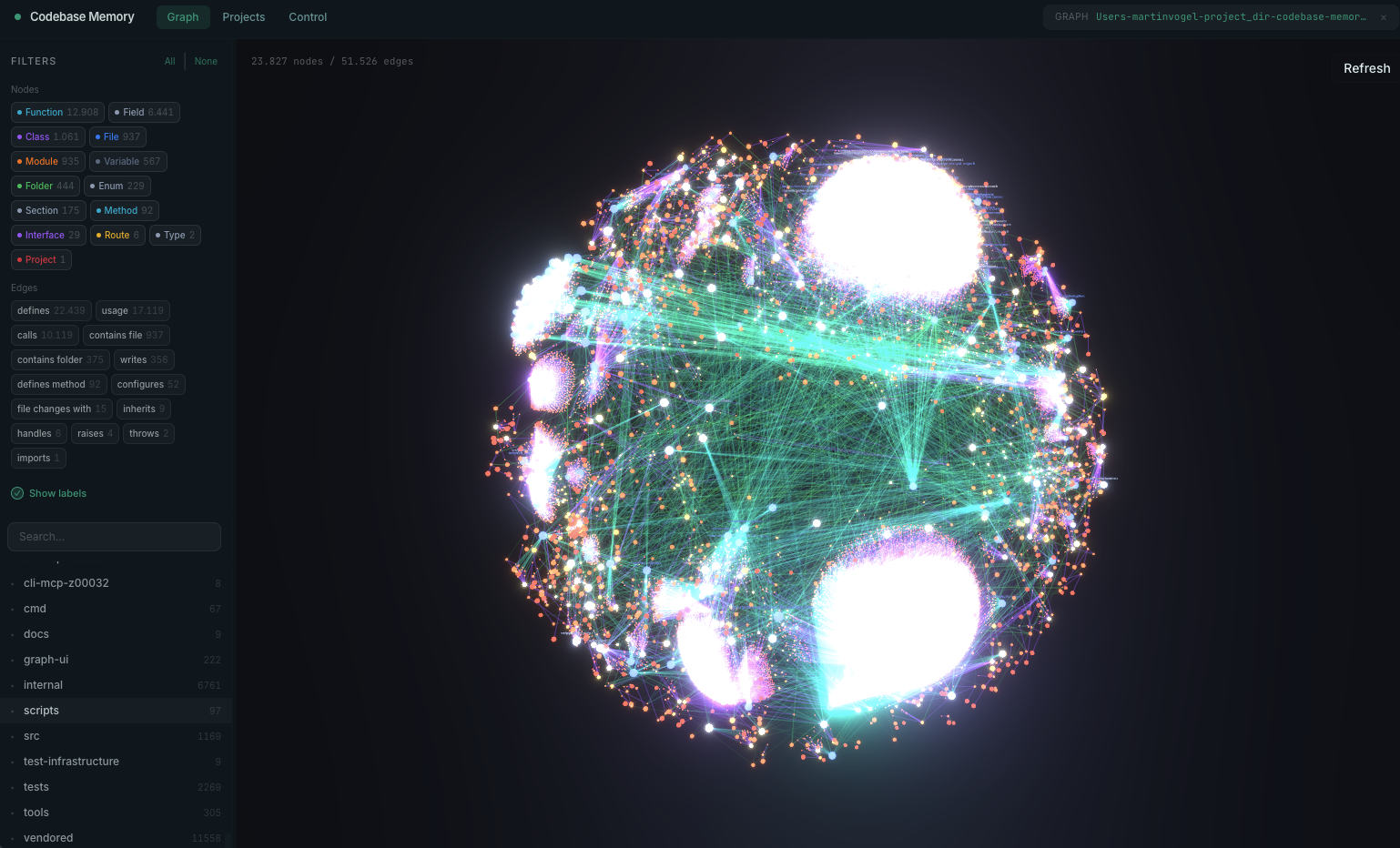
Open-source team DeusData has introduced codebase-memory-mcp, a high-performance Model Context Protocol (MCP) server that indexes codebases across 158 programming languages into persistent knowledge graphs using a single static binary. Built for AI coding agents, it eliminates the compounding token waste and latency of repeated file-by-file exploration.
Image source: DeusData / GitHub
Traditional AI coding agents explore software projects by alternating between string searching and reading raw files one by one—a loop of grep → read file → grep → read file. As architectural questions grow more complex, tool call counts multiply and context windows quickly fill with raw source code. codebase-memory-mcp replaces this repetitive cycle with a pre-indexed, SQLite-backed persistent knowledge graph, enabling agents to retrieve symbol hierarchies and dependency chains in a single structured query.
Pure C Single-Binary Architecture and 158-Language Knowledge Graph
Architecturally, codebase-memory-mcp distinguishes itself by shipping as a zero-dependency static binary written entirely in pure C. It operates completely self-contained without requiring heavy runtime environments like Python, Node.js, or Docker, and demands no external API keys or cloud services, allowing immediate deployment across local machines and continuous integration workflows.
The engine integrates vendored tree-sitter grammars covering 158 programming languages. This is augmented with a lightweight Hybrid LSP (Language Server Protocol) semantic type resolution layer for major languages including Python, TypeScript/JavaScript, Go, Rust, Java, and C/C++, moving beyond basic Abstract Syntax Tree (AST) tokenization to accurately resolve type references and module boundaries.
All extracted code intelligence is committed to a persistent SQLite knowledge graph database. The system models functions, classes, interfaces, call chains, module imports, and HTTP web route endpoints as structural nodes and edges, preserving the complete relational topology of the repository for instant reuse across subsequent agent queries.
3-Minute Linux Kernel Indexing: Sub-Millisecond Queries and 99% Token Drop
Throughput and query latency benchmarks demonstrate significant scale handling. When tested on the entire Linux kernel codebase—spanning 28 million lines of code across 75,000 files—codebase-memory-mcp completed a full repository index in approximately 3 minutes.
Once indexed, the server answers structural queries regarding symbol definitions and call traces in under 1 millisecond. This sub-millisecond retrieval eliminates agent idle time and removes the overhead of parsing raw files on demand.
According to research across 31 open-source repositories documented in arXiv:2603.27277, codebase-memory-mcp achieved an overall 10x reduction (up to 99% token savings) in token consumption and reduced tool invocations by 2.1x compared to traditional file traversal. On graph-native queries such as hub detection and caller ranking, it matched or outperformed file-exploration agents across 19 of 31 languages. The server exposes 15 dedicated MCP tools supporting indexing control, structured, semantic, BM25, and structural searches, call tracing, architecture overviews, and git diff impact analysis.
45-Client Integration Ecosystem and Practical Deployment Caveats
codebase-memory-mcp integrates broadly across developer tools, connecting via the standard MCP protocol to 45 client surfaces, including Anthropic's Claude Code, OpenAI Codex, Cursor, Windsurf, and Aider. The installation also includes a built-in local 3D graph visualization web UI and a background process coordination daemon to manage local service state.
Teams evaluating the tool should note specific real-world considerations and trade-offs highlighted by benchmark analysis and user reports:
- Accuracy Trade-off in Localized Queries: While arXiv:2603.27277 highlights dramatic token savings for architectural and relational queries, detailed retrieval of localized implementation specifics yielded an answer accuracy of 83%, compared to 92% for full-file reading agents.
- Windows Setup and Security Flags: Deploying on Windows may require setting PowerShell execution policies to bypass (
Set-ExecutionPolicy Bypass), and heuristic false-positive detections such as Wacatac in Windows Defender have been reported, making binary hash verification essential. - Process Coordination Consistency: All concurrent codebase-memory-mcp components—the server, CLI utility, and background daemon—must run the exact same version, build, coordination ABI, and shared cache directory (
~/.cache/codebase-memory-mcp) to prevent coordination conflicts.