Claude Code Tip: Generating Code Animations Across 35 Art Styles with 'huashu-art-motion'
A practical workflow for Claude Code and Opus 5.5 using huashu-art-motion to programmatically generate animations across 35 artistic styles—from Van Gogh to Dal
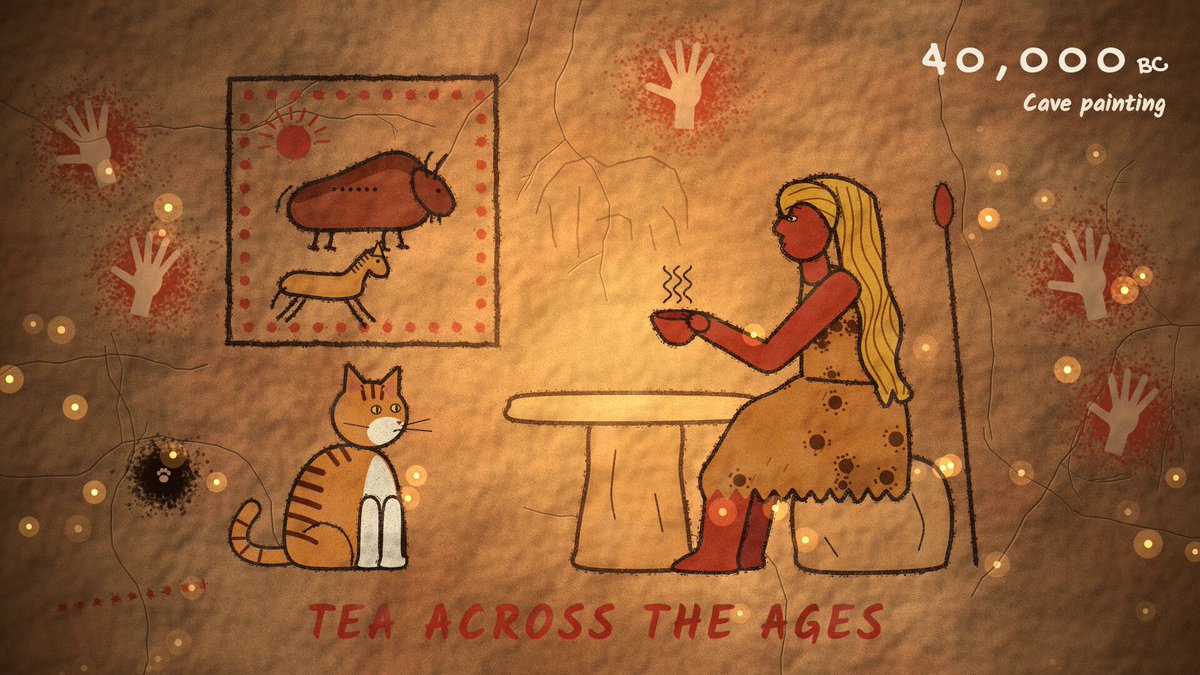
Shared on X by creator Vox (@Voxyz_ai), this hands-on tip details how installing the huashu-art-motion tool in Claude Code alongside Claude Opus 5.5 enables developers to programmatically draw animations across 35 historical art styles, complete with an automated delivery script that guards against static outputs.
Image source: @Voxyz_ai via X
As generative AI video workflows mature, developers are increasingly exploring code-driven animation where visual styles and movements are rendered through code. The workflow introduced by Vox pairs code-based artistic animation with a delivery script that rejects outputs where almost nothing moves.
Installing huashu-art-motion and Rendering Across 35 Art Styles
At the core of this technique is installing huashu-art-motion in Claude Code to instruct the agent to draw animations across diverse styles using code.
- Rapid Prototyping Demo: According to the creator, Opus 5.5 generated the demonstration video—transitioning across 35 built-in styles from prehistoric cave art to 2026 while keeping the room, cat, and character constant—within 10 minutes of installing
huashu-art-motionin Claude Code. - Broad Art-Historical Coverage: The preset library spans roughly 40,000 years of visual history, ranging from prehistoric cave art to Vincent van Gogh's swirling starfields, Salvador Dalí's melting surrealist clocks, Claude Monet's impressionism, and structured Bauhaus geometric movements.
- Code-Native Generation: Instead of relying exclusively on static image prompting, the agent writes programmatic animation code to render dynamic motion, such as swirling starry skies or dripping clocks.
Production Scenarios: Voiceover Sync and Reference Animation Breakdown
Beyond one-off artistic clips, the workflow accommodates several structured production workflows for practical content pipelines:
- Voiceover-Synced Explainer Animations: Users can prompt the agent to generate custom explainer sequences tailored to specific art styles that accompany a voiceover narration track.
- Multi-Painting Scene Transitions: The model can choreograph scene logic, such as a continuous character walking through one classic painting after another.
- Reverse-Engineering Reference Footage: When supplied with an existing reference animation, the pipeline first deconstructs the clip—analyzing cuts, beats, and what moves where in the frame—before rebuilding the animation in code.
The 'Reject Static Outputs' Delivery Script and Model Prerequisites
A standout feature highlighted by creative developers is the tool's built-in delivery script, which enforces motion before completing a run.
- Automated Rejection of Static Renders: The delivery script rejects any film where almost nothing moves, while also filtering out 0.3+ seconds of blank frames mid-film and blue-purple backgrounds occupying over 30% of the runtime (categorized as AI slop). Community commentary noted that this gate directly addresses a key failure mode in agent video generation: achieving style without adequate motion density.
- Opus 5.5+ Model Tier: According to the author, the skill includes a dedicated tier for Claude Opus 5.5 or stronger models, enabling the model to combine libraries and write custom renderers. Community testers similarly reported that other models struggled to run the workflow properly, pointing to Opus 5.5 as the effective requirement.
- Runtime and Rendering Prerequisites: Video rendering requires uv, ffmpeg, and Playwright Chromium. Additionally, because the skill documentation is written in Chinese, prompting the agent to read the documentation and interact in English is recommended.
Original source
- Vox (@Voxyz_ai) on X: https://x.com/Voxyz_ai/status/2109690569563746755