Claude Code Game Studios: Open-Source Framework Expanding Claude Code into a 49-Agent Game Studio
Claude Code Game Studios (Donchitos/Claude-Code-Game-Studios) has been open-sourced, transforming a single Claude Code CLI session into a hierarchical game deve
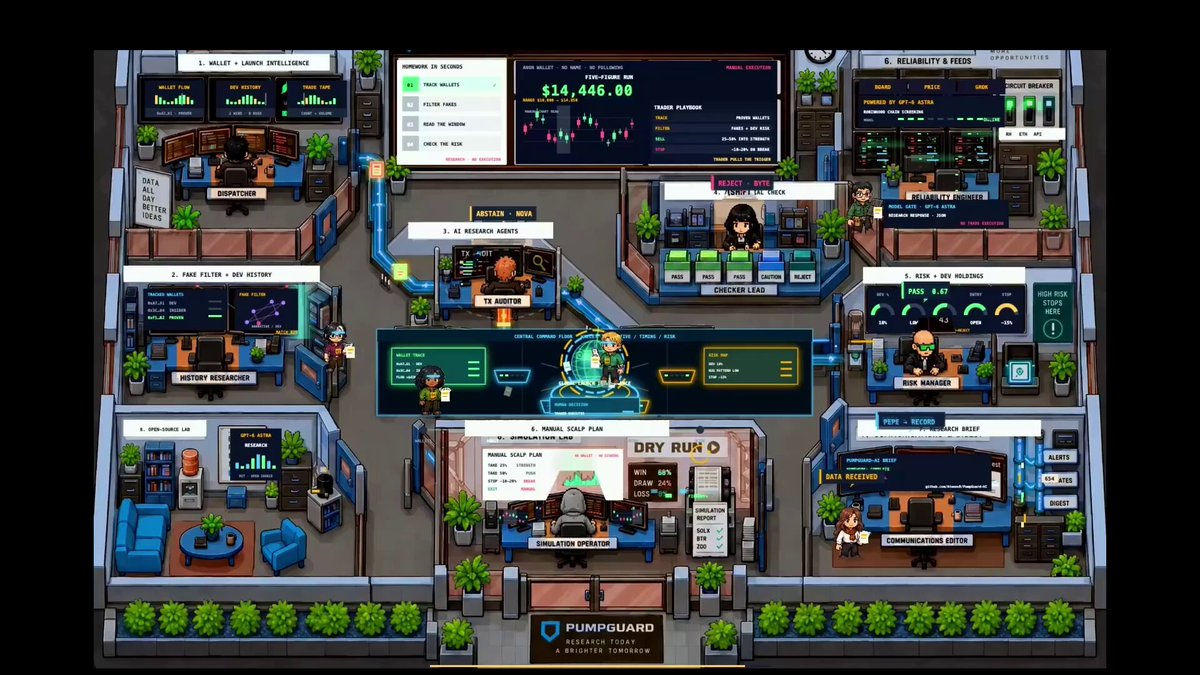
Claude Code Game Studios (Donchitos/Claude-Code-Game-Studios), an open-source framework licensed under MIT, has been released on GitHub to transform a single terminal-based Claude Code CLI session into a fully structured game development studio team. Moving beyond monolithic general-purpose AI prompts, the project establishes a coordinated hierarchy of 49 specialized AI agents covering every phase of production from game design to engineering, art planning, QA, and release management.
Image source: @TeddyinMedia on X / Donchitos
For solo creators and small indie teams adopting AI coding assistants, the primary failure mode is frequently context contamination and blurred domain responsibilities. Asking a single conversational session to handle level design, shader programming, narrative dialogue, and sound effects concurrently often leads to broken architectural boundaries and forgotten design constraints. Claude Code Game Studios addresses this structural challenge by modularizing traditional studio organizational practices into discrete prompt boundaries, slash commands, and automated CLI rules.
Three-Tier Studio Hierarchy and 49 Specialized Agents
Claude Code Game Studios structures its agent ecosystem into three distinct operational tiers modeled after professional game development studios:
- Directors: Responsible for high-level vision and creative consistency, ensuring decisions made by individual departments do not compromise core design pillars.
- Department Leads: Domain owners who oversee game design, engineering, art, narrative, and audio, managing task delegation and enforcing quality baselines.
- Specialists: Execution-focused agents that write engine-specific scripts, build UI components, write unit tests, and perform hands-on technical tasks.
The 49 specialized agents cover eleven distinct disciplines across the game development lifecycle: game design, art and assets, UX/UI, technical architecture, story and dialogue, code review, QA and automated testing, production management, release preparation, localization and content, and cross-cutting orchestration.
The orchestration agent serves as the operational hub of the team. As different agents concurrently or sequentially develop combat mechanics, dialogue trees, user interface layouts, audio effects, and level layouts, the orchestrator coordinates context passing and task handoffs to prevent conflicting changes.
Seven-Phase Pipeline and /gate-check Quality Gates
Development follows an end-to-end seven-phase pipeline spanning initial concept conception to final production release, underpinned by systematic quality enforcement mechanisms:
- 72 Slash Command Workflow Skills: Structured commands guide development at each step, including
/startto initialize projects,/design-systemto define design tokens,/create-epicsto break down game requirements,/dev-storyto implement gameplay features, and/gate-checkto validate phase readiness. - 12 Automated Hooks: Real-time listeners trigger on Git commits, push events, asset file changes, and CLI session lifecycles to automatically enforce workflow hygiene.
- 11 Path-Scoped Coding Rules: Strict coding conventions and boundary constraints apply dynamically based on target directories, including
src/gameplay/,src/ai/, engine-specific folders, and UI layers, preventing unintended coupling across modules. - 39 Standardized Document Templates: Built-in templates for Game Design Documents (GDD), Architecture Decision Records (ADR), and sprint plans help maintain consistent written documentation throughout development.
A core operational discipline is the /gate-check system. Work cannot proceed to the subsequent phase until intermediate deliverables and test criteria satisfy the gate's formal requirements, preventing early design flaws or unverified code from cascading into late-stage builds.
Godot 4 and Unity Support with Practical Implementation Considerations
Claude Code Game Studios provides out-of-the-box specialist agents tailored to mainstream target game engines:
- Godot 4 Specialists: Optimized prompt rulesets and context patterns for GDScript authoring, Godot Shader optimization, and scene node tree structuring.
- Unity Specialists: Specialized agents focused on Unity C# programming, MonoBehaviour and component lifecycles, and package dependency configurations.
While the framework introduces valuable structure for solo developers and small teams, several practical tradeoffs require consideration before adoption.
First, orchestrating 49 specialized agents across seven gate-checked phases involves substantially higher API token consumption and coordination overhead compared to standard single-session prompting.
Second, developers must maintain pre-configured local environments for both Claude Code CLI and their chosen game engine (Godot or Unity), and must adopt the repository's recommended directory hierarchy for path-scoped rules to trigger effectively.
Finally, the framework serves as a structured workflow methodology rather than an autonomous studio substitute; developers remain fully responsible for reviewing /gate-check deliverables, compiling engine builds, and conducting hands-on playtesting.
Sources
- GitHub Repository: Donchitos/Claude-Code-Game-Studios
- TeddyCEO (@TeddyinMedia) on X: A Full AI Game Dev Team in GitHub