Mechanical Transformation Video Workflow: Extracting Prompts via Astra and Generating in MiniMax H3
How to decompile complex mechanical robot transformations with GPT-6 Astra and render seamless physics-driven animations in MiniMax H3, featuring the complete p
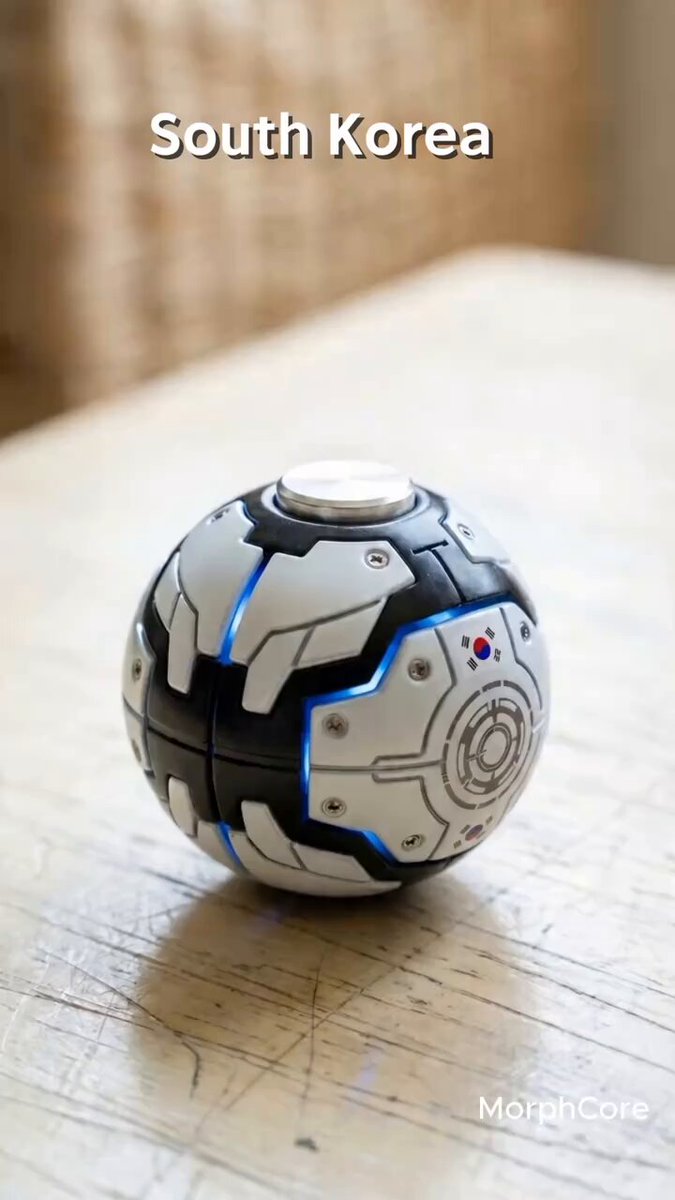
AI creator Daeun (@daeun_lab) has shared an advanced generative video workflow and a complete production prompt that solves one of the most challenging tasks in AI video generation: rendering a continuous, physically grounded robot transformation sequence by combining GPT-6 Astra prompt reverse-engineering with the MiniMax H3 video model.
Image source: @daeun_lab / @GreatZodd (X)
The demonstration captures a closed mechanical sphere unfolding its joints and curved armor plating in a single continuous shot to transform into a four-legged robotic white tiger toy on a tabletop. The workflow resolves common morphing artifacts, where robotic components arbitrarily melt, disappear, or materialize out of thin air.
The Challenge of Mechanical Transformations and the Two-Stage Solution
In generative AI video, articulating mechanical transformations or assembly sequences represents an extreme test of spatio-temporal consistency.
Creator Zodd (@GreatZodd) initially raised the question to the community, noting that standard text prompts or general video pipelines like Google Flow frequently failed to preserve mechanical continuity, causing parts to dissolve into liquid-like slop or lose structural fidelity even when using prompts generated by tools like Astra or Muse.
In response, Daeun (@daeun_lab) outlined a precise two-stage production solution: using GPT-6 Astra to decompile the source video's kinematics and part movement hierarchy into a structured, step-by-step descriptive prompt, and executing the generation through MiniMax H3.
MiniMax H3 excels at tracking continuous physical kinematics, weight dynamics, and synchronized audio-visual cues. When guided by explicit part persistence rules and overlapping motion descriptions, it successfully maintains component continuity throughout the entire unfolding sequence.
The Complete Production Prompt for MiniMax H3
The verbatim English prompt crafted by Daeun describes the transformation from a compact sphere to a robotic white tiger with kinematic precision:
Setting: A single continuous vertical close-up of a transforming robot toy on a pale wooden table, warm diffused window light, beige curtains. Stationary three-quarter camera. Only the toy occupies the tabletop.
At 0.0 seconds one closed ivory-and-silver mechanical sphere is already resting at the center, fully visible. Its shell has six large curved armor plates joined to a black articulated chassis: two blue-ringed side plates, one flag-marked top plate, one lower-front plate, and two rear plates. These six recognizable plates remain attached and visible as the robot unfolds.
In order: blue seams brighten; the front plate swings under the chin as the tucked silver tiger head lifts out; the blue-ringed plates roll outward into broad shoulders as the folded forelegs reach for the table. While the forepaws descend, the flag-marked top plate slides backward along the extending spine and the rear plates swing around the hips. The hind legs unfold underneath those hip plates as the forepaws take weight. The tail uncurls from between the rear plates while the chest moves forward and the back settles between the shoulders. Each next motion starts while the preceding motion is still in progress: head lifting, shoulders rolling, paws reaching, back extending and hips rising form one connected wave. Visible black hinge arms carry the rigid shell plates through curved paths, leaving the same six plates as substantial armor on the final animal.
The robot leans onto its reaching forepaws, shifts its weight through the shoulders and follows with the hindquarters, like a cat uncurling and standing up. Its joints yield slightly under weight, the tail follows the body's movement with a delay, and the armor plates settle with a small recoil. By the end one compact robotic white tiger stands on four grounded paws with a rounded armored back, broad blue-ringed shoulders and curved hip armor. It holds that stance for the final moment. The entire toy stays visible. Brushed silver, ivory plastic, black joints, blue eyes. Quiet variable-pitch servo whir, soft sliding metal and paw contact, room ambience.
Five Core Prompt Engineering Principles for Mechanical Transformations
Instead of relying on vague narrative prompts like "a sphere robot transforms into a mechanical tiger," this prompt anchors the model with five strict physical and kinematic constraints:
1. Locking Camera and Environment Anchors
- Stationary Framing: Defining a
Stationary three-quarter cameraprevents camera motion from compounding geometric distortion on the transforming subject. - Subject Isolation: Specifying that
Only the toy occupies the tabletopon a clean pale wooden table removes background clutter that could dilute the model's spatial attention.
2. Explicit Initial Part Inventory at 0.0 Seconds
- The prompt establishes an inventory of the six discrete armor plates comprising the closed sphere (
two blue-ringed side plates, one flag-marked top plate, one lower-front plate, and two rear plates) before any action begins. - It explicitly enforces persistence (
These six recognizable plates remain attached and visible as the robot unfolds), preventing parts from vanishing or morphing into unrelated geometries.
3. Continuous Kinetic Overlap and Mechanical Hinge Paths
- Rather than dividing the sequence into isolated keyframe steps, movements are structured as an overlapping wave where each action begins while the previous one is underway (
Each next motion starts while the preceding motion is still in progress... form one connected wave). - It defines the physical linkage mechanisms, specifying that
Visible black hinge arms carry the rigid shell plates through curved pathsrather than letting plates float disconnectedly.
4. Organic Weight Transfer and Physical Recoil
- The mechanical unfolding is grounded in realistic biological dynamics (
like a cat uncurling and standing up). - Granular physical feedback is explicitly described: joints yielding slightly under weight (
joints yield slightly under weight), secondary motion in the delayed tail swing, and settling recoil in the final armor plates.
5. Material Consistency and Diegetic Soundscapes
- The visual styling is anchored with durable material descriptors: brushed silver, ivory plastic, black articulated joints, and blue illuminated eyes.
- Leveraging MiniMax H3's native multimodal audio capabilities, the prompt embeds realistic diegetic sound cues: variable-pitch servo whirs, soft sliding metal, tabletop paw contacts, and ambient room tone.
Practical Directing and Production Tips
- Leverage Astra for Kinematic Decompilation: When analyzing complex mechanical references (such as folding mechanisms, origami, or modular transformations), prompt GPT-6 Astra to deconstruct the video frame-by-frame and describe component paths using mechanical engineering terminology.
- Match Complexity with the Right Backend: High-precision multi-stage motion requires video models with robust temporal and physics priors like MiniMax H3, rather than general text-to-video models tuned primarily for loose atmospheric motion.
- Minimize Camera Movement During Intricate Transformations: When the internal geometry of a subject changes dramatically, keep the camera static. Allocating all model capacity to subject mechanics yields significantly higher fidelity and consistency.
Original source
- Daeun (@daeun_lab) and Zodd (@GreatZodd) Thread on X: Astra Prompt Extraction and MiniMax H3 Robot Transformation Workflow