Anthropic Engineer's 90-Minute Agent Architecture Lecture: From Brain-Hand Decoupling to Multi-Tenant CI/CD
A complete breakdown of the 90-minute AI agent architecture lecture delivered by an Anthropic engineer, curated by @F5Adon. Explore core design patterns includi
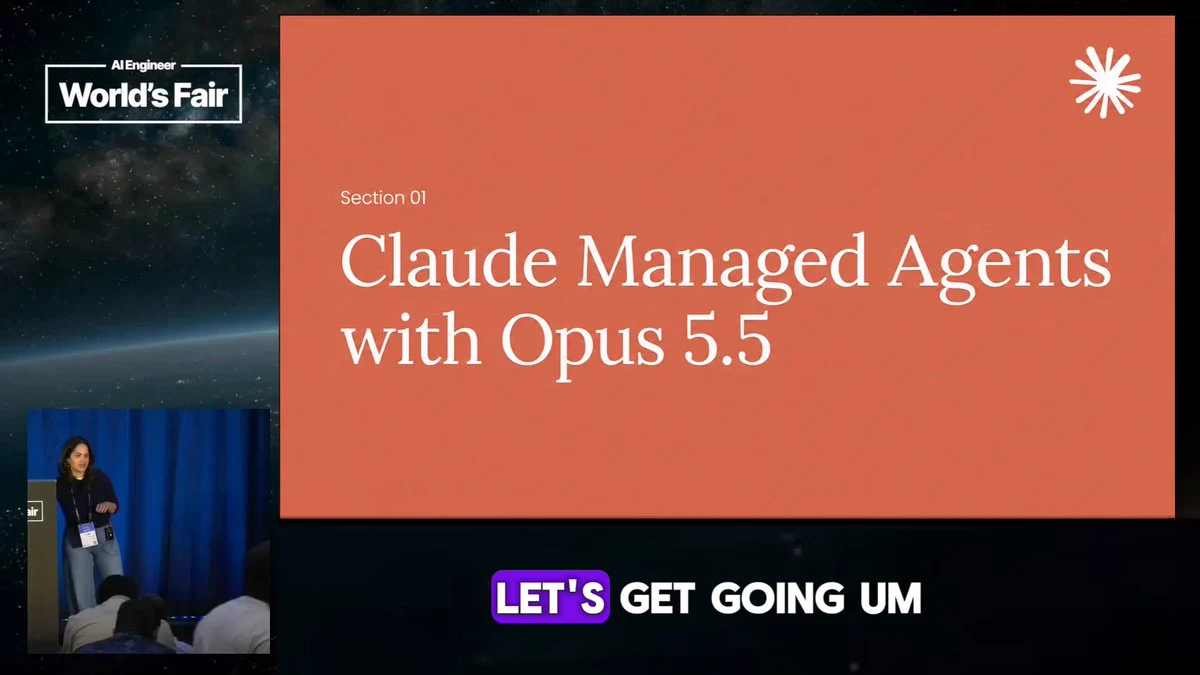
AI technical analyst @F5Adon shared a comprehensive timeline and structural overview of a 90-minute deep-dive lecture delivered by an Anthropic engineer. Centered around practical applications with Claude Opus 5.5, the session addresses how to build, deploy, and maintain autonomous AI agents reliably in high-consequence enterprise environments.
Image source: https://x.com/F5Adon/status/2117021112500437426
While most agent tutorials limit themselves to toy prompt chaining or single-turn tool calling, this lecture steps back to examine production-grade system architecture. It outlines how engineering teams can move beyond brittle prototypes toward fault-tolerant, horizontally scalable multi-agent systems. Below is the curated breakdown of the timeline and core technical takeaways.
Lecture Timeline and Core Curriculum Overview
The 90-minute lecture is systematically structured into five progressive modules, advancing from fundamental architectural philosophy to large-scale production infrastructure:
- 00:00 - Why Brain and Hands Must Be Decoupled: Isolating decision-making inference models from external tool execution layers.
- 07:45 - Architecture Behind Claude Hosted Agents: Managed infrastructure patterns for session state isolation, credential boundary control, and persistent execution contexts.
- 23:40 - Building a Research Agent Step by Step: Constructing resilient pipelines for multi-source search, cross-document verification, and structured synthesis.
- 54:00 - Scheduled Agent Execution and Inter-Task 'Dreaming': Operating background cron jobs alongside offline context consolidation and long-term memory refinement.
- 1:10:23 - Evaluation, CI/CD Pipelines, and Concurrent Multi-Tenant Operations: Automated multi-turn regression benchmarks and resource sandboxing across enterprise customer workloads.
Decoupling Brain and Hands: Physical Isolation of Reasoning and Execution (00:00–07:45)
The opening segment establishes what Anthropic engineers describe as the foundational rule of resilient agent design: strictly separating the "brain" (the reasoning LLM) from the "hands" (the code execution environment and external APIs).
In basic agent scripts, developers often let the language model directly trigger external tools inside the primary runtime loop. In production, this tight coupling introduces acute operational risks. Malformed tool arguments or recursive loops can lock up application servers, pollute host environments, or trigger unbounded compute expenses.
- Core Separation Principle: The LLM's sole responsibility is planning, state evaluation, and structured schema emission. The actual invocation of tools, file I/O, or web calls must be handled by stateless, isolated worker runtimes.
- Hosted Agent Infrastructure (07:45): Anthropic’s hosted agent architecture relies on a centralized orchestrator that coordinates session state, manages tool authorization boundaries, and spins up ephemeral execution sandboxes on demand.
When execution layers are decoupled, an API failure, rate limit, or network timeout never crashes the reasoning context. The model receives a sanitized execution error, updates its internal plan, and determines alternative steps without losing conversational state.
Step-by-Step Research Agents and Inter-Task 'Dreaming' (23:40–54:00)
At the 23-minute mark, the curriculum shifts to an end-to-end implementation of an autonomous research agent. Research tasks typically span dozens of document queries and quickly exhaust native context window budgets if not managed deliberately.
- Staged Query and Synthesis Pipelines: Instead of dumping raw search results directly into the prompt context, the workflow uses a two-phase filtering funnel where intermediate workers validate source credibility, extract relevant snippets, and feed only distilled observations to the primary synthesizer.
- Scheduled Workflows and 'Dreaming' (54:00): For agents running on scheduled intervals (such as daily market reviews or internal audit checks), the lecture introduces an offline consolidation phase referred to as "dreaming."
During inter-task idle periods, the agent reviews historical operational traces, discards transient noise tokens, and synthesizes key domain insights and operational mistakes into structured long-term memory (such as vector indexes or key-value knowledge stores). When the next scheduled job triggers, the agent boots with fresh, low-overhead context rather than wading through cluttered historical logs.
CI/CD Evaluation and Multi-Tenant Scaling in Production (1:10:23)
The final segment tackles the challenging transition from single-user internal prototypes to multi-tenant software-as-a-service (SaaS) environments.
Because generative agents exhibit non-deterministic behaviors across multi-turn trajectories, traditional deterministic unit testing fails to capture subtle operational regressions. A prompt tweak that improves tool invocation on one scenario might cause catastrophic hallucinations on another.
- Agent CI/CD Test Harnesses: Teams must implement statistical evaluation suites that simulate complex multi-step user scenarios. Commits are benchmarked against historical baseline pass rates, average token consumption, tool calling precision, and task completion latency.
- Multi-Tenant Concurrency and Isolation: Serving hundreds of concurrent organizational clients requires robust tenant-level rate limiting, separate execution namespaces, and encrypted persistent storage partitions to completely eliminate data leakage between accounts.
Strategic Checklist for Engineering Teams
Curator @F5Adon highlighted that this technical walkthrough provides far greater actionable depth than conventional, expensive commercial AI workshops. Teams developing agentic workflows can apply these practical questions to their current architectures:
- Are execution layers strictly sandboxed? Verify that model reasoning loops cannot directly execute unconstrained host commands without intermediate API gateways.
- Is multi-turn evaluation automated? Ensure every prompt, tool schema, or model version change is validated against a deterministic benchmark harness before deployment.
- Does context consolidation run out-of-band? Implement periodic cleanup and reflection routines ("dreaming") to prevent long-running tasks from degrading due to context saturation.
As frontier models like Claude Opus 5.5 grow increasingly capable, system reliability depends less on raw prompt tricks and almost entirely on the rigor of the surrounding software engineering harness.