10 Open-Source GitHub Repositories Where AI Meets Cybersecurity
A curated breakdown of 10 open-source security tools combining AI agents with penetration testing, traffic inspection, vulnerability scanning, secret detection,
Cybersecurity researcher @DivyanshT91162 shared a curated collection on X spotlighting 10 open-source GitHub repositories that bridge artificial intelligence, large language models (LLMs), Model Context Protocol (MCP), and static/dynamic analysis to transform modern security workflows.
Image source: @DivyanshT91162 on X
Spanning autonomous penetration testing agents, traffic interception proxies, code-level secret scanners, and multi-cloud compliance auditors, these ten open-source tools offer practical solutions across every phase of application security and infrastructure defense.
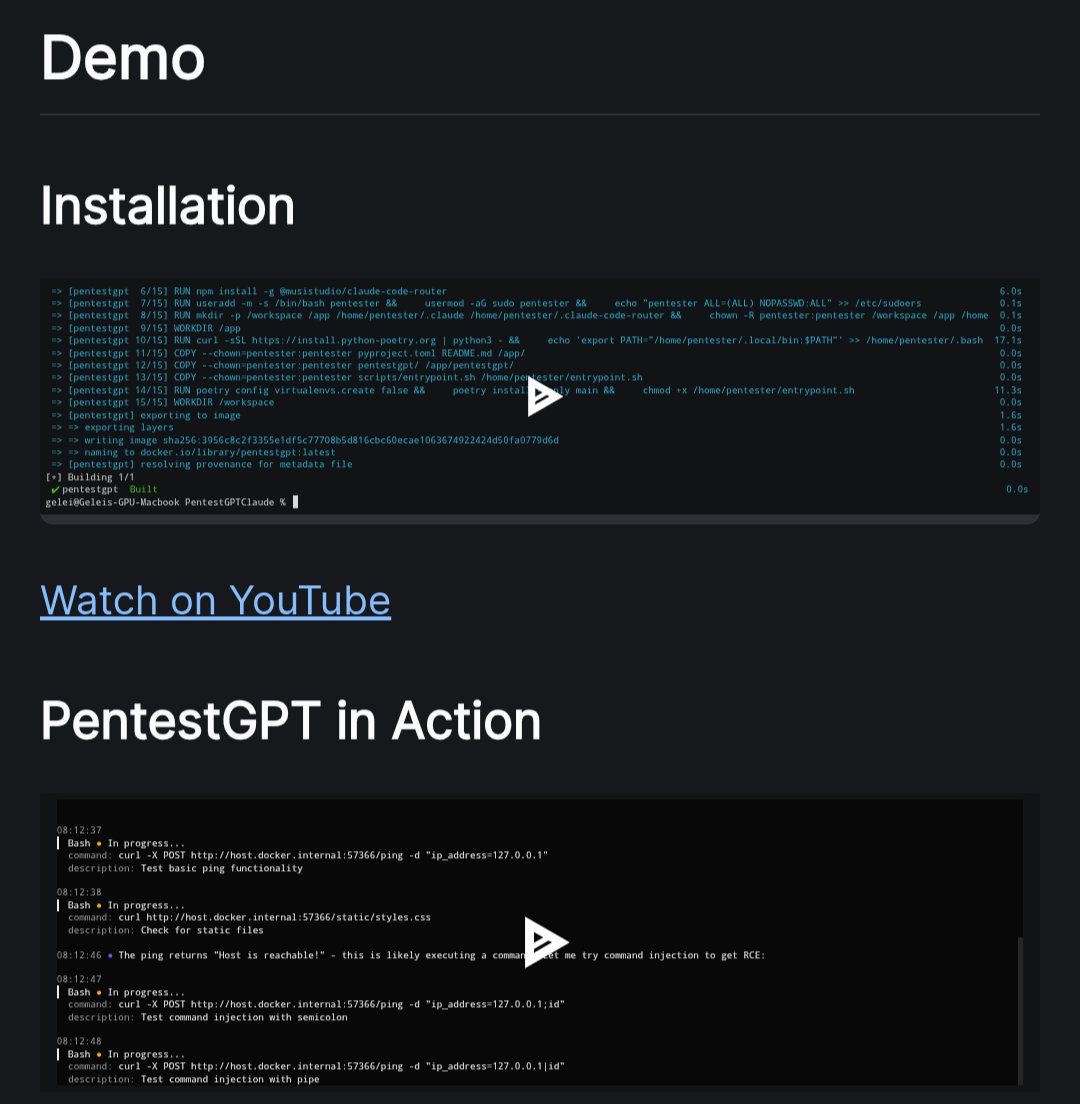
1. PentestGPT — AI Assistant for Penetration Testing Workflows
PentestGPT is an open-source autonomous and interactive framework designed to guide security researchers through penetration testing operations using large language models. Originally published at USENIX Security 2024, it helps practitioners reason through complex multi-step attack chains, interpret tool outputs, and plan subsequent testing actions.
- Pentesting Task Tree (PTT) Architecture: Utilizes three self-interacting modules (Reasoning, Generation, and Parsing) to track engagement status across an attack tree structure.
- Multi-Stage Autonomous Pipeline: Systematically covers target discovery, vulnerability identification, exploitation, and walkthrough reporting.
- Multi-LLM & Local Backend Integration: Supports major foundation models from Anthropic and OpenAI alongside local inference via Ollama.
2. Caido — Modern Web Security and HTTP Traffic Toolkit
Caido is a lightweight, fast platform built for web security research and HTTP/HTTPS traffic manipulation. Designed to overcome the resource overhead of legacy interception proxies, Caido offers a clean, modern interface focused on inspecting, intercepting, and replaying requests.
- High-Performance Traffic Interception: Efficient architecture for inspecting, modifying, and fuzzing HTTP requests and responses in real time.
- Extensible Plugin & AI Ecosystem: Seamlessly integrates with custom plugins and AI orchestration layers to automate traffic analysis and vulnerability discovery.
3. HexStrike AI — MCP-Based Security Automation Framework
HexStrike AI is an open-source security automation framework that connects AI agents with an extensive suite of cybersecurity utilities using the Model Context Protocol (MCP).
- Standardized Tool Calling: Allows LLM agents to orchestrate diverse command-line scanners and exploit tools through a single, consistent interface.
- Autonomous Attack Chaining: Enables intelligent models to sequence reconnaissance, payload generation, and verification steps dynamically.
4. Strix — Autonomous AI Security Testing Agent
Strix is an open-source AI penetration testing system that investigates applications dynamically, identifies security flaws, and validates them by generating verifiable proofs of concept (PoCs).
- Dynamic Validation over False Positives: Minimizes static analysis noise by running code and verifying vulnerabilities through actual execution in isolated environments.
- Structured Findings: Automatically categorizes discovered issues with CVSS scoring and OWASP taxonomy for engineering teams.
5. Nuclei — High-Speed Template-Based Vulnerability Scanner
Nuclei by ProjectDiscovery is a fast, highly customizable vulnerability scanner that uses simple YAML templates to detect security flaws across web applications, APIs, networks, and cloud infrastructures.
- Extensive Community Rule Library: Thousands of community-contributed templates covering zero-days, CVEs, and dangerous misconfigurations.
- Massive Parallel Scanning: Built to scan thousands of targets concurrently, making rapid perimeter assessment feasible.
6. Semgrep — Static Code Security Analysis (SAST) Engine
Semgrep is a fast, code-aware static analysis tool that scans large codebases to catch vulnerabilities, bugs, and enforce security policies before code reaches production.
- Syntax & Semantic Pattern Matching: Looks beyond basic regex to evaluate code structure and abstract syntax trees (AST).
- Custom Rule Authoring: Allows development and security teams to author expressive YAML rules tailored to their internal standards.
7. Gitleaks — Secret and Credential Hunting in Git Repositories
Gitleaks is an open-source static analysis tool for detecting and preventing hardcoded secrets—such as API tokens, private keys, passwords, and credentials—across Git repositories, commit histories, and pull requests.
- Comprehensive History Inspection: Scans deep commit histories to catch accidentally committed credentials before and after they are pushed.
- Pre-Commit and CI Integration: Runs seamlessly in developer pre-commit hooks and automated CI pipelines to prevent data leaks.
8. OWASP Amass — In-Depth Attack Surface Mapping
OWASP Amass is an open-source framework for network mapping and external asset discovery, helping organizations understand their exposed digital footprints.
- Extensive Asset Enumeration: Combines DNS brute-forcing, OSINT sources, and certificate transparency logs to discover domains and subdomains.
- Graph-Based Infrastructure Visualization: Models relationships between IPs, ASNs, domains, and certificates to uncover unexpected attack vectors.
9. Wazuh — Open-Source Security Monitoring and SIEM Platform
Wazuh is a unified open-source security platform providing host-based intrusion detection (HIDS), log analysis, file integrity monitoring (FIM), vulnerability detection, and regulatory compliance tracking.
- Real-Time Endpoint Monitoring: Deploys lightweight agents across server and container fleets to track suspicious activities and configuration drift.
- Integrated SIEM & Automated Response: Correlates events across disparate systems to trigger automated defensive rules and incident alerts.
10. Prowler — Command-Line Multi-Cloud Security Assessment
Prowler is an open-source command-line tool that performs security assessments, auditing, and compliance checks across AWS, Azure, GCP, and Kubernetes environments.
- Comprehensive Standard Mappings: Evaluates cloud infrastructure against CIS Benchmarks, NIST, PCI-DSS, ISO 27001, and cloud security best practices.
- Actionable Remediation Guidance: Identifies misconfigured cloud assets, open buckets, and over-privileged IAM policies with specific fix steps.
Summary: Strategic Synergy Across the Modern Security Lifecycle
These ten repositories illustrate how open-source tooling and AI capabilities complement one another across the software lifecycle:
- Development & Code Hygiene:
SemgrepandGitleakssecure the pipeline by eliminating bugs and secret leaks early in CI/CD. - Reconnaissance & Testing:
OWASP AmassandNucleimap and scan external surfaces, whileCaido,PentestGPT,Strix, andHexStrike AIorchestrate deep, context-aware analysis and verification. - Operational Defense & Compliance:
Prowlercontinuously audits multi-cloud postures whileWazuhmaintains endpoint visibility and host intrusion detection.
By thoughtfully combining these open-source tools, organizations and practitioners can establish an agile, AI-assisted security posture without being locked into expensive proprietary software suites.
Original source
- X @DivyanshT91162: October 4, 2026 Post