Trump Warns of 'Tremendous Tax' on US Companies Building AI Data Centers Abroad
U.S. President Donald Trump has threatened heavy taxation on American companies constructing artificial intelligence data centers overseas. This report details
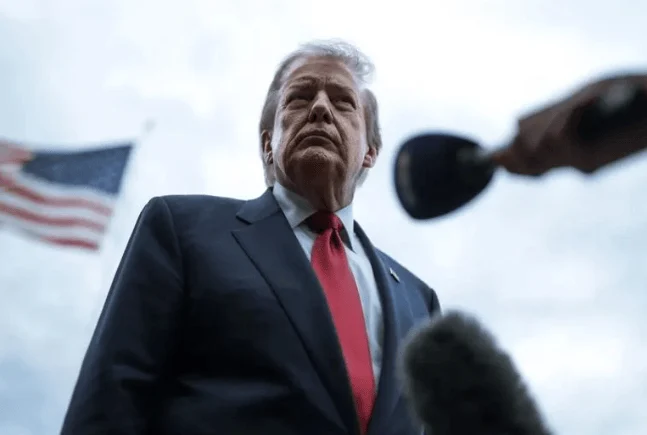
U.S. President Donald Trump has signaled a powerful economic penalty to curb the outflow of artificial intelligence infrastructure overseas. Speaking to reporters at the White House on November 21, 2026, President Trump warned that U.S. companies building AI data centers abroad would face a "tremendous tax." The statement underscores the friction between the president's conviction that massive infrastructure expansion is vital to winning the AI race and deep-seated public skepticism fueled by surging electricity and water consumption in host communities.
Image source: https://americanpress.com/2026/11/21/trump-seeks-to-penalize-us-companies-that-build-ai-data-centers-abroad
The remarks came shortly after the president's return to Washington following a trip to Asia. While boasting that the United States remains ahead of China in developing what he termed "super intelligence," Trump warned that the nation could fall behind if a growing political backlash halts data center development. Contrasting his push to keep AI infrastructure on U.S. soil with the foreign manufacturing of advanced computer chips—which he characterized as "very destructive to our country"—the president reiterated his insistence on domestic buildouts.
The Push for Domestic AI Infrastructure and the Threat of Overseas Penalties
During the briefing, Trump made it clear that his administration would not stand idly by as American firms establish server hubs in other countries. "We’re not going to allow companies to build data centers in other countries," Trump said. "If they do that, they can. But we’re going to put a tremendous tax on them." The warning echoes his broader economic platform of preventing the hollowing out of domestic industrial capacities, similar to past offshoring trends in semiconductor manufacturing.
However, the enforcement mechanism and specific regulatory path for this proposal remain undefined. Trump noted that he had not yet briefed his staff on the specific proposal to target overseas data center development, and immediate details on execution were lacking. Nonetheless, the warning signals a firm policy trajectory aimed at retaining strict control over critical AI supply chains.
Local Pushback and Public Opinion Divides
In stark contrast to the administration's aggressive promotion of AI development, everyday American voters and host communities remain deeply skeptical. Data centers—massive computational facilities packed with tens of thousands of servers and heavy cooling systems required to train and run machine learning models—consume colossal amounts of electricity and water, stoking intense environmental and utility cost concerns among residents.
According to The AP Voter Poll, about three-quarters (75%) of U.S. voters in this year's election opposed the construction of new data centers in their local communities. Furthermore, a summer survey conducted by The Associated Press-NORC Center for Public Affairs Research and the Energy Policy Institute at the University of Chicago found that roughly 60% of Americans supported capping new data center developments. Across both major political parties, majorities reported being "extremely" or "very" concerned about the impact of data centers on local electricity prices and water supplies.
This public anxiety contributed directly to political fallout, surfacing prominently weeks before voters headed to the polls in the midterm elections. With Democrats securing majorities in both chambers of Congress, technology giants and data center developers face a significantly tougher regulatory landscape ahead, even as industry champion Donald Trump attempts to buffer federal crackdowns.
Big Tech's Response Strategy and Economic Uncertainties
Facing mounting public resistance and community mistrust, tech behemoths such as Google and Meta are attempting to course-correct. Executives from both companies told The Associated Press that they are striving to be more transparent with local communities, rely less on taxpayer handouts, and offer tangible financial investments to secure local backing. Companies are also making environmental reduction pledges and assuring communities that data centers will bolster local property values, while maintaining that AI remains an essential engine for the American economy.
Trump suggested that these local concerns could be addressed through direct community negotiations between tech companies and municipal leaders. Tax breaks, utility bill reductions, educational funding for schools, and direct payments to local residents could all serve as bargaining chips. "Make the deal," Trump advised. "They have plenty of money. Take it."
At the same time, economists note that while the data center buildout provides a powerful growth engine—with UBS economists estimating that major tech firms will spend up to $1.8 trillion next year primarily on AI data centers—it carries mixed economic returns. Although the boom has driven up wages for skilled contractors like electricians, much of the underlying hardware, including advanced semiconductors and copper materials, is imported, offsetting a portion of the net domestic economic gain.
Sources
- Associated Press (AP): Trump seeks to penalize US companies that build AI data centers abroad