2D Sprite AI Pipeline 'Sprite-gen 2.21.0' Released: Zcre MCP Integration and Grok Support
Open-source 2D animation atlas generator 'Sprite-gen' hits 2.4k GitHub stars with its 2.21.0 update, introducing Zcre MCP integration and Grok-powered generatio
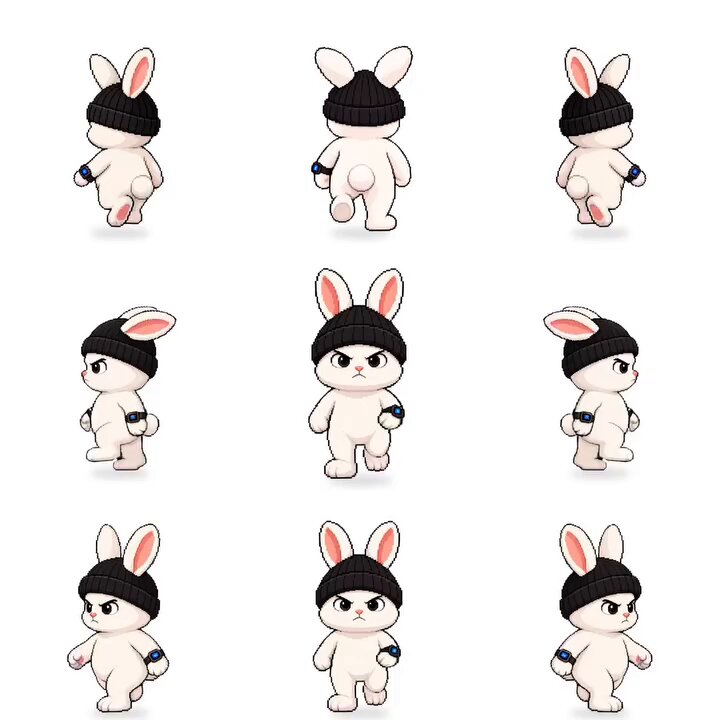
In 2D indie game development, producing multi-state character animation sprites with consistent visual identity and packing them for game engines is often a labor-intensive hurdle, even for seasoned pixel artists. Korean developer aldegad (@AldegadWildKim) has released the 2.21.0 update for 'Sprite-gen', an Apache-2.0 open-source toolchain that recently passed 2.4k stars on GitHub. The new release introduces native Model Context Protocol (MCP) connectivity for the Zcre platform (zcre.co.kr), allowing developers to drive sprite and atlas generation through AI agent workflows using Zcre infrastructure and sponsor credits alongside Grok-powered video generation.
Image source: @AldegadWildKim via X
Sprite-gen automates the path from a single character illustration or descriptive text prompt to game-ready runtime assets. It generates core character actions—such as walking, running, idling, and attacking—strips backgrounds to clean transparent alpha, and packages the extracted frames into organized sprite sheets and atlas formats, significantly lowering the asset creation barrier for solo developers and indie studios.
Identity-Locked Animation Pipeline from a Single Base Image
When adopting generative AI for game animation, one of the most common failure modes is identity drift: character facial details, proportions, and outfit features shift unpredictably between different movement states. Sprite-gen addresses this challenge by establishing an anchor-and-derive workflow rooted in a single reference image.
- Directional Idle Anchoring: Starting from one input character image or text prompt, the tool first establishes directional idle poses. All subsequent animations are derived from these anchored idle frames, locking the character's core visual traits and silhouette across varying motions.
- Grok-Driven Motion Video Generation: Using the directional idle frames as references, the pipeline drives video generation models—such as xAI Imagine / Grok—to produce continuous motion clips for walking, running, idle, and combat sequences.
- Alpha Extraction and Seam Inspection: The pipeline strips chroma backgrounds to produce clean alpha channels and removes edge artifacts. It also analyzes loop intervals, comparing the first and last frames to verify seamless transition cycles.
- Engine-Ready Atlas Packaging: Extracted frames are packaged into transparent horizontal PNG strips, grid sprite sheets, animated WebP files, and GIFs. The export includes a machine-readable
manifest.jsoncontaining precise frame layouts and bounding data, enabling direct imports into game engines like Unity and Godot.
2.21.0 Highlights: Zcre MCP Integration and Agent-Driven Workflows
The headline addition in Sprite-gen 2.21.0 is direct support for MCP integration with Zcre (zcre.co.kr).
While earlier iterations operated primarily as a standalone Python virtual environment CLI and an agent skill, the 2.21.0 update connects directly to the Zcre platform via MCP. In development environments powered by MCP-compatible AI coding assistants like Claude Code and Codex, agents can call sprite generation commands natively, leveraging Zcre platform capabilities and sponsored credits directly within the conversation session.
Furthermore, the developer announced that in addition to the existing Python CLI and AI agent skill environments, a standalone web service is actively in development to allow creators to configure and generate sprite atlases directly in the browser.
Runtime Prerequisites, Credentials, and Production Considerations
Because Sprite-gen is distributed as an open-source codebase, developers host and run the pipeline locally. Integrating the tool into an existing production workflow requires noting several technical prerequisites and operational constraints:
- Environment and Installation: The tool is installed within a Python virtual environment following the instructions in the repository README. Available CLI commands and configuration options can be inspected via
sprite-gen --help. - Model Credentials: Generating action videos requires the user's personal Grok account login or an xAI API key (
XAI_API_KEY). The open-source repository does not bundle any third-party API credentials. - External Dependencies: Local processing relies on system installations of
ffmpegfor video frame handling and libwebp utilities (img2webp) for lossless transparent animated WebP generation. - Pixel-Perfect Limitations: Because frames are extracted from diffusion-based video generation and automated alpha segmentation, the output may not guarantee the strict, mathematical pixel-perfect alignment of hand-drawn retro pixel art. Commercial game production pipelines will still benefit from minor manual artist retouching on complex silhouettes.