Ponytail, a Code-Diet Tool for AI Agents: From a 335-Line Date Picker to 10 Lines
A look at Ponytail, a repository that injects reuse-first, native-browser-first discipline into AI coding agents. It claims benchmark gains, but those figures a
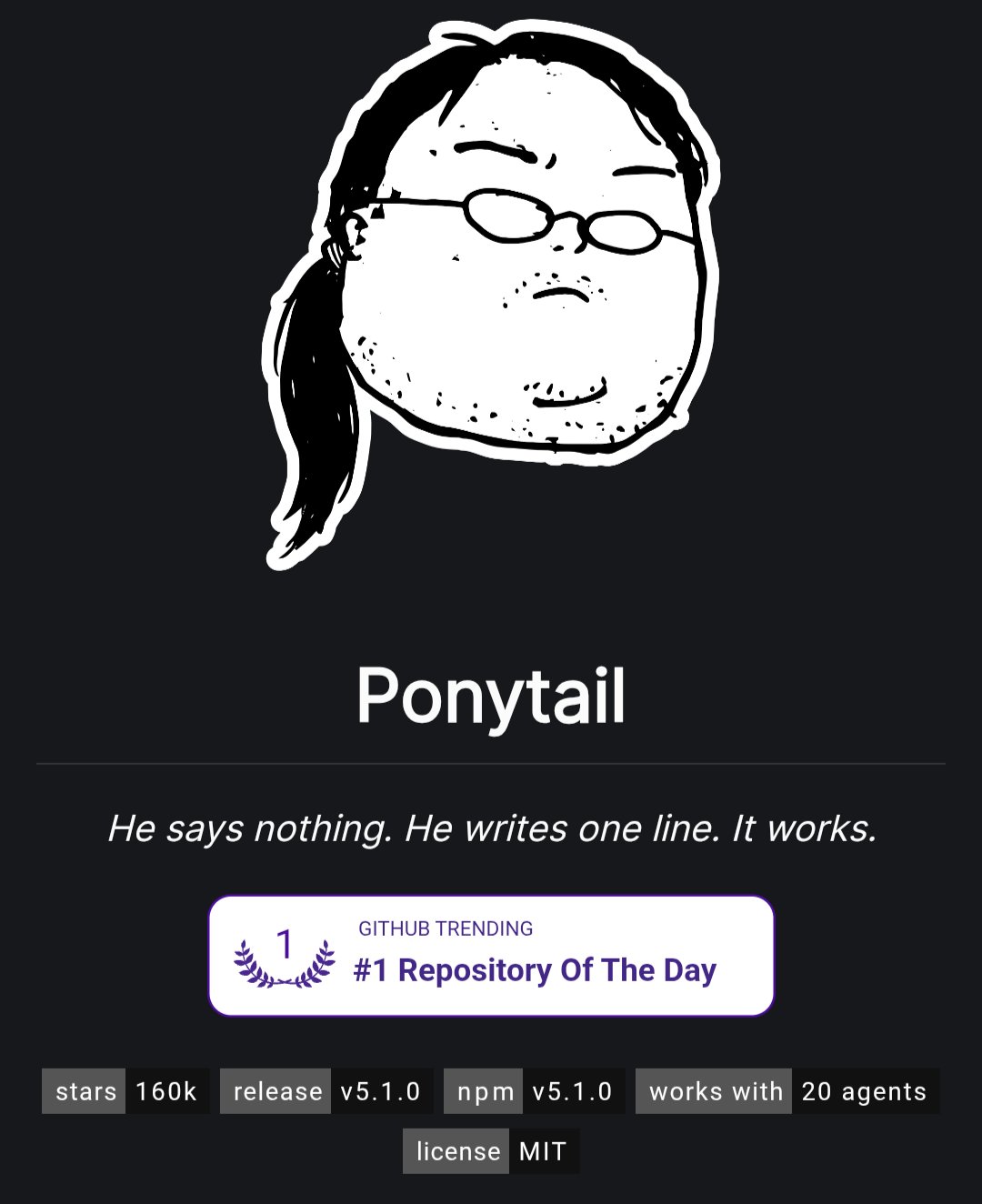
X user @DivyanshT91162 (divyansh tiwari) introduced a repository called Ponytail on October 10, 2026, aimed at the code-bloat problem of AI coding agents. The pitch is simple: bake a lazy senior developer's mindset into the agent so it reuses what already exists and prefers native features before writing hundreds of lines for a single date picker.
Image source: @DivyanshT91162 X post attached image
The repository's identity was disclosed by the author himself in a follow-up reply: https://github.com/DietrichGebert/ponytail. The original post carried no direct repository link; the URL appeared in the immediately following reply. This bundle did not directly capture the GitHub repository's README or install documentation, so installation and usage must be confirmed on the original repository page.
The five principles Ponytail claims to inject
The principles listed in the original post read less like style rules and more like a work order: look at what already exists before building anything new.
- Reuse existing components: reuse components already present in the codebase instead of rebuilding them.
- Prefer native browser features: check whether a native browser feature solves the problem before adding an unnecessary dependency.
- Write tests for risky logic: ship tests alongside high-risk logic.
- Review bugs beyond the lines changed: look past the edited lines for surrounding bugs.
- Audit the entire codebase and rank by priority: audit the full codebase and prioritize issues.
Replies to the post echo the same diagnosis. One reply noted that bloat happens because the agent never checks what is already installed; another joked that the native date input was sitting there the whole time while a 335-line picker was being built. Ponytail's problem statement clearly resonates with the agent-coding community.
The claimed benchmark figures and how to read them
The author claims the following benchmark effects in the post: 53% less code, 45% fewer output tokens, 26% lower cost, and 41% less time. On test coverage for risky logic, the claim is that 98% shipped with a test under Ponytail versus 68% in the comparison group.
All of these figures are self-reported numbers claimed by the X post's author and have not been independently reproduced or verified. One reply made the fair point that benchmark tasks, an independent correctness review, and edge-case and accessibility regression reports should accompany cost and speed figures. Treat the numbers as the author's claims, not established facts, and measure against your own codebase before adopting the tool.
Who should pay attention
Teams that repeatedly ask AI coding agents to build UI components or utilities, projects where agent output-token costs have visibly climbed, and developers who keep watching agents rebuild what already exists will find this repository worth a look. Since the README was not captured in this bundle, this article does not assert supported clients, license, or install commands. Check the original repository page first.
Sources
- Original post (@DivyanshT91162, 2026-10-10): Your AI coding agent writes 335 lines for a date picker
- Repository disclosure reply: Repo: github.com/DietrichGebert/ponytail
- Ponytail repository: https://github.com/DietrichGebert/ponytail