Perplexity Unveils '8848', an Everest Survival Game Built via Multi-Agent Collaboration
Perplexity CEO Aravind Srinivas has introduced '8848', a browser-based Everest survival game built entirely through a multi-agent mode utilizing Fable 5.2 as an
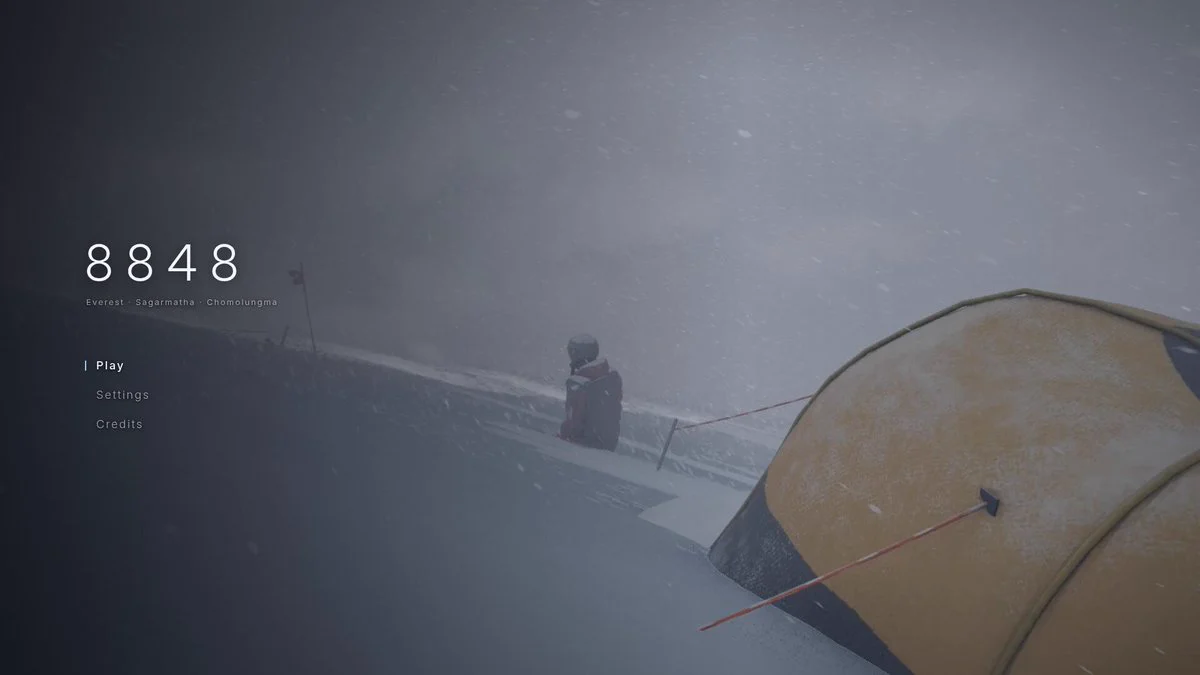
On November 29, 2026, Perplexity CEO Aravind Srinivas announced the release of "8848," a browser-based survival game set on Mount Everest, built entirely through a multi-agent collaboration mode powered by advanced AI models.
Image source: https://x.com/AravSrinivas/status/2126731322123227495
The newly unveiled project highlights a major shift beyond traditional single-model interactions. By employing a multi-agent architecture where a primary orchestrator model coordinates specialized subagents, Perplexity demonstrated how fully functional software can be collaboratively generated and executed in real time. Users can directly play the survival game straight from their web browsers without any additional installations.
Fable 5.2 and Gemini Neon: How Multi-Agent Coordination Built the Game
The core innovation behind the "8848" project lies in its division of labor among distinct artificial intelligence models. During the development run, the system utilized Fable 5.2 as the overarching orchestrator model, which was tasked with planning the game architecture and delegating tasks.
Acting as the project manager, Fable 5.2 structured the development workflow and assigned specific coding and asset-generation subtasks to Gemini Neon subagents. Operating in a multi-agent effort mode, these parallel subagents worked simultaneously, writing code, reviewing progress, and communicating with the orchestrator much like a synchronized human development team. This workflow offers a glimpse into autonomous software engineering, where human high-level intent is translated into code through orchestrated AI collaboration.
Playing '8848' Directly in the Browser
Named after the precise peak elevation of Mount Everest in meters, "8848" challenges players to survive in an unforgiving snowy alpine environment. The game is hosted directly on the web, allowing anyone to access and play it instantly via standard web browsers.
Featuring minimalist user interfaces and survival mechanics, the game provides an interactive experience that demonstrates how generative AI can produce functional, playable web applications. Observers on social media noted various entertaining gameplay details—such as unexpected obstacles moving through the snowy terrain—proving that multi-agent pipelines can successfully build coherent interactive entertainment products.
The $1,160 Cost and the Economics of Multi-Agent Software Development
While building a complete browser game through multi-agent collaboration is an impressive technical feat, it also brought to light significant economic realities. According to Perplexity CEO Aravind Srinivas, the total cost incurred during the multi-agent run to build "8848" amounted to approximately $1,160.
Developers and AI researchers pointed out that this high expenditure stems from the intensive token consumption inherent in multi-agent architectures. Because multiple parallel workers continuously read and re-read the same game files while communicating back and forth with the orchestrator, token burn rates accumulate rapidly.
Nevertheless, paying $1,160 to autonomously generate a fully functional browser-based prototype highlights a compelling economic trade-off for rapid prototyping. As token efficiency improves and agent communication protocols become more streamlined, leveraging multi-agent AI engineering teams to build software from scratch is poised to become an increasingly viable pathway for developers and creators alike.
Sources
- Perplexity Everest Game: 8848 Web Application
- Aravind Srinivas Official X (Twitter): Multi-Agent Game Announcement Post