Fund Manager Spending $50K Daily on Claude Records 65% Loss, Sparking AI Investment Debate
Reports that Leopold’s fund, which spends $50,000 daily on AI tools like Claude, dropped 65% last quarter have triggered fierce debate over the practical invest
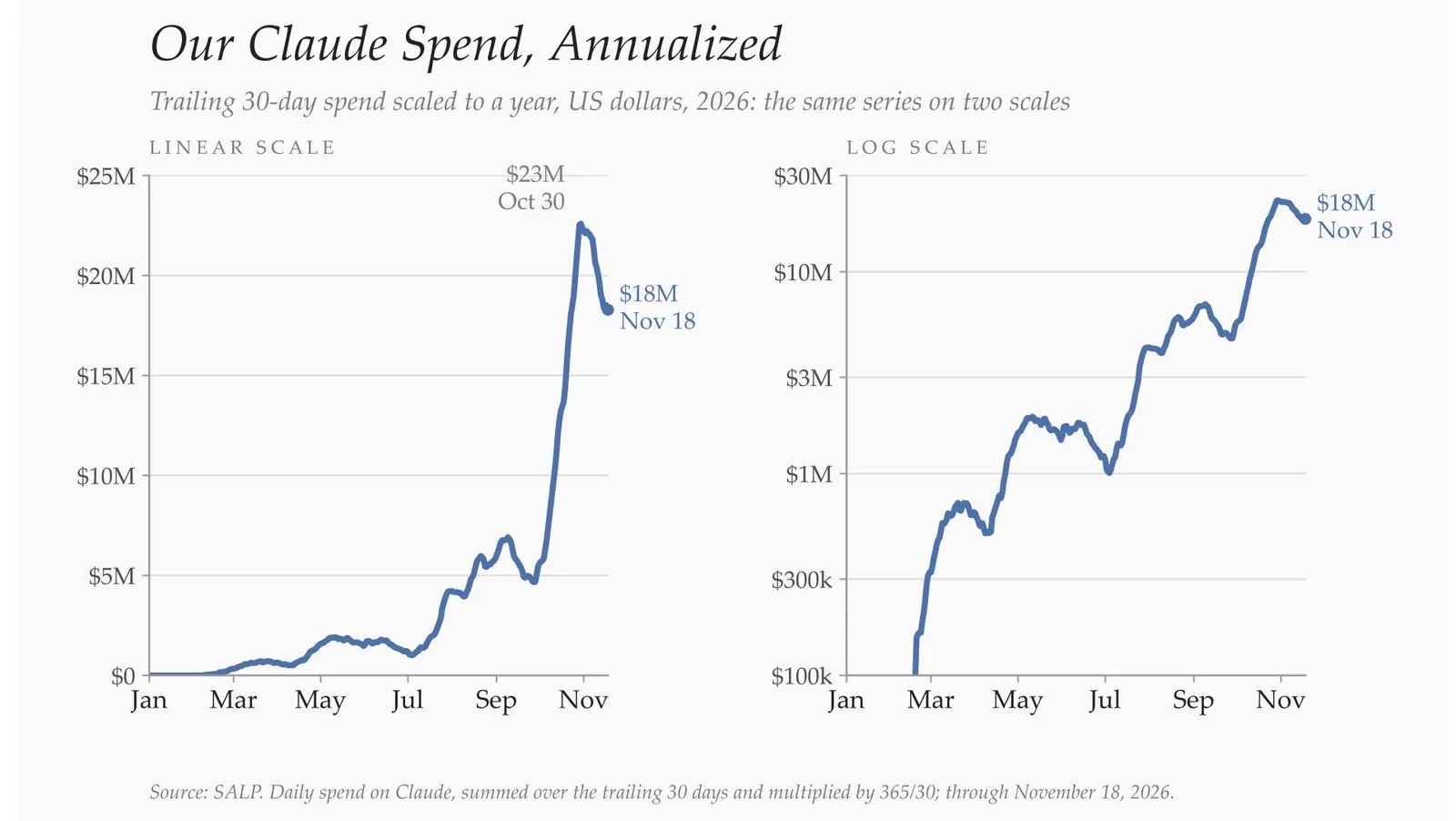
As public and industry interest in how artificial intelligence shapes financial markets and investment strategies continues to peak, the poor performance of a fund manager reportedly spending $50,000 per day on Anthropic’s Claude language model has ignited a heated debate across social media. With astronomical sums poured into AI infrastructure and tools only to yield severe fund losses, skepticism surrounding technological omnipotence and calls for reevaluating AI's practical utility are mounting.
Image source: https://x.com/Geiger_Capital/status/2126713689470566607
This incident has emerged as a stark illustration of both the promise and the perils of adopting AI within the investment sector. While the prevailing expectation holds that advanced language models and automated tools will fundamentally transform knowledge work and data analytics, critics argue that without rigorous human judgment and robust risk management, heavy expenditures on AI can lead straight to massive financial failure.
A $50,000 Daily Claude Budget and a 65% Quarterly Drop
Market observers at Geiger Capital brought the situation to light by sharing details regarding the financial performance and AI expenditure of a fund operated by an individual named Leopold on social media platform X. According to the disclosures, the fund allocated an average of $50,000 per day toward automated workflows and analytical tasks driven by the Claude model.
Despite this high-cost AI strategy, the fund recorded a staggering 65% loss during the previous quarter. Operating top-tier AI models around the clock to analyze the market and formulate strategies failed to prevent performance that severely lagged behind market benchmarks. News of these results quickly prompted financial experts and investors to question whether expensive AI tools actively contribute to generating net investment returns.
Tool Capability Versus Human Judgment: Fueling the AI Skepticism Debate
Beyond the struggles of a single fund, the episode acts as a catalyst for broader bearish sentiment surrounding artificial intelligence. Many commentators point out that, regardless of the inherent potential of AI technology itself, deploying advanced models without a sound decision-making framework can easily backfire.
While market participants acknowledge that AI models can rapidly process massive volumes of text and data or generate structured reports, managing ultimate risks amid volatile macroeconomic indicators and unexpected market shifts remains strictly the responsibility of human managers. Critics suggest that adopting AI without a disciplined investment philosophy or proper risk controls may simply enable flawed decisions to be executed faster, backed by elaborate walls of text and surface-level rationales.
Conversely, some observers urge caution against dismissing the overall validity of AI technology merely by linking tool expenses directly with fund losses. They argue that possessing analytical software does not automatically neutralize market uncertainty, and that individual operational missteps should not be conflated with the limitations of the technology itself.
The Limits of Unverified Claims and Market Perspectives
It is important to note that the figures and claims circulating in this narrative have not been independently verified through official fund audit reports or audited financial statements. Because the information originated from social media posts and market commentary, observers should maintain a degree of skepticism regarding the exact expenditure figures and loss percentages.
Nevertheless, the controversy offers a vital lesson for corporations and financial institutions rushing to adopt artificial intelligence. Simply procuring high-performance AI tools and allocating massive budgets does not guarantee a competitive edge; rather, organizations must cultivate internal capabilities to critically evaluate and execute technological outputs. As this case demonstrates, before trusting AI-generated insights, disciplined human judgment remains the ultimate determinant of success or failure.
Sources
- X (formerly Twitter): Geiger Capital Post