NVIDIA SkillSpector: Open-Source Vulnerability Scanner for AI Agent Skills and MCP
An open-source security scanner that inspects AI agent skills for Claude Code, Codex, and MCP across 71 vulnerability patterns—including prompt injection and da
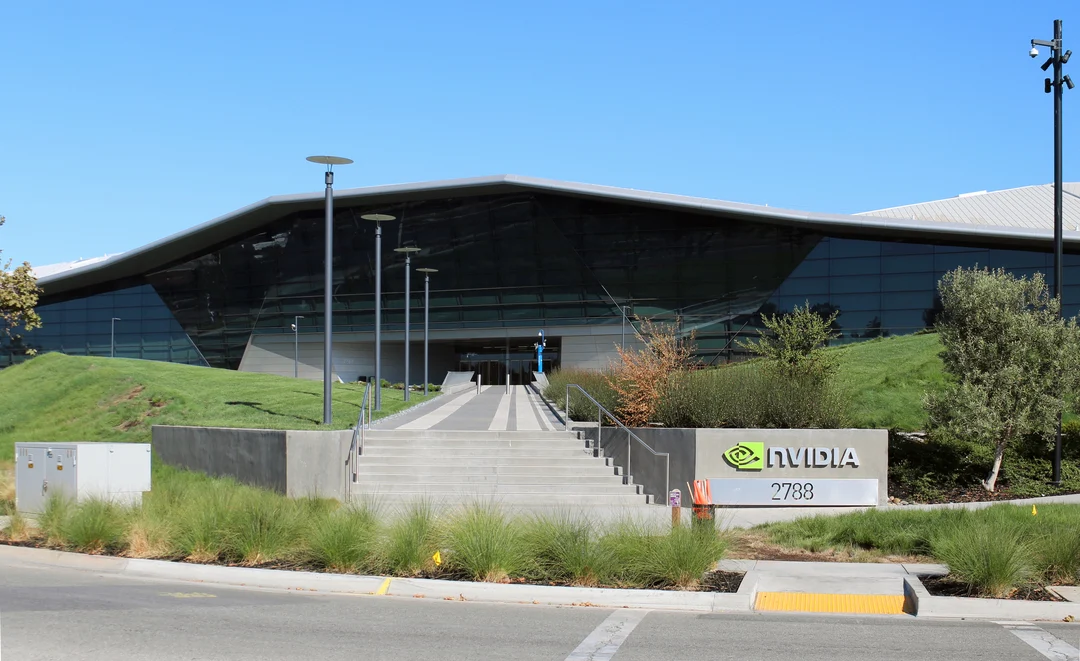
NVIDIA has developed and open-sourced SkillSpector, an automated security scanner engineered to inspect external skills and tools designed for Large Language Model (LLM) coding agents—such as Claude Code, Codex CLI, and Gemini CLI—as well as Model Context Protocol (MCP) servers before installation.
Image source: Coolcaesar 쨌 CC BY-SA 4.0 쨌 https://creativecommons.org/licenses/by-sa/4.0 쨌 https://commons.wikimedia.org/wiki/File:NVIDIA_Headquarters.jpg

As autonomous AI agents increasingly handle day-to-day software engineering tasks by executing shell commands, reading directories, and modifying codebases, the community-shared "skills" and tool definitions they consume operate with broad ambient authority. According to analysis conducted on a 31,132-skill research subset cited in the project's documentation, 26.1% of evaluated skills contained security vulnerabilities, and 5.2% demonstrated likely malicious intent. SkillSpector serves as a deterministic checkpoint to evaluate whether an untrusted skill definition is safe to bring into a local development workspace.
71 Vulnerability Patterns Across 17 Categories and Two-Stage Pipeline
SkillSpector organizes its detection engine around 17 security categories covering 71 distinct vulnerability and attack patterns commonly observed in agentic workflows:
- Prompt Injection and System Prompt Leakage: Catches payloads engineered to override model instruction boundaries, bypass ethical guardrails, or exfiltrate private initial system prompts through hidden instructions.
- Data Exfiltration and Privilege Escalation: Identifies suspicious network transfers targeting remote endpoints, unauthorized reads of environment variables or SSH credentials, and attempts to acquire elevated shell permissions.
- MCP Least Privilege Violations and Tool Poisoning: Under the Model Context Protocol (MCP)—an emerging open standard enabling models to interact with local services—the scanner checks for tools that request excessive system access or manipulate parameter schemas to compromise adjacent tools.
- Memory Poisoning and AST Structural Hazards: Combines Abstract Syntax Tree (AST) parsing—which parses code into a hierarchical structural representation to locate dangerous command execution sinks—with YARA signature matching to detect suspicious binaries and script snippets.
The scanner runs a two-stage evaluation pipeline. A rapid static analysis pass executes locally by default. For deeper contextual validation, users can optionally activate a second-stage LLM semantic evaluation pass. Additionally, the scanner performs live CVE queries against the OSV.dev open vulnerability database, falling back automatically to cached rules when offline.
Installation and Execution Pathways
SkillSpector requires Python 3.12 or newer. It can be installed as a global CLI tool using uv or pip, or run in an isolated environment via Docker.
When using uv, the CLI tool can be installed directly from the GitHub repository. To include MCP registry scanning capabilities, the optional [mcp] extra can be specified:
# Core CLI installation
uv tool install git+https://github.com/NVIDIA/skillspector.git

# Installation with MCP registry support
uv tool install 'skillspector[mcp] @ git+https://github.com/NVIDIA/skillspector.git'
To build from source inside a dedicated virtual environment:
git clone https://github.com/NVIDIA/skillspector.git
cd skillspector
uv venv .venv && source .venv/bin/activate
make install
For teams that prefer not to manage a local Python 3.12 runtime, SkillSpector provides a ready-to-build Docker configuration based on python:3.12-slim-bookworm:
# Build the local Docker image
make docker-build

# Mount current directory and execute static scan without LLM calls
docker run --rm -v "$PWD:/scan" skillspector scan ./my-skill/ --no-llm
Input Ingestion and Output Formats
SkillSpector supports multiple input types, enabling developers and automated build pipelines to scan artifacts at different stages of authoring:
- Flexible Targets: The CLI accepts single
SKILL.mdspecification files, local skill project directories,.ziparchives, and remote Git repository URLs. - Structured Reports: Alongside styled terminal output, the tool exports machine-readable JSON, human-readable Markdown, and SARIF (Static Analysis Results Interchange Format) files for integration into GitHub Actions and IDE security dashboards.
# Scan a local directory and export a JSON report
skillspector scan ./my-skill/ --format json --output report.json

# Scan a single SKILL.md and generate a SARIF report for CI/CD
skillspector scan ./SKILL.md --format sarif --output report.sarif
Operational Safeguards and Practical Considerations
When integrating SkillSpector into automated security gating or local developer setups, several built-in resource boundaries should be noted:
First, to defend against oversized downloads and zip bomb decompression attacks, the scanner enforces fail-closed resource limits during initial ingestion. Remote stream downloads, total uncompressed zip file sizes, and cloned Git repository sizes are capped at 100 MiB (INGEST_MAX_BYTES). In addition, individual zip archives cannot contain more than 10,000 member entries (INGEST_MAX_ZIP_MEMBERS). Exceeding either limit raises an IngestLimitExceededError and halts execution immediately. Downstream analyzers also observe a 1 MB per-file reading ceiling (MAX_FILE_BYTES).
Second, running the optional LLM-assisted semantic analysis phase requires supplying API credentials (such as an Anthropic API key) through environment variables or a local .env configuration file. When integrating into air-gapped systems or minimizing external network dependencies, passing the --no-llm flag restricts the scanner purely to AST, YARA, and static rule heuristics without incurring API costs.
By establishing an automated inspection layer before new agent tools are loaded into active developer runtimes, SkillSpector addresses a critical security gap in the rapidly expanding ecosystem of AI developer skills.
Sources
- GitHub Repository: NVIDIA/SkillSpector
- NVIDIA Documentation: Scanning Agent Skills