Split Editorial Poster Prompt Tips for Nano Banana 2.1: Real Photo to Illustration
Learn creator @ChillaiKalan__'s prompt for Nano Banana 2.1 that creates a two-part editorial poster pairing a photoreal portrait with a matching hand-painted il
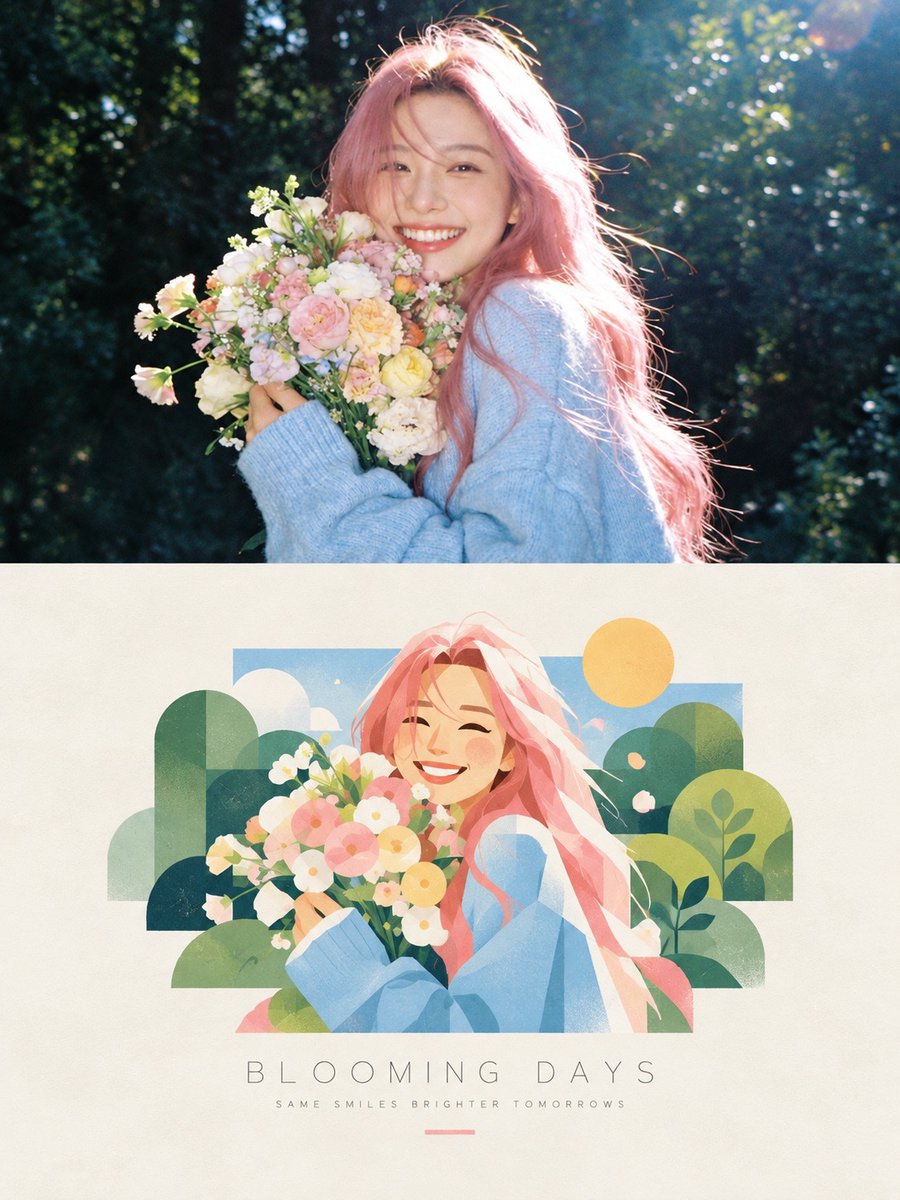
Preserving subject consistency across contrasting artistic mediums within a single image generation remains one of the most demanding challenges for generative AI creators. On October 17, 2026, AI visual artist K (@ChillaiKalan__) shared a production-grade prompt template designed for the Nano Banana 2.1 model that generates a two-part split editorial poster: a photorealistic portrait bathed in natural sunlight on top, seamlessly paired with a hand-painted digital illustration preserving the exact same subject, pose, and attire below.
Image source: @ChillaiKalan__ (X)
The template formats the generation into a balanced 3:4 vertical composition reminiscent of an independent magazine cover. Instead of requiring post-processing or manual inpainting across two disparate runs, the prompt instructs Nano Banana 2.1 to construct both visual representations simultaneously while enforcing strict identity continuity, delicate paper textures, and minimalist typographic accents in a single generation step.
The Full Two-Part Real-to-Illustration Prompt Template
Here is the verbatim prompt provided by creator @ChillaiKalan__. Users can substitute their own variables into [SUBJECT], [SETTING], [MAIN TITLE], and [TAGLINE] to produce tailored editorial posters.
Create a premium editorial poster featuring a two-part visual composition. The upper half shows a photorealistic photograph of [SUBJECT] in [SETTING], captured in warm natural sunlight with realistic skin texture, authentic expressions, soft highlights, and cinematic depth of field. The lower half transforms the exact same scene into a beautiful hand-painted digital illustration, preserving the subject’s pose, hairstyle, clothing, colors, and key visual details.

Place the illustrated scene inside a clean rectangular frame on a warm ivory, subtly textured paper background. Use a charming contemporary illustration style with delicate brush textures, simplified organic shapes, pastel colors, soft outlines, and a nostalgic summer-magazine aesthetic. Add tasteful decorative elements that complement the scene.

Below the illustration, include a centered minimalist editorial title reading “[MAIN TITLE]” in thin, widely spaced uppercase typography, followed by a smaller subtitle reading “[TAGLINE]” in elegant letter-spaced text. Add a short, thin pastel-colored line underneath.

Maintain balanced spacing, refined art direction, a cohesive color palette, and a sophisticated print-design finish. Vertical 3:4 composition, high resolution, natural lighting, polished editorial layout, aesthetically pleasing, realistic-to-illustration transformation.

Avoid clutter, excessive text, distorted anatomy, inconsistent facial features, harsh colors, heavy borders, and unnecessary graphic elements.
Practical tips for filling the template placeholders:
[SUBJECT]: Detail the character's facial features, styling, and mood (e.g.,a young woman in casual summer linen clothes sitting by the window).[SETTING]: Specify the spatial context and environmental lighting (e.g.,a sunlit coastal veranda overlooking the morning ocean).[MAIN TITLE]: The primary centered header rendered in clean, widely tracked capital letters (e.g.,SUMMER ARCHIVE).[TAGLINE]: A delicate secondary subheader beneath the title (e.g.,A RECORD OF SUNLIT MEMORIES).
Enforcing Visual Consistency Across Photographic and Illustrated Halves
The key technical breakthrough in this prompt lies in how it commands semantic inheritance between the two stylistic halves of the image:
- Strict Identity and Attribute Retention (
preserving the subject's...): By directing the model to carry over the subject's pose, hairstyle, clothing, colors, and key visual details directly into the lower half, the prompt eliminates the identity drift that often plagues multi-style generations. - Naturalistic Photographic Grounding: The top frame relies on natural descriptors—warm natural sunlight, genuine skin texture, unforced expressions, gentle highlights, and shallow depth of field—to prevent the hyper-smoothed artificial sheen common to unconstrained AI portraits.
- Contemporary Illustrated Art Direction: The lower half commands delicate brush textures, simplified organic shapes, pastel colors, and soft outlines to evoke the nostalgic warmth of a contemporary summer-magazine illustration aesthetic.
Editorial Framing, Typography Constraints, and Artifact Suppression
Beyond raw image generation, the prompt acts as a complete layout engine governing print balance, white space, and visual hierarchy:
- Textured Ivory Canvas Framing: Placing the illustration within a clean rectangular frame on warm ivory textured paper grounds the image with tactile materiality, transforming it from a raw render into a finished graphic design asset.
- Minimalist Typographic Layout: Centering the widely spaced uppercase title and paired tagline alongside a subtle pastel accent rule establishes an uncluttered, modern editorial focal point.
- Rigorous Negative Boundaries: The closing instructions explicitly forbid visual clutter, runaway text rendering, distorted anatomy, conflicting facial markers, harsh color palettes, and heavy borders—proactively preventing the typical failure modes of complex multi-element generations.
Original source
- K (@ChillaiKalan__) Official X Post: Nano Banana 2.1 Split Editorial Poster Prompt Template