Meta Unveils Frontier Agent Models 'Muse Wonder' and 'Muse Wonder Full'
Meta Superintelligence Labs has introduced Muse Wonder and Muse Wonder Full, next-generation frontier models built for personal and professional agentic workflo
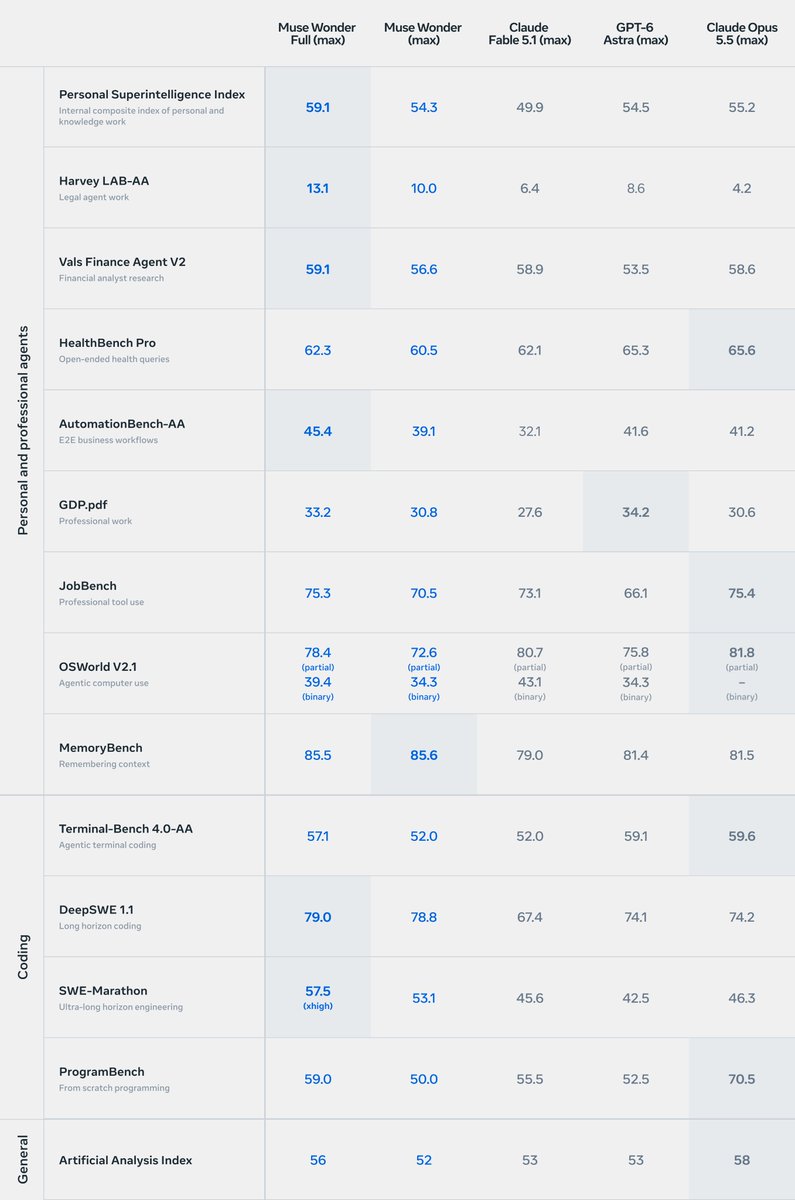
On October 12, 2026, Meta CEO Mark Zuckerberg (@finkd) officially unveiled Muse Wonder, a new family of frontier foundation models designed to deliver state-of-the-art performance for personal and professional agentic work.
Image source: Mark Zuckerberg (@finkd) / Meta
Arriving just over a year after the launch of Meta Superintelligence Labs, the Muse Wonder family represents a substantial scale and architectural expansion over its predecessor, Muse Spark. Zuckerberg framed the release as a major leap toward delivering personal superintelligence for everyone, with plans to expand access across broader user bases over time.
Two-Tier Lineup: Fast 'Muse Wonder' and Full-Scale 'Muse Wonder Full'
The release introduces two distinct variants engineered to address different operational constraints and workload complexities:
- Muse Wonder: Designed for fast frontier performance. It targets latency-sensitive tasks, everyday personal assistance, and rapid real-time agentic workflows where response speed is critical.
- Muse Wonder Full: The full-capability edition of the architecture. It is built for complex multi-step reasoning, high-autonomy decision-making, and demanding professional agent tasks.
Meta stated that both models bring the organization directly to the frontier, surpassing the initial Muse Spark generation. Technical specifications, model parameter sizes, and benchmark disclosures have been published on Meta's official research blog.
Availability and Ecosystem Rollout: Muse, Muse Code, and Meta Model API
Meta initiated deployment immediately for developers and paying subscribers across its primary agent tools:
- Muse Subscriptions: Available immediately for active Muse subscribers, powering personal assistant and agentic functions directly inside the platform.
- Developer Workflows (Muse Code): Integrated directly into Muse Code to support coding agents and software engineering workflows.
- Meta Model API: Accessible via Meta Model API endpoints for enterprise teams and external developers building custom agent applications.
- Broader Product Integration: Set to roll into other Meta products sequentially, with Zuckerberg reiterating a commitment to bring this tier of intelligence to all users over time.
Ecosystem Implications and Practical Considerations
The launch marks a significant shift as Meta aligns its frontier models directly with integrated agent runtime products rather than isolated model weights alone.
Teams evaluating early integration should keep several operational factors in mind:
- Subscription-Gated Early Access: Initial access is concentrated across paid Muse tiers, Muse Code, and developer API endpoints, with general free-tier availability rolling out gradually over time.
- Empirical Benchmark Verification: While Meta highlights state-of-the-art agent performance, practical evaluation across custom tool-calling, multi-turn task stability, and complex agent scaffolding remains essential.
- Phased Deployment: Product integrations across Meta's broader application suite will follow a progressive rollout timeline, requiring developers to monitor official release schedules for specific feature sets.
Sources
- Mark Zuckerberg Official X (@finkd): 2026-10-12 Muse Wonder Announcement Thread
- Meta Superintelligence Labs Research Blog: Introducing Muse Wonder