MCP for Blender: Open-Source AI Agent Tool for Controlling 3D Modeling, Materials, and Lighting via Natural Language
An overview of MCP for Blender, an open-source bridge connecting AI agents such as Claude Desktop, Claude Code, Codex, and Cursor to Blender through local add-o
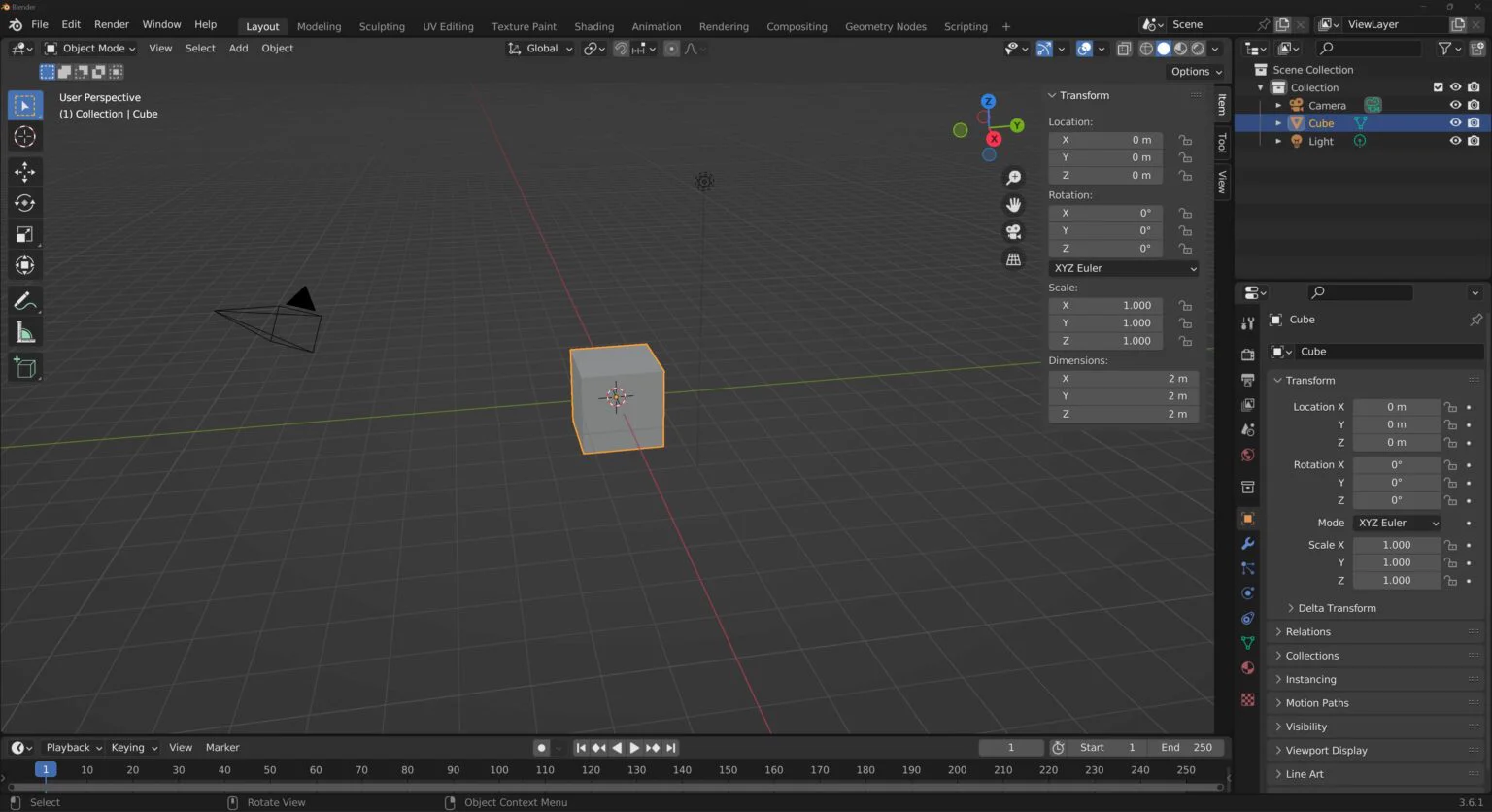
Image source: https://www.blenderbasecamp.com/unveiling-blender-3d-features-benefits-and-more/
The open-source project 'MCP for Blender', which bridges 3D creation suite Blender with large language models (LLMs) and autonomous coding agents, is gaining significant traction across developer and 3D artist communities. Since its repository creation in March 2025, the tool has accumulated over 30,600 GitHub stars and more than 2,700 forks as of October 2026.
Originally launched under the name 'blender-mcp' before undergoing an official rebranding, the project aims to transform traditional 3D workflows—often bogged down by navigating deep parameter menus—into an intuitive workflow driven by natural language prompts and automated Blender Python scripting.
Two-Tier Architecture and Natural Language 3D Workflows
The architectural foundation of MCP for Blender decouples local 3D execution from external AI client logic into two dedicated components:
- Local Blender Add-on: Runs inside an active Blender instance, opening a dedicated background socket port to listen for incoming automation calls.
- MCP Server: Implements Anthropic's Model Context Protocol (MCP) standard interface, exposing Blender capabilities as native tools that allow AI models to generate and execute Blender Python (
bpy) commands.
Thanks to this standardized design, the tool works seamlessly with major MCP-compatible environments, including Claude Desktop, Claude Code, Codex, Cursor, and VS Code, without requiring custom client modifications.
In practical workflows, users can issue high-level instructions such as "change the selected sphere's material to brushed metal and place a soft fill light from the side." The connected AI agent interprets the prompt, writes the corresponding Blender Python code, and executes it directly inside the scene. The model can also inspect its own work across Wireframe, X-Ray, and Rendered viewport shadings, verifying geometric alignment and refining parameters iteratively.
Additionally, native integration with Poly Haven enables users to pull from an asset library of more than 2,400 CC0-licensed HDRIs and PBR textures without requiring API keys or encountering rate limits.
Production Pipeline Limitations: Static Schemas and Scene State Feedback
Despite enthusiastic adoption, several architectural hurdles remain before the tool can reliably handle demanding studio production pipelines.
A primary technical bottleneck is the impedance mismatch between Blender's operator behavior and MCP tool schemas. Blender operators are inherently coupled to the viewport's current active selection set and editing mode. In contrast, existing MCP tool definitions rely on static parameter schemas. When a model attempts complex topology adjustments or modifier stack manipulations without real-time synchronization of current selection states, geometry hallucinations and command failures frequently occur.
To address this challenge, community contributors are actively building local scene-state reflection bridges. These bridges allow models to query the active hierarchy, selected nodes, and active modifiers before dispatching state-altering commands.
Security Considerations and Local Operation Guidelines
Engineers deploying the tool should heed important operational and security caveats:
First, MCP for Blender is an independent, third-party open-source integration project and is not developed, officially endorsed, or maintained by the Blender Foundation.
Second, the local communication port opened by the Blender add-on includes no built-in authentication mechanisms or transport encryption. Exposing this port to external public networks or unfiltered interfaces introduces substantial security risks, including unauthorized remote Python execution. Users should strictly confine the add-on's network listener to the local loopback interface on single-user workstations.
Sources
- Ryrenz X Project Signal (@Ryrenz): MCP for Blender Announcement and Project Milestones
- Ye Fan Technical Analysis (@YeFan05): Blender Operator State Synchronization and Scene Bridge Analysis