Keio iPS Cell Transplant Early Trial Report: 1 of 4 Spinal Cord Injury Patients Stood Independently
Per a claim relayed in a Next Science X post on October 11, 2026, an early Keio University trial transplanting iPS-derived neural precursor cells reportedly saw
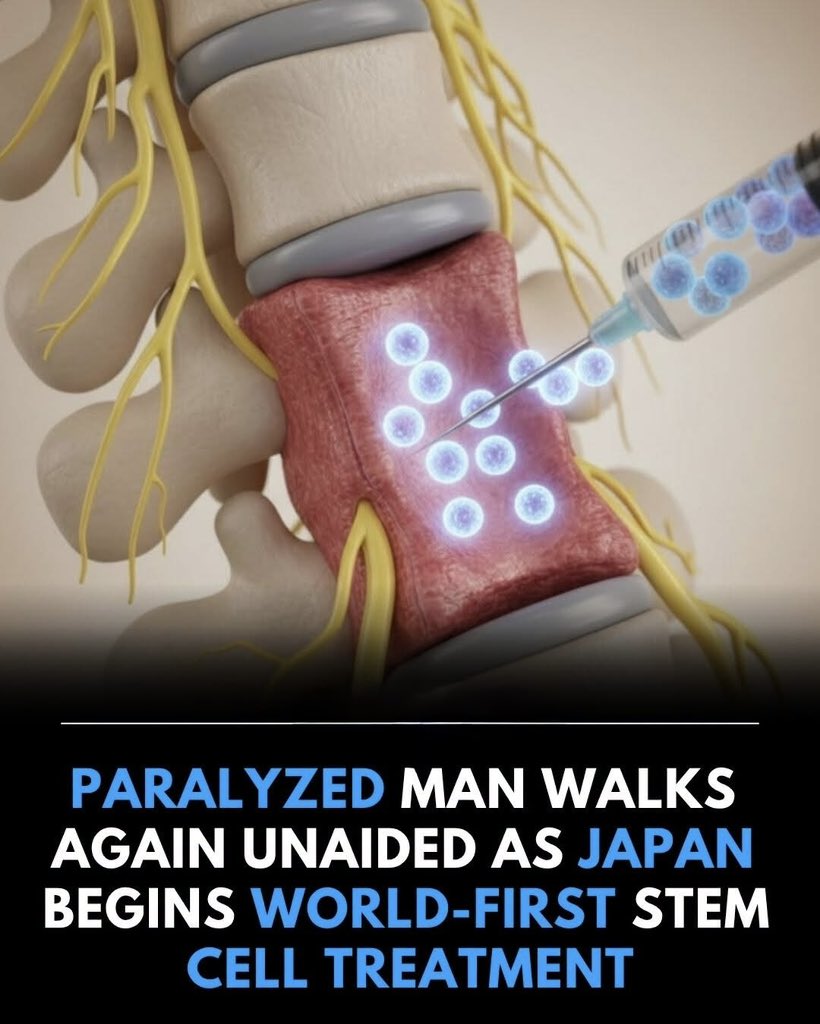
According to a claim relayed by the science channel Next Science (@NextScience) in an X post dated October 11, 2026, 1 of 4 spinal cord injury patients who received an experimental stem cell treatment attributed to a Keio University research team regained the ability to stand independently. The post presents the outcome as an early result offering new hope to people living with paralysis, while stating that the treatment remains experimental.
Image source: Next Science (@NextScience) X post media
This article stays strictly within what that X post conveyed. The collected source text cuts off mid-sentence ("one participant reportedly r…"), so detailed figures and follow-up periods cannot be confirmed, and no independent primary source such as a paper or university announcement was included in this memo. Everything below should be read as "what the post claims."
What was reported
- Source: an October 11, 2026 X post by the verified account Next Science (@NextScience).
- Subject: a small early-stage trial the post attributes to a Keio University team.
- Size: 4 participants.
- Outcome: the post reports that 1 of the 4 regained the ability to stand independently.
- Character: the post itself calls these "early results" and notes the treatment "remains experimental."
The post provides no supporting detail on the extent of recovery (whether the patient could walk, how long the effect lasted, or when it was assessed). The collected text breaks off at "one participant reportedly r…," so nothing beyond "stood up" can be asserted from this evidence.
The approach: transplanting iPS-derived neural precursor cells
The treatment concept described in the post is as follows.
- Start from induced pluripotent stem (iPS) cells, which the post describes as cells that can be transformed into specialized cells.
- Differentiate them into neural precursor cells and transplant them into damaged spinal cord tissue.
- The stated aim is to support nerve repair and restore signaling between the brain and the body.
The decisive details for judging a real trial — the cell line used, dose, timing of administration, and concurrent rehabilitation — are absent from the post.
Limits and what still needs confirmation
At this stage, the only firm fact is that "such a claim was made." The remaining verification tasks:
- No primary source: with no university press release or paper link in this collection, the lead researchers, trial registration number, and ethics-review status are unconfirmed.
- Sample and interpretation: recovery in 1 of 4 participants cannot separate a treatment effect from natural recovery or rehabilitation, at this scale. The post says nothing about a control group.
- Comment claims excluded: some replies mention "no tumors after up to 4 years of follow-up" or "beating normal recovery rates," but those are third-party commenters' assertions, not verified body facts, and are not included here.
- No safety data: tumor formation risk, immune response, and long-term follow-up — the central issues for any stem cell therapy — do not appear in the post body.
Readers following this story should watch for a Keio University announcement or a published paper, then compare enrollment criteria, endpoints, follow-up duration, and adverse-event reporting. Until then, the accurate framing is "a hopeful signal at the early-claim stage."
Sources
- Next Science (@NextScience): October 11, 2026 X post (original text and photo)