KakaoTalk Emoticon Strategy: Catching Conversation Context Over Drawing Skills
Key insights into KakaoTalk emoticon approvals: why chat readability, solving awkward reply moments, and iterative submissions matter far more than polished dra
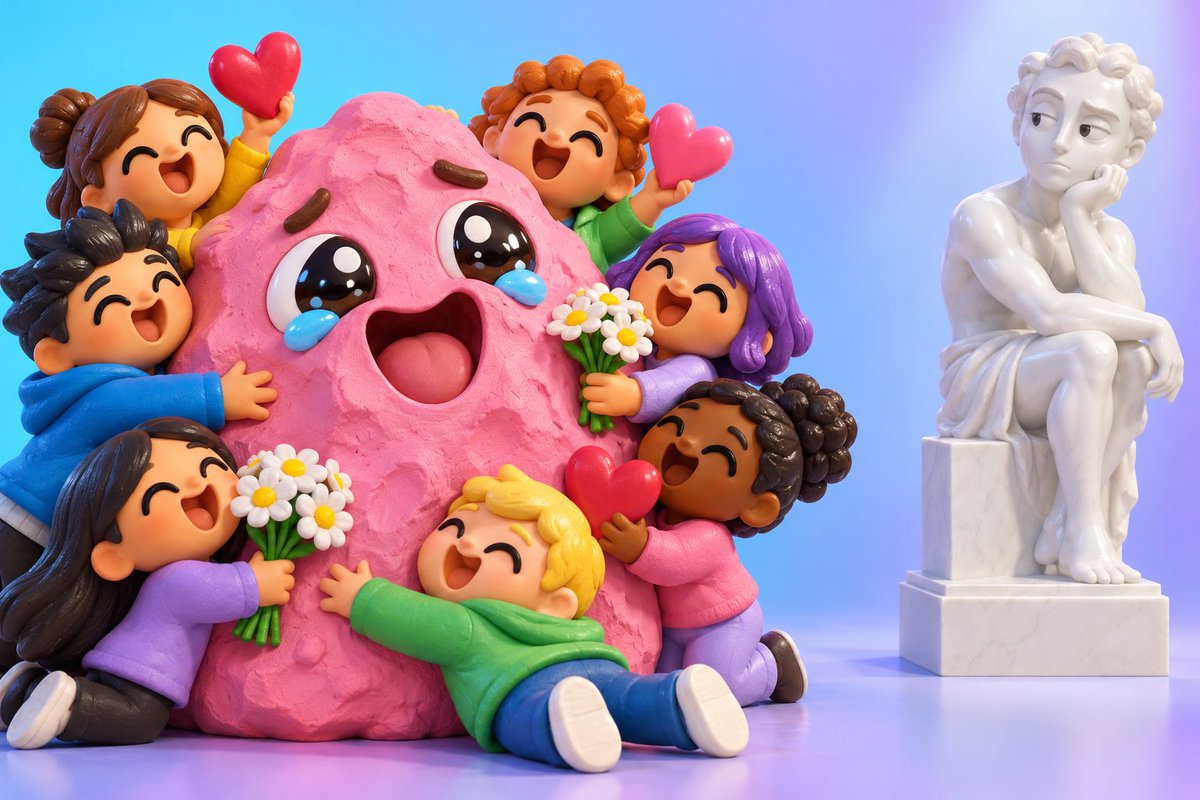
The original creator is Seoul Alley Log (@SeoulAlleyLog) on X. Drawing on 20 years of IT industry experience and official Kakao metrics, they shared practical insights into why capturing conversational context and immediate utility matters far more than refined drawing skills when creating commercially viable KakaoTalk emoticons. For digital creators often caught up in aesthetic polish, this breakdown serves as a grounded reminder that messenger stickers are not art pieces for passive appreciation, but functional communication tools built for daily dialogue.
Image source: @SeoulAlleyLog / X
When beginning creators enter the messenger emoticon ecosystem, they frequently obsess over drawing techniques, color palettes, and intricate visual styling. However, in an active messaging environment, the sets that actually drive sustained purchases and frequent in-chat sending are not necessarily the most beautifully illustrated, but those that frictionlessly solve awkward social interactions and express what words cannot easily convey.
A 1.2 Trillion Won Market and the Reality of a 2–3% Approval Rate
According to figures released by Kakao in May 2025 commemorating the 14th anniversary of Kakao Emoticons, South Korea's domestic Kakao emoticon market reached an estimated valuation of over 1.2 trillion KRW as of December 2024. Long-term commercial milestones reflect the immense scale of this digital goods economy:
- Sets exceeding 100 million KRW in cumulative revenue: 2,885 items
- Sets exceeding 1 billion KRW in cumulative revenue: 146 items
- Mega-hits surpassing 10 billion KRW in cumulative revenue: 17 items
- Total registered individual emoticons: Over 700,000 items
- Monthly subscription (Emoticon Plus) active users: Over 2.5 million subscribers
While the aggregate market volume is vast, the gateway for aspiring creators remains remarkably narrow. According to industry reports from 2021, the Kakao Emoticon Studio receives approximately 5,000 new set proposals every month, while the number of approved sets actually released averages only 3 to 5 per day.
A simple arithmetic calculation puts the monthly approval rate at roughly 2% to 3% (noted by the author as their own working estimate based on public disclosures rather than an official Kakao metric). In one notable case, an established creator who has secured 64 approved sets disclosed that they endured 135 rejections along the way. Even for proven creators with a track record of commercial success, facing rejections more than twice as often as approvals is the baseline operational reality.
What Actually Sells: Conversational Utility Over Aesthetic Art
Kakao does not publicly disclose its detailed internal review rubrics. However, industry veterans and submission evaluations consistently highlight three core criteria: mass appeal, differentiation, and product planning. Technical drawing finesse constitutes only a minor fraction of that broader equation.
Emoticons are not gallery paintings; they are conversational instruments designed to augment or substitute for typed text on mobile screens. In practice, the emoticon sets that capture user wallets and become everyday fixtures deliver three clear communicative utilities:
- Friction reduction during awkward conversational moments: When typing feels cumbersome or social situations demand tactful brevity, stickers providing immediate, intuitive reactions like "Got it," "Sorry," "Understood," or "Signing off" lower the emotional burden of communication.
- Immediate readability on small smartphone screens: Expressions and contextual intent must be recognizable in a split second within narrow chat bubbles. Excessively detailed line art and cluttered shading introduce visual noise rather than communicative clarity.
- Pinpoint capture of target demographic personas: Sets must embody the authentic speech patterns and relatable daily frustrations of specific groups—whether the weary banter of office workers, the relatable domestic stress of parents, or the anxieties of exam students.
An emoticon set that fails to streamline chat flow will sit unused, regardless of how expertly its assets are rendered. This explains the persistent phenomenon where deceptively simple, doodle-like sticker sets consistently dominate top sales rankings—they nail the exact moment users want to send them.
Avoiding All-in Bets: Learning Market Fit Through Iterative Submissions
Creators entering the Kakao emoticon space must face a sobering dynamic: the vast majority of submissions are rejected on their first attempt, and even approved sets risk fading into obscurity amidst the daily influx of new releases without dedicated promotion.
Citing the creator who achieved 64 approved sets while absorbing 135 rejections, the author strongly cautions against an "all-in" mentality that wagers everything on a single, labor-intensive proposal.
- Learning market fit through iterative submissions: Rather than obsessing over perfecting a single master set, pitching multiple distinct concepts and scenarios provides a continuous feedback loop from Kakao's review team and end consumers.
- Prioritizing use cases over technical complexity: Looking back across two decades in the IT sector, the product features that achieved massive adoption were rarely the most technically intricate; they were the ones that solved an exact moment of user need. Emoticon design requires that same user experience (UX) mindset over artistic bravura.
- Grounding ideation in actual group chats: Instead of browsing aesthetic illustration portfolios for inspiration, creators are advised to re-read their own daily group chats. Observing the exact moments where friends, colleagues, or family hesitate to type and wish for a ready-made sticker provides the clearest roadmap toward an approved, best-selling emoticon.
Original source
- Seoul Alley Log (@SeoulAlleyLog) on X: https://x.com/SeoulAlleyLog/status/2109824442050261145