Building an Autonomous Short-Form Video Agent with Jev and Astra 6
How to build an autonomous short-form agent using TypeSafe Jev for fast decision routing and Astra 6 for script generation, keeping context under 272k to minimi
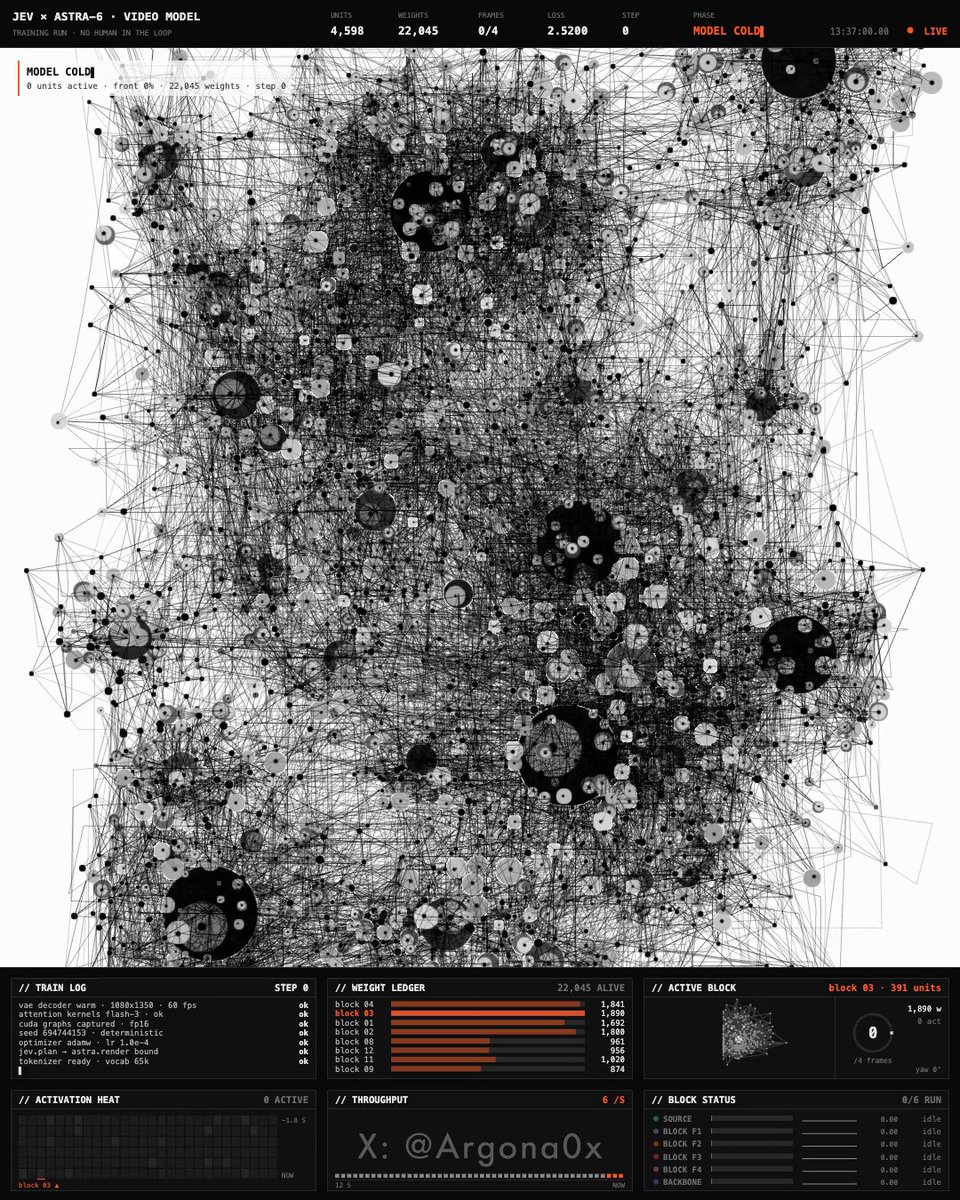
AI engineer and creator @Argona0x recently detailed an autonomous short-form video agent pipeline combining TypeSafe Jev and Astra 6 on a previously inactive TikTok account. According to the author, the agent booked $4,200 in brand clips within 11 days without the creator opening the app once. Rather than relying on a naive single-model wrapper, this production pipeline decouples fast micro-decisions, custom thumbnail-retention prediction, and heavy video scripting to minimize token overhead and prevent costly tool-call failures.
Image source: @Argona0x on X
In production short-form automation, builders frequently face two primary failure modes: runaway token bills caused by feeding raw video data into multi-modal foundation models, and pipeline deadlocks caused by brittle platform tool calls. The architecture shared by @Argona0x resolves both issues using a 30-minute recurring loop, deliberate context starvation below Astra's 272,000-token pricing inflection point, and a strictly isolated single-publisher execution boundary.
The Six-Stage Autonomous Pipeline: From Ingestion to Self-Sustaining Operations
The entire workflow executes automatically every 30 minutes across six synchronized stages:
- Niche Ingestion: The ingestion worker continuously scrapes metadata from 800 to 1,200 short-form video clips published across the designated niche over the preceding 6 hours.
- High-Speed Jev Labeling: All 1,200 incoming clips are routed through TypeSafe Jev to categorize hook types, evaluate pacing, and classify retention drivers. Because Jev returns typed classifications rather than generating open-ended prose, labeling the entire 1,200-clip batch costs approximately 8 cents ($0.08).
- Median-Relative Outlier Filtering: Instead of selecting clips based on raw aggregate view counts, the system filters for videos that outperform their specific channel's median metrics. This ensures the model learns from statistical breakout hits on small accounts rather than baseline volume coasting on large follower bases.
- Custom 4-Frame Retention Training: The opening 4 frames of every outperforming clip are fed overnight into a compact custom retention model (22,045 parameters across 6 blocks) to learn which visual entry points halt thumb scrolling. The model's loss currently sits at 1.3534 and continues to decrease.
- Astra 6 Script Generation: The top three retained concepts are passed to Astra 6, which generates complete production-ready deliverables: hook variations, detailed shot lists, cover directions, and optimized captions.
- Publishing and Self-Sustaining Billing: Rendered clips are automatically published, and incoming account revenue directly funds subsequent rendering server expenses. If the assigned rendering budget reaches $0, publishing halts immediately.
Asymmetric Model Roles: Decision Routing via Jev and the 272k Token Ceiling
The operational economics of the system depend on a strict division of labor between an ultra-low-latency decision engine and a high-capacity generative model:
- TypeSafe Jev as a Micro-Router: Jev does not write text. It evaluates candidate inputs against pre-declared schemas and returns typed classifications within 70 to 500 milliseconds. Priced at $0.042 per million input tokens with free decision outputs, Jev allows thousands of candidate clips to be categorized at negligible cost.
- Managing Astra 6's 272k Pricing Threshold: Astra 6 features a massive 1,050,000-token context window with an 88% first-turn execution success rate (scaling to 99.2% within four turns). However, Astra's per-token pricing doubles once context exceeds 272,000 tokens.
- Intentional Context Starvation: To prevent expensive pricing tiers, Jev operates upstream as a strict filter, condensing raw video metadata and passing only minimal, pre-ranked structural briefs downstream to Astra. This guarantees Astra's operational context remains well below the 272k threshold.
Production Resilience: The Single-Publisher Rule and 41% Retention Pruning
To handle the realities of social platform APIs and automated media generation, the pipeline incorporates two mission-critical runtime safeguards:
1. The Single-Publisher Boundary
External social media tool calls suffer from a 3% to 15% failure rate due to rate limits, session drops, and transient network glitches. If distributed worker agents are permitted to post independently, conflicting retries and duplicate uploads inevitably corrupt the account. To prevent this, exactly one isolated worker process is granted publishing authority. Every other sub-agent in the cluster is restricted to proposing content drafts.
2. The 41% Retention Cutoff and Structural Transfer
Performance is evaluated at the one-hour mark. If a published video fails to achieve at least a 41% retention rate after 60 minutes, the underlying concept is permanently deleted from the database and barred from future iterations. Furthermore, the system never duplicates verbal copy or text from viral videos; it extracts only structural mechanics—specifically the initial 1.2-second sequence, cutting tempo, and subject entry timing—which reliably transfer across diverse content categories.
Practical Caveats and Account Enforcement Risks
While this architecture demonstrates exceptional structural efficiency, developers evaluating similar setups should account for real-world production risks:
- Self-Reported Performance: The headline figure of $4,200 generated in 11 days is an author-reported metric from @Argona0x; verified client contracts, payment settlement schedules, and sustained brand retention have not been independently confirmed.
- Custom Model Overhead: Building the custom 22,045-weight retention predictor, extracting multi-frame visual embeddings, and maintaining the automated training loop (originally drafted by Astra 6) requires non-trivial machine learning engineering.
- Platform Bot Detection: Fully autonomous headless publishing carries substantial risk under major platform anti-automation policies. Without robust residential proxy networks and humanized session lifecycles, automated accounts face permanent suspension.