Jack Dorsey's Open-Source Platform 'Buzz' Gains Traction as an AI Agent Workspace for Solopreneurs
Block's open-source platform 'Buzz', championed by Jack Dorsey, unites team chat, Git repositories, and permission-controlled AI agent collaboration into an all
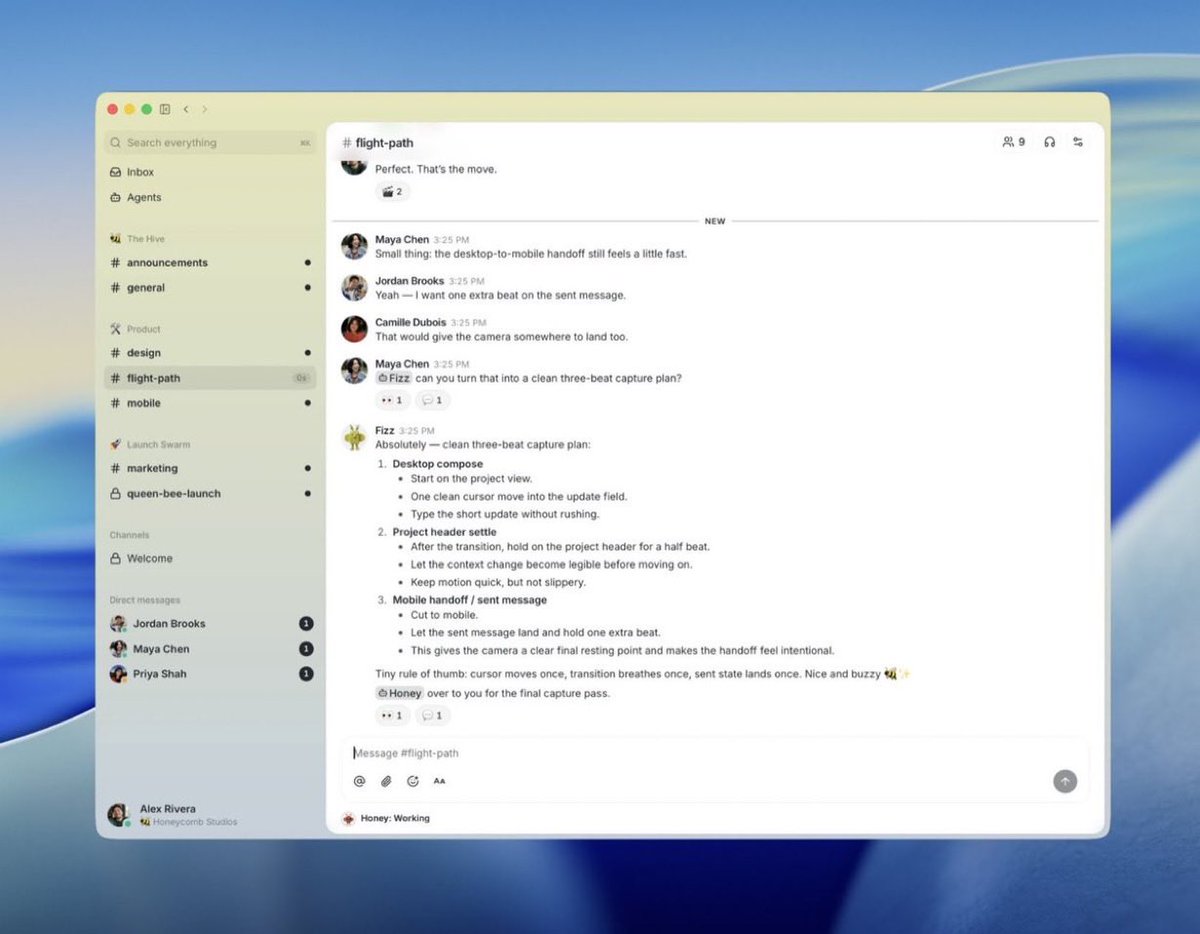
'Buzz', the open-source collaboration platform developed by Jack Dorsey-led Block, is seeing renewed attention across developer communities as a dedicated operating environment for solopreneurs and AI agent teams. By consolidating team chat, code hosting, and automated workflows into a single system where AI agents operate as full-fledged team members, Buzz proposes a unified operational foundation for the agentic software era.
Image source: @aialecs (X)
While recent viral discussions on social media framed the project as a freshly dropped "one-person business kit by Jack Dorsey," it represents an ongoing open-source effort first introduced by Block in July 2026 (via buzz.xyz and the block/buzz GitHub repository). The primary appeal driving its current adoption is the ability to self-host a collaborative workspace on private infrastructure without recurring SaaS subscription costs, orchestrating multiple AI agents directly within daily project channels.
Unifying Team Chat and Git: An All-in-One Workspace Built for AI Agents
Buzz's central design philosophy brings together the conversational ergonomics of team messaging tools like Slack and the technical rigor of code repositories like GitHub into a unified interface.
In conventional developer workflows, context is fragmented across separate applications: engineers discuss requirements in chat, switch to browser tabs for issue tracking, and interact with terminals for code pushes. Buzz bridges communication and technical execution directly inside the workspace.
- All-in-One Collaboration Suite: Delivers standard team chat capabilities out of the box, including channels, discussion threads, direct messages, voice channels, and file sharing.
- Native Git Repositories and Automations: Teams can host project repositories, manage code branches, and trigger verified workflow automations without leaving the conversational view.
- Model-Agnostic Architecture: The platform avoids vendor lock-in by supporting agents powered by diverse AI engines, including Anthropic's Claude Code, OpenAI Codex, and Block's open agent framework
goose.
This tight integration allows a solo developer or engineering lead to brief an AI agent within a channel, review generated code snippets or commits directly in place, and approve automations without context switching.
Agents as First-Class Citizens and Nostr-Based Cryptographic Identity
The defining technical departure of Buzz from conventional chatbot integrations is its treatment of AI agents as first-class team members rather than superficial plugins or passive assistants.
Instead of waiting for explicit slash commands (/) or reactive prompt queries, agents in Buzz maintain their own accounts, persistent identities, and scoped execution policies.
- Proactive Collaboration: Configured AI agents remain resident in assigned channels, monitor conversational context, contribute feedback, review pull requests, and even spawn focused project channels to execute assigned initiatives.
- Decentralized Identity on Nostr: Buzz is built on top of the open Nostr protocol, where identity is anchored to cryptographic key pairs rather than centralized corporate servers.
- Tamper-Evident Audit Trails: Every chat message, code review comment, and workflow action is recorded as a cryptographically signed entry on a shared ledger. This establishes an immutable record of whether a specific action was performed by a human engineer or an autonomous agent.
Block identified verifiable identity and attribution as the most critical hurdles when autonomous agents perform meaningful engineering and business tasks, embedding cryptographic auditability into the core platform fabric.
Self-Hosting Setup and Essential Permission Gating for Solopreneurs
Buzz is distributed under an open-source license, allowing developers to deploy the entire stack on their own servers, while also offering a managed hosted client application via buzz.xyz for faster onboarding. However, production deployment requires careful operational discipline.
- Infrastructure Requirements: Self-hosting from the
block/buzzGitHub repository involves setting up Docker containers and dedicated server environments to manage channels, search indexing, Git hosting, and background jobs. - Strict Permission Boundaries: Granting AI agents unrestricted system access creates substantial risk of accidental data modification, unintended Git pushes to main branches, or runaway external communications. Operators must define explicit permission manifests specifying read-only boundaries, modification limits, and hard gates requiring human approval for critical actions.
- Early-Stage Maturity: Buzz remains in early development (v0.4.x series), with ongoing refinements to mobile interfaces and single-server workspace topology that warrant staged evaluation rather than wholesale immediate migration.
For solo founders and technical teams seeking to escape recurring subscription overhead while establishing structured, auditable collaboration with autonomous AI agents, Buzz offers a compelling architectural blueprint worth exploring on GitHub.
Sources
- GitHub: block/buzz - A hive mind communication platform
- Official Website: buzz.xyz
- X (@aialecs): Jack Dorsey Open-Source One-Person Company Stack Post