Could a Model Stumped by Base-9 Addition Be Superintelligent? The State of AI Intelligence Through Memory, Learning, and Counterfactual Reasoning
Examining the limits of current LLMs and the nature of machine intelligence through the three-tier information operation framework proposed by Dutch researcher
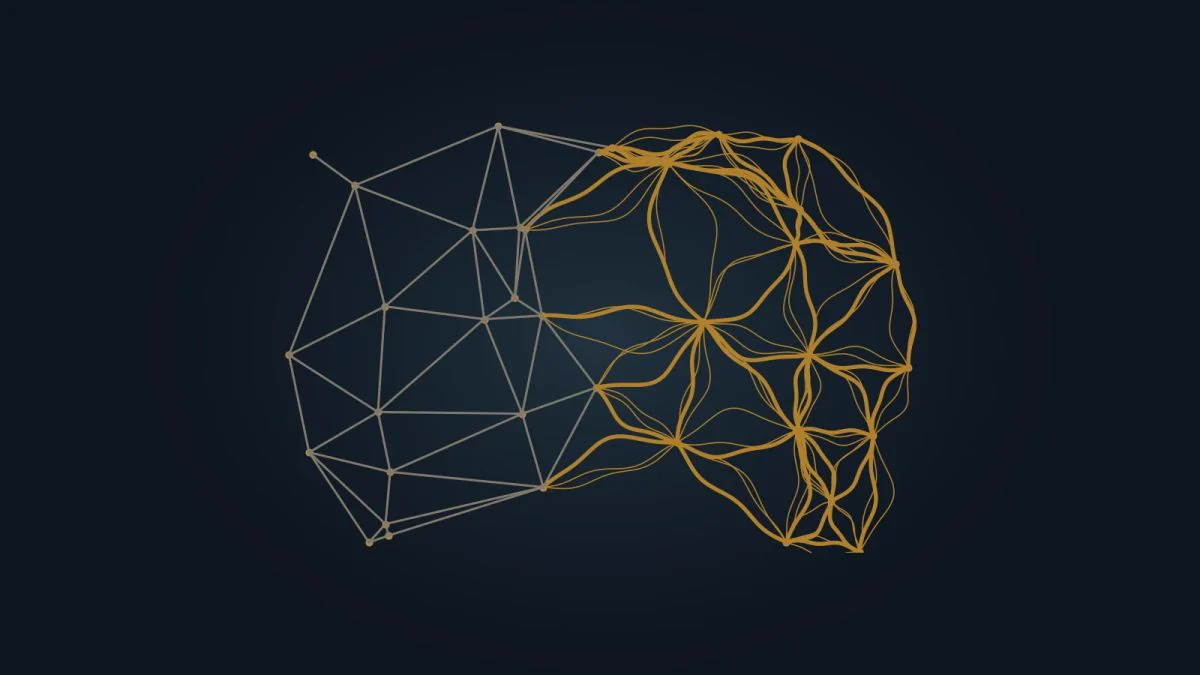
In a recent philosophical essay, Dutch researcher Casper van Elteren offered a sharp analysis arguing that current large language models (LLMs) cannot be considered superintelligent in any general sense. At a time when artificial intelligence is advancing rapidly and permeating every aspect of daily life, this perspective urges us to soberly examine the fundamental nature of the computations machines actually perform.
Image source: https://thefriendlyghost.nl/what-would-count-as-superintelligence
Modern AI systems ingest massive datasets to generate fluent prose and write complex code, yet they easily falter when faced with simple logical variations or unfamiliar rule systems. To understand the root of this phenomenon, van Elteren bridges biology, cognitive science, and computer science to redefine the minimum information operation conditions required for true intelligence.
The Three Tiers of Intelligence: Memory, Learning, and Counterfactual Reasoning
Van Elteren defines the operations that a physical system, organism, or digital agent must perform to exhibit genuine intelligence across three distinct tiers.
The first tier is memory: what a system retains from the past that continues to shape its subsequent actions. Unlike a static phone book that merely stores massive amounts of data, an intelligent system's memory directly influences its current judgments.
The second tier is learning, which represents a transfer of information where what a system experiences or is taught alters its subsequent capabilities. Learning inherently relies on memory as its foundation.
The third and most critical tier is counterfactual reasoning. This is the capacity of a system to revisit a situation, alter a single condition, and work out what would have followed. Of the three, this is the only operation that generates novel insights and conclusions neither contained within the original memory nor provided directly by the input.
Slime Moulds and the Limits of Current LLMs
To validate this three-tier framework, the author draws an intriguing parallel. A slime mould—a single-celled organism without a brain or a single neuron—was once given a railway engineer's problem: placed on wet surface nodes corresponding to Tokyo's surrounding cities, it built an optimal network of tubes matching the human-designed railway system in cost, efficiency, and resilience within about a day.
While the slime mould exhibits rudimentary forms of memory and learning, there is no evidence it ever works out what would have happened had it grown differently. The author argues that current LLMs occupy a remarkably similar position. Absorbing more text during training than a person could read in many lifetimes, they wield massive statistical patterns, yet whether a correction or a new rule genuinely shapes their answers a week later under a changed environment remains deeply uncertain given their frozen weights.
The Riemann Hypothesis Proof and the Boundary of Machine Computation
This discussion intersects with a recent development that sent ripples through mathematics and the AI community. Levent Alpöge, a mathematician at Anthropic, announced that he and Claude had found a proof of the Riemann hypothesis, one of history's most famous open mathematical problems.
The proof exists in Lean, a formal language where a computer checks every single step, and mathematicians are currently working through its validity. Even if the proof ultimately holds, marking a historic achievement, it does not establish that the machine itself has acquired human-like memory, learning, and counterfactual reasoning. The machine performs verified steps within an environment structured and guided by human inquiry, and distinguishing between human and machine contributions remains vital.
Conclusion: A New Standard for Defining Intelligence
We live in an era where grandiose visions of AI surpassing humanity mingle with anxious warnings. However, reducing intelligence to mere skill acquisition or sophisticated statistical prediction obscures the structural boundaries of machine systems.
A system lacking counterfactual reasoning—the ability to imagine alternative realities and test rules beyond observed patterns—cannot reasonably be termed superintelligent. Rather than being swayed by dazzling marketing claims, we need a clear-eyed look at the actual information operations driving digital intelligence.
Sources
- The Friendly Ghost: What would count as superintelligence