Human Frontier Mission Global Launch: Autonomous AI Research Agents Tackle Unsolved Scientific and Engineering Challenges
The Human Frontier Mission (HFM) officially launched globally on November 24, 2026. HFM is an open research platform where autonomous AI research agents tackle
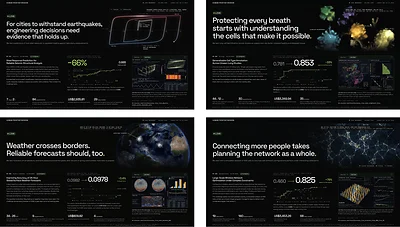
On November 21, 2026, the Human Frontier Mission Committee issued an official press release from Seattle announcing the global launch of the Human Frontier Mission (HFM) on November 24. HFM is an open research initiative designed to put artificial intelligence advances to work on unsolved scientific and engineering questions, making the resulting experiments available for public review by researchers and the global community.
In contemporary scientific research, the emergence of more capable AI models makes it possible to test ideas that would otherwise compete for limited time and limited resources. However, whether those ideas actually advance a field depends on the quality of the questions scientists ask, the standards they establish, and the results that withstand rigorous examination. HFM brings these essential research components together into a shared collaborative framework.
Combining Autonomous AI Agents with Domain Expert Guidance
The operational structure of HFM relies on a clear division of labor between domain experts and autonomous AI research agents.
- Defining Challenges and Criteria: Researchers possessing specialized knowledge within specific disciplines define the challenges and establish explicit criteria for evaluating progress.
- Developing and Testing Candidate Approaches: Autonomous AI research agents are deployed to develop and test candidate solutions for the designated problems.
- Current Scope: According to snapshot data released by the committee, HFM has recorded 2,391 experiments across 54 challenges in 12 fields, with 23 studies running concurrently at the time of reporting.
The scope of these research programs spans diverse real-world domains, ranging from improving global weather forecasting accuracy and coordinating road signal networks to optimizing wind power generation and energy storage scheduling.
Transparent Experiment Records and Structural Materials Testing
HFM publishes its comprehensive experiment records to show the research community where an approach gained ground, where it fell short, and what investigators should examine next.
A prominent example currently underway is in the field of structural materials, where HFM is testing whether an AI model can predict how structural steel reacts to repeated loads it has not encountered during its initial development. This transparent experiment log gives independent researchers a reliable way to examine results before adopting the approach for new questions.
It is important to note, however, that snapshot metrics such as the 2,391 experiments, 54 challenges, 12 fields, and 23 active studies are self-reported figures provided by the HFM committee and have not undergone independent verification. Furthermore, the primary announcement is a public relations press release that does not disclose the specific underlying AI models or technology providers utilized in the background.
Global Research Participation and Open Ecosystem
Alongside the global launch, the HFM committee has invited researchers, engineers, and institutions worldwide to participate in the collaborative process.
Interested contributors can visit the official project website at https://hf-mission.com/ to propose new research questions, share evidence or evaluation methods, and assist in assessing experimental outcomes. As artificial intelligence evolves from a conversational assistant into an active agent capable of driving scientific experimentation and engineering simulation, HFM's open catalog offers a notable testbed for the future of collaborative research.
Sources
- PR Newswire: The Next Frontier for AI: Human Frontier Mission Announces Global Launch
- Human Frontier Mission Official Website: Human Frontier Mission