Chinese Engine, US Badge: How MiniMax H3 Powers Top AI Video Leaderboards Amid Licensing Scrutiny
Multiple top-ranking models on Artificial Analysis video leaderboards trace back to Chinese developer MiniMax's H3 open-weight engine. We examine US repackaging
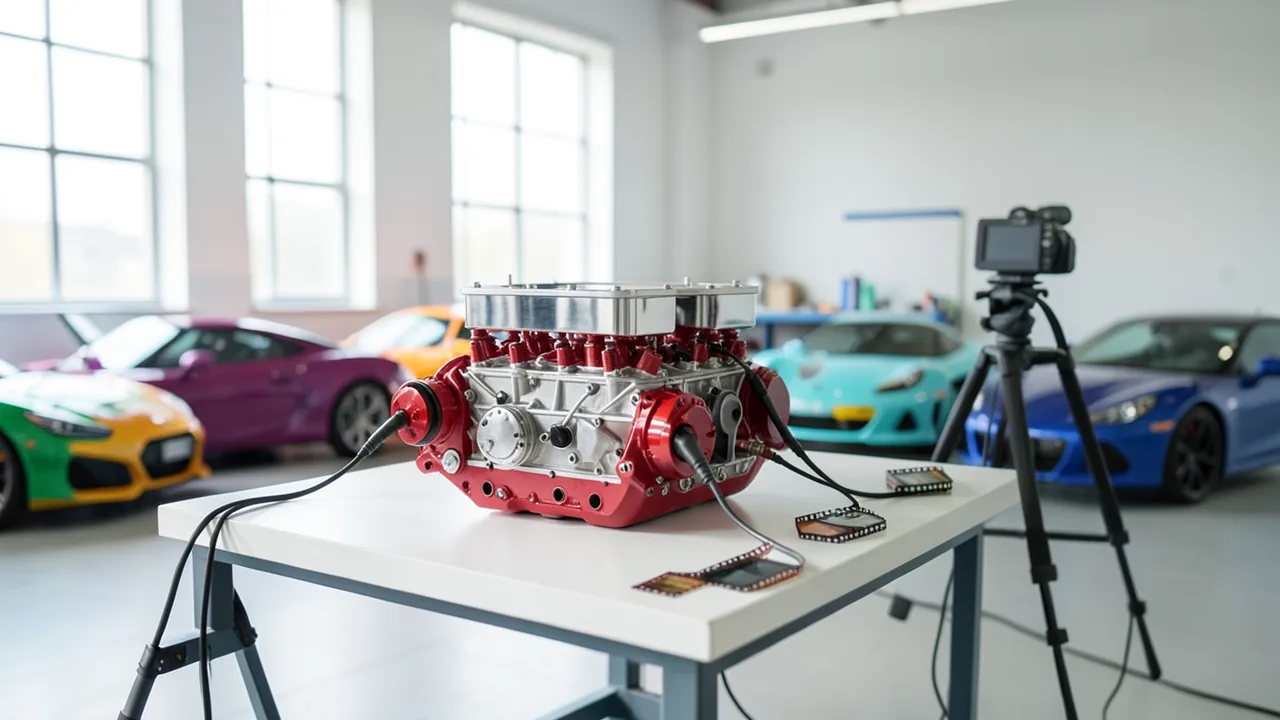
The landscape of artificial intelligence video generation, long dominated by domestic American models, is experiencing a profound shift. Looking at the latest "Text-to-Video with Audio" leaderboard from independent benchmarking firm Artificial Analysis, a striking pattern emerges: a significant share of the top 14 models trace their lineage back to "H3," an open-weight engine released by Chinese AI startup MiniMax.
Image source: https://tokenstrom.com/posts/chinese-engine-us-badge-how-minimax-h3-quietly-powers-the-top-of-ai-vi
As US companies post-train and repackage the model under their own brand names, prominent leaderboards create the impression of homegrown American dominance. Beneath the surface, however, a single Chinese foundational model quietly powers much of the global video generation ecosystem. This article examines the technical background of MiniMax H3, its sprawling family tree of derivatives, and the complex realities of its licensing terms and regional restrictions.
The Rise of MiniMax H3 and the Open-Weight Ecosystem
MiniMax officially released H3 on August 3, 2026. The publicly downloadable asset is a 33-billion-parameter base model built on a transformer architecture—the underlying neural network framework common to modern large language and multimodal models. It generates 768p video clips ranging from 4 to 15 seconds at 24 frames per second, complete with stereo audio.
According to its model card, two critical components remain closed: a prompt preprocessing stage (H3-Context-IR) and 2K upscaling (H3-Regenerate-2K). Consequently, specialized analysis publications like DeepLearning.AI's The Batch have described the release as "only minimally open."
Even so, the developer community on platforms like Hugging Face quickly embraced the release, producing hundreds of fine-tunes, adapters, and quantizations (optimized versions with reduced numerical precision to save memory). The main repository accumulated millions of downloads, while repackaged variants created by interface teams like Comfy achieved even wider distribution, cementing H3 as a foundation for downstream commercial tooling.
US Repackagings and the Video Leaderboard Reality
According to Artificial Analysis benchmarks, 6 of the top 14 entries on the text-to-video with audio leaderboard and 7 of the top 12 on the image-to-video leaderboard trace directly back to H3.
Prominent derivative models and their US operators include:
- Utopai X (Utopai Studios): Post-trained on film production data, demonstrating exceptional performance in audio synchronization and camera movement.
- HeyGen Video 1 (HeyGen): Developed by Silicon Valley-based avatar and video platform HeyGen through undisclosed post-training procedures.
- H3 Max / H3 Max Turbo (fal): Offered by San Francisco-based infrastructure provider fal, combining post-training with inference optimization.
- Pika H3 Flex (Pika): Fine-tuned and distilled from 50 steps down to 6 steps using LoRA (Low-Rank Adaptation, a lightweight parameter-efficient tuning method) adapters.
Several of these services are priced lower than the original model. For instance, HeyGen Video 1 costs approximately $0.04 per second at 768p—roughly half the price of the base model—while trailing by a negligible margin in Elo ratings (a blind comparison rating system borrowed from chess). This offers users high cost-efficiency under familiar American brand names.
Licensing Scrutiny and the "Excluded Territory" Paradox
As Chinese open-weight engines are refined and resold under Western brand names, questions surrounding license compliance have come to the foreground.
Section IV.2 of the H3 community license explicitly requires commercial products to display "MiniMax H3" prominently within their user interface. Public documentation reveals a mixed compliance picture: while HeyGen openly acknowledges the base model in developer docs and launch announcements on X, and companies like Pika and fal incorporate "H3" directly into product names, aggregator platforms like OpenRouter omit any mention of MiniMax.
Furthermore, geographic restrictions present a major hurdle. The license defines an "Applicable Territory" that explicitly excludes the European Union, the United Kingdom, South Korea, and the United States. In these excluded jurisdictions, users are barred not only from running and modifying model weights but also from using or displaying generated output. MiniMax has justified these limitations by citing regulatory uncertainty around personality rights and ongoing copyright litigation in the US, noting that the restriction means "not yet, not never."
Consequently, users in South Korea and other excluded regions face strict barriers: running local instances requires written permission or commercial enterprise licensing tiers (such as Comfy's commercial local subscription starting at $5,000 per month). Ironically, while local execution is heavily restricted, users can often access these same models through official APIs or US-based cloud wrappers without local friction, highlighting the complex tension between open weights and regional regulatory enforcement.
Sources
- Tokenstrom: Chinese engine, US badge: How MiniMax H3 quietly powers the top of AI video
- Artificial Analysis: Text-to-Video Leaderboard
- Hugging Face: MiniMaxAI/MiniMax-H3 Model Repository