Analyzing 126 Finalists from the Higgsfield AI Film Festival: Directing & Prompt Tips
A breakdown of 126 finalist entries from the $1M Higgsfield AI Film Festival, examining production briefs, visual assets, and prompt structures for video creato
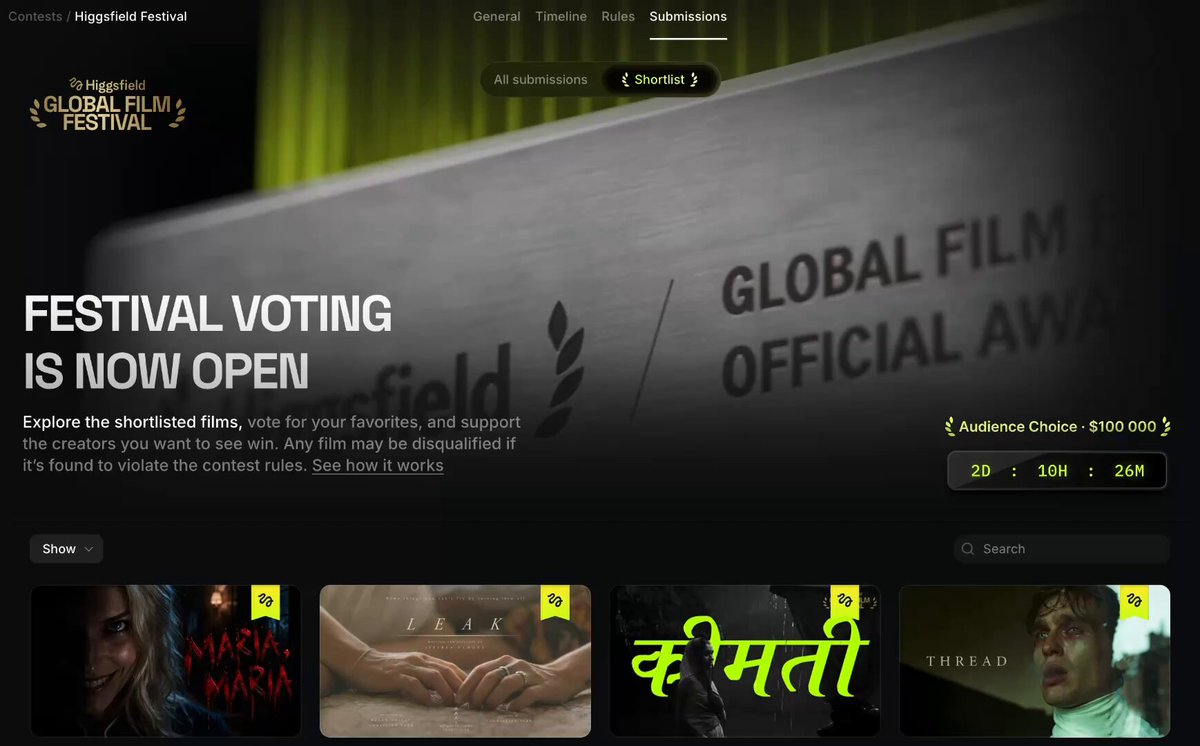
Originally shared on X by AI creator LOOPY (@VibeEverything), this guide examines the 126 finalist entries selected from 67,223 submissions to the $1,000,000 Higgsfield AI Film Festival. By studying completed video clips alongside their underlying production briefs, visual assets, and prompts, creators can analyze real-world directing workflows and build reusable prompt structures for their own video projects.
Image source: @VibeEverything via X
As generative AI video pipelines develop, creators are looking beyond simple text prompt testing toward structured pre-production and directing control. The newly released archive of 126 finalists provides concrete reference material: alongside finished video clips, each work includes its production brief, visual assets, and prompts, giving creators direct visibility into the end-to-end production process.
126 Finalists Selected from 67,223 Entries: References Vetted by Film Directors
The core value of this archive lies in the vetting process behind the selections. Out of 67,223 total submissions, 126 works were chosen as finalists through formal judging.
- A $1 Million Competition: With a total prize pool of $1 million, the global festival drew tens of thousands of entries, culminating in 126 curated finalist works.
- Judging by Working Film Directors: Actual film directors participated in the judging process, establishing the selected works as vetted benchmarks of production quality.
- A Practical Reference Resource: The author emphasized that this archive is valuable material for AI video creators to bookmark and study, receiving strong positive feedback from the creator community.
Rather than merely viewing finished results, creators can examine how these judged works were developed through the disclosed production data.
Production Briefs and Asset Preparation: Characters, Props, and Locations
The first key area highlighted in the analysis is the pre-production stage covering briefs and visual assets.
Examining the finalists' workflows shows that creators prepared the core elements needed for each scene before moving to final video generation:
- Production Briefs: Finished videos are accompanied by production briefs, allowing viewers to see the planning intent and creative process behind each sequence.
- Character and Prop Preparation: The archive illustrates how characters and props required for each scene were prepared in advance.
- Location and Environment Assets: Creators can see how backgrounds and locations were planned and assembled as assets for each scene.
Structuring characters, props, and locations as prepared assets serves as a fundamental foundation for high-quality generative video production.
Character Motion and Camera Direction: Structuring Prompts for Adaptation
The second core takeaway focuses on prompt structuring—specifically how character actions and camera movements are directed through text prompts.
The released prompts demonstrate how creators explicitly instructed character movements and camera staging:
- Directing Character Actions: Viewers can study how specific character actions and movements were instructed in the prompts.
- Directing Camera Movement: The prompts show how camera angles and movements were directed to achieve dynamic scenes.
- Organizing and Adapting Prompt Structures: The author recommends organizing the directing style and prompt structures of preferred scenes, allowing creators to adapt and test them in their own projects.
By studying the directing choices and prompt patterns across these 126 finalist works, creators can reduce trial and error and refine their own video workflows.
Original source
- LOOPY (@VibeEverything) on X: https://x.com/VibeEverything/status/2110003456446779690