Character Action Animation Prompting with GPT Image 2.5 and Seedance 2.5
A two-stage prompt workflow using GPT Image 2.5 split character sheets and Seedance 2.5 timecoded action sequencing to produce slapstick fight animations.
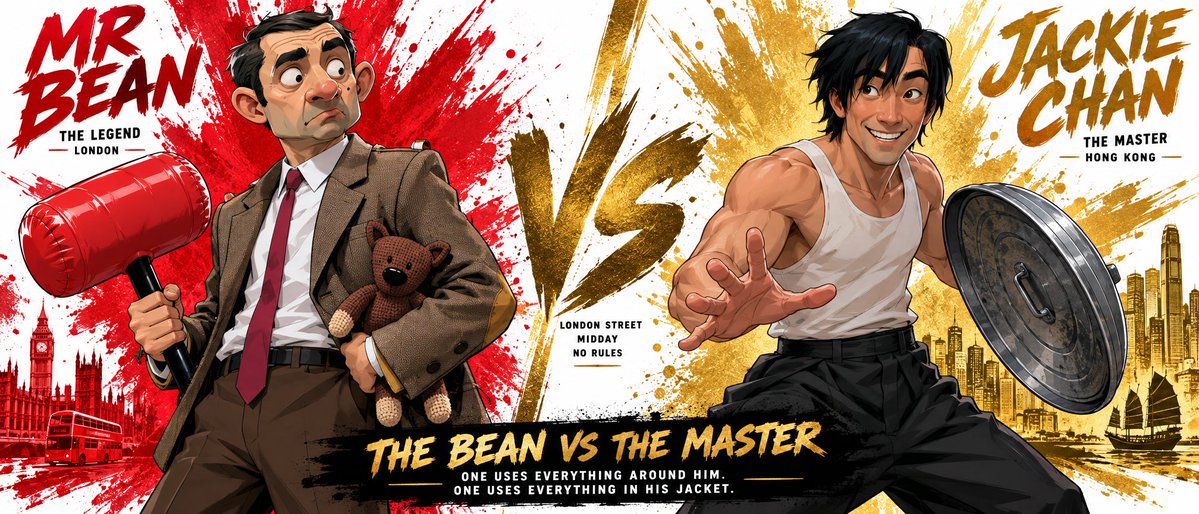
AI visual creator @TechieBySA has shared a two-stage prompting workflow combining OpenAI's latest GPT Image 2.5 model and ByteDance's Seedance 2.5 video generation model to produce high-consistency slapstick martial arts animations featuring two distinct characters.
Image source: @TechieBySA
In standard text-to-video (T2V) workflows, generating scenes with multiple contrasting characters engaged in rapid physical comedy often leads to severe visual degradation—character features blend together, iconic costumes mutate, and object interactions fall apart mid-motion. The approach demonstrated by @TechieBySA solves these continuity bottlenecks by establishing a clean dual-character bible sheet in GPT Image 2.5 first, then supplying that sheet as a strict visual reference to Seedance 2.5 alongside 2-to-4-second timecoded action blocks to deliver a cohesive 20-second cel-shaded 3D anime sequence.
Step 1: Generating a Dual-Character Bible Sheet with GPT Image 2.5
The foundation of multi-character animation consistency lies in locking character proportions, color palettes, costumes, and prop identities inside a single reference asset before any video diffusion starts.
Borrowing the visual format of fighting game matchup screens ("VS Screen"), the character sheet prompt splits the frame down the center to isolate each character's identity while maintaining a shared illustrative grammar.
Create a premium cinematic character bible sheet for MR BEAN & JACKIE CHAN. Use uploaded character sheets as strict visual reference for both characters. Do not change either's appearance.
LAYOUT: Split screen VS format. Two halves divided by a bold dramatic dividing element in the center.
LEFT SIDE — MR BEAN: Bold dramatic bright red watercolor splash radiating behind him filling the entire left side. Large bold brushstroke text MR BEAN top left in bright red. Below small text: THE LEGEND / LONDON. One massive dramatic cropped hero image of Mr Bean from mid-thigh up — brown tweed jacket, bright red tie, giant inflatable hammer in one hand, small stuffed toy under the other arm, completely calm and unbothered expression.
CENTER: Bold dramatic VS in deep gold. Below it small text: LONDON STREET / MIDDAY / NO RULES.
RIGHT SIDE — JACKIE CHAN: Bold dramatic deep gold watercolor splash radiating behind him filling the entire right side. Large bold brushstroke text JACKIE CHAN top right in deep gold. Below small text: THE MASTER / HONG KONG. One massive dramatic cropped hero image of Jackie Chan from mid-thigh up — white tank top, black baggy trousers, rubbish bin lid in one hand, wide grin, expressive and ready.
BOTTOM CENTER: Bold text THE BEAN VS THE MASTER in deep gold. Tagline: ONE USES EVERYTHING AROUND HIM. ONE USES EVERYTHING IN HIS JACKET.
OVERALL: Clean white background, bold dramatic bright red watercolor explosion left side, bold dramatic deep gold watercolor explosion right side, dramatic gold center divider, bold flat color blocking, chunky simplified forms, hard edge shadows, thick black outlines, cinematic cel-shaded 3D anime, hand-painted textures, not cartoon not Disney not Pixar, print ready.
Prompt Engineering Highlights
- Spatial Separation and Color Blocking: Isolating Mr. Bean within a bright red watercolor splash on the left and Jackie Chan within deep gold on the right prevents visual attribute bleeding across subjects during reference encoding.
- Explicit Prop Binding: Linking Mr. Bean specifically to his brown tweed jacket, red tie, giant inflatable hammer, and teddy bear, and Jackie Chan to his white tank top, baggy trousers, and rubbish bin lid, provides concrete visual anchors for physical comedic interactions.
- Negative and Stylistic Guardrails: Directives like
cinematic cel-shaded 3D anime,hard edge shadows, andthick black outlines, combined withnot cartoon not Disney not Pixar, enforce a sharp, modern stylized aesthetic instead of generic 3D renders.
Step 2: Directing a 20-Second Action Sequence in Seedance 2.5
With the dual-character sheet uploaded to Seedance 2.5 as a visual reference, the video prompt defines behavioral rules for both characters and choreographs the physical encounter using explicit timestamp intervals.
The complete Seedance 2.5 prompt is structured as follows:
Cinematic anime clip, 20 seconds. Narrow London street at midday — bright clear sunshine, warm golden daylight, brick walls, lamp posts, rubbish bins, newspaper stands, parked cars.
MAIN CHARACTER 1 — ATHLETIC ASIAN MALE IN WHITE TANK TOP: Use uploaded character sheet. Always attacking, never pausing, reacts big to everything.
MAIN CHARACTER 2 — AWKWARD MALE IN BROWN TWEED JACKET WITH RED TIE: Use uploaded character sheet. Completely calm, never scared, never knows he's in a fight, every item pulled out mid attack.
0:00–0:02 — Main character 1 charging with rubbish bin lid. Main character 2 dropping marbles casually. Main character 1 hitting them at full sprint — sliding violently into a parked car.
0:02–0:04 — Main character 1 grabbing traffic cone launching fastest combination. Main character 2 blowing party horn directly in his ear mid combination. Everything going off course. Main character 1 standing completely still eyes wide.
0:04–0:06 — Main character 1 swinging around lamp post launching flying kick. Main character 2 stepping aside to look at shop window at exact moment. Kick flying past completely. Main character 2 face pressed against glass unbothered.
0:06–0:08 — Main character 1 grabbing newspaper stand charging. Main character 2 pulling out enormous raw turkey. Main character 1's combination connecting with the turkey instead of main character 2. Main character 1 completely stunned.
0:08–0:10 — Main character 1 grabbing main character 2's collar furiously — SNAP. Mousetrap on both fingers from inside the jacket. Releasing instantly shaking hands in agony.
0:10–0:14 — Main character 1 charging one final time. Main character 2 pulling out deflated giant inflatable hammer inflating it slowly. Main character 1 slowing stopping staring confused. Hammer fully inflated. Main character 2 swinging it connecting perfectly. Main character 1 lifted completely off his feet landing flat on his back.
0:14–0:18 — Close up on main character 1 on the ground staring at the sky. Expression of a man who has never lost to an inflatable anything. Main character 2 placing small stuffed toy gently on his chest.
0:18–0:20 — Wide from above. Main character 2 walking away adjusting his tie. Main character 1 flat on the ground stuffed toy on his chest marbles scattered around him.
Cel-shaded 3D anime, Unreal Engine quality, narrow London street midday bright sunshine throughout, bold flat color blocking, hard edge shadows, thick black outlines, film grain, orchestral score switching between action and comedy every impact hard every item silly sound effect building to inflatable hammer finale, camera switching constantly — never same angle twice — main character 1 always attacking never pausing, main character 2 always calm never scared, comedy escalating from frame one to last frame.
Core Prompt Engineering Principles for Multi-Character AI Video
This breakdown offers four practical takeaways for creators looking to orchestrate dynamic, multi-character encounters with modern video models:
- Polar Archetype Contrast: Character 1 is cast as a relentless, high-energy martial artist whose attacks constantly escalate, while Character 2 is an oblivious, unbothered clown who does not even realize he is in a fight. Giving each character an unmistakable, non-overlapping behavioral rule prevents the video model from confusing agency or reversing roles.
- Timecode Chunking for Cause and Effect: Rather than giving the model a vague paragraph describing a chaotic fight, breaking the timeline into distinct 2-to-4-second increments (
0:00–0:02,0:02–0:04, etc.) enforces sequential causality—charge, slip, miss, react—ensuring props like marbles, cones, turkeys, mousetraps, and inflatable hammers trigger at exact intervals. - Decoupling Visual Identity from Motion Directives: Facial features, builds, and costumes are handled entirely by the pre-generated GPT Image 2.5 reference sheet. This frees the Seedance 2.5 prompt to focus entirely on kinematic actions, reactions, comedic timing, and prop handoffs.
- Enforcing Dynamic Cinematography: Tagging the prompt with
camera switching constantly — never same angle twiceensures the model cuts dynamically between medium shots, extreme close-ups, and aerial wide angles, avoiding the visual fatigue of static locked-off AI video generations.