Google Releases Android Studio Rabbit 2 with AI Agents and Gemini Nano 4 APIs
At Android Dev Summit, Google released Android Studio Rabbit 2 with support for over 40 coding agents, expanded Android CLI tools, and introduced on-device Gemi
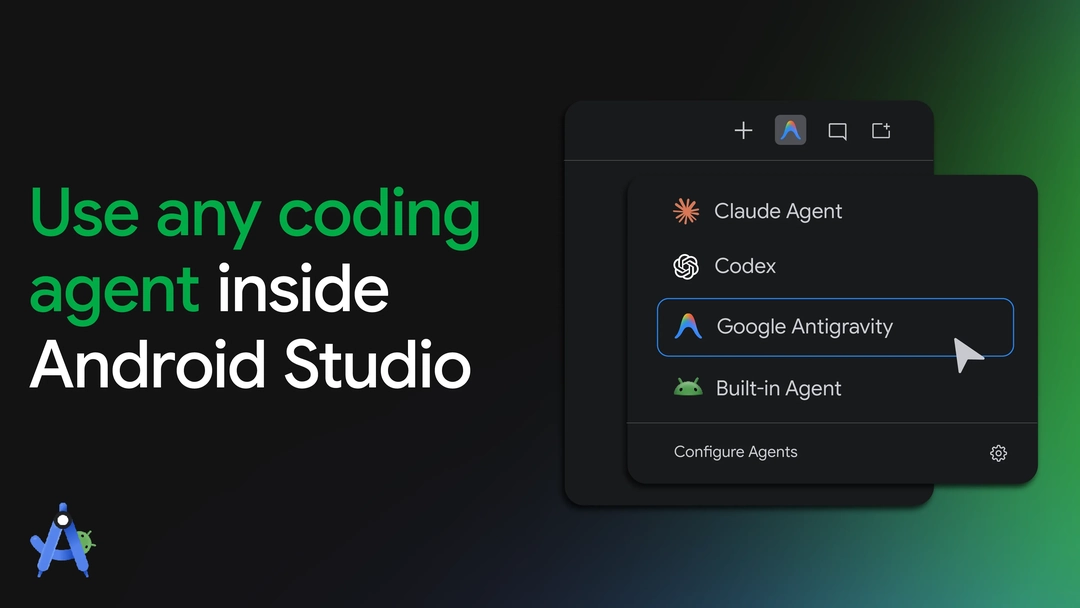
On October 28, 2026, at Android Dev Summit, Google released the stable version of Android Studio Rabbit 2, bringing official support for more than 40 AI coding agents, alongside the alpha launch of new on-device Gemini Nano 4 agentic APIs for Android developers.
Image source: https://developer.android.com/blog/posts/build-it-your-way-a-next-era-of-android-development
Google originally previewed its Bring Your Own Agent (BYOA) feature in the latest Android Studio Canary on September 24. The distinct October 28 milestone is general availability in the stable Rabbit 2 release, announced alongside APIs that let Android apps provide capabilities to AI agents.
Android Studio Rabbit 2 and 40+ Coding Agents
The centerpiece of the development announcement is the stable release of 'Bring Your Own Agent' (BYOA) in Android Studio.
With Android Studio Rabbit 2 reaching its stable release milestone, developers can integrate more than 40 coding assistants compatible with the Agent Client Protocol directly into the IDE workspace.
- Supported Integrations: Supported tools include Anthropic's Claude Agent, OpenAI's Codex, Google Antigravity, and Junie.
- Tooling Access: Rather than operating solely within an isolated chat window, integrated agents can inspect project structures, traverse code, manage build systems, and execute commands against the Android Emulator and Logcat to analyze errors and apply fixes.
This design gives engineering teams flexibility over model selection, pricing models, and licensing terms without requiring shifts away from standard Android development workflows.
Expanded Android CLI and Compose Preview Workflows
Google has expanded the Android command-line interface (Android CLI) for terminal-based workflows and continuous-integration pipelines.
New capabilities allow agents to render Jetpack Compose previews, stream remote test devices, inspect performance traces, and run static analysis on application packages. Instead of analyzing raw code alone, agents can examine rendered layouts and diagnostic outputs directly.
- Official CLI Plugins: Dedicated plugins were released for Claude Code and OpenAI Codex, making Android-specific toolchains accessible outside the desktop IDE.
- Internal Benchmark Results: In a separate official Android CLI tools announcement, Google said agents using the new 'android preview' command completed UI tasks 77% faster while consuming up to three times fewer tokens in its internal tests. These figures are not guaranteed across all codebases or developer configurations.
- Diagnostic Integration: Google also highlighted LeakCanary memory analysis and tools for inspecting system traces and crash reports.
ML Kit Gemini Nano 4 Agentic API, AppFunctions, and Agent-to-UI
Google also rolled out development frameworks for building agentic AI features directly inside Android applications.
Within ML Kit, Google launched an alpha release of the Agentic API powered by the on-device Gemini Nano 4 model. The API automates multi-step agent orchestration, conversation history tracking, and tool invocation locally on the user's device. On-device processing can offer privacy and latency benefits for supported tasks, though capabilities depend on the device, model, and task.
- AppFunctions (Beta): An Android platform API that lets apps expose selected capabilities as callable functions. Callers need the
EXECUTE_APP_FUNCTIONSpermission to discover and invoke these functions, and apps control which functions they expose. Google's documentation lists Android 16 or higher as the supported platform. - Agent-to-UI (Alpha): An integration for Jetpack Compose that renders structured, interactive native UI components from agent responses instead of plain text output.
- Connected Apps Platform: A phased developer preview for bringing third-party services into Google Search and Gemini. Google said it had launched more than 50 Connected Apps between Search and Gemini. Adobe, Experian, Localiza, and Peloton integrations were already live in Gemini and were planned for Search in the coming weeks, while a Calm integration was announced for a future rollout across both Search and Gemini.
Sources
- Google Android Developers (October 28): Android Dev Summit announcement and original release image
- Google Android Developers (October 28): Android Studio Rabbit 2 stable release
- Google Android Developers (October 28): Android CLI developer tools and internal performance measurements
- Google (October 28): Connected Apps Platform and integration rollout
- Google Android Developers: AppFunctions API and caller permissions
- Google Android Developers (September 24): BYOA Canary preview announcement