GitHub Trending Surge: Agent-Native CLI Abstraction 'CLI-Anything' and Three Open-Source Highlights
Explore the key features and metrics of standout open-source projects trending on GitHub on November 24, 2026, including CLI-Anything for agent-native CLI abstr
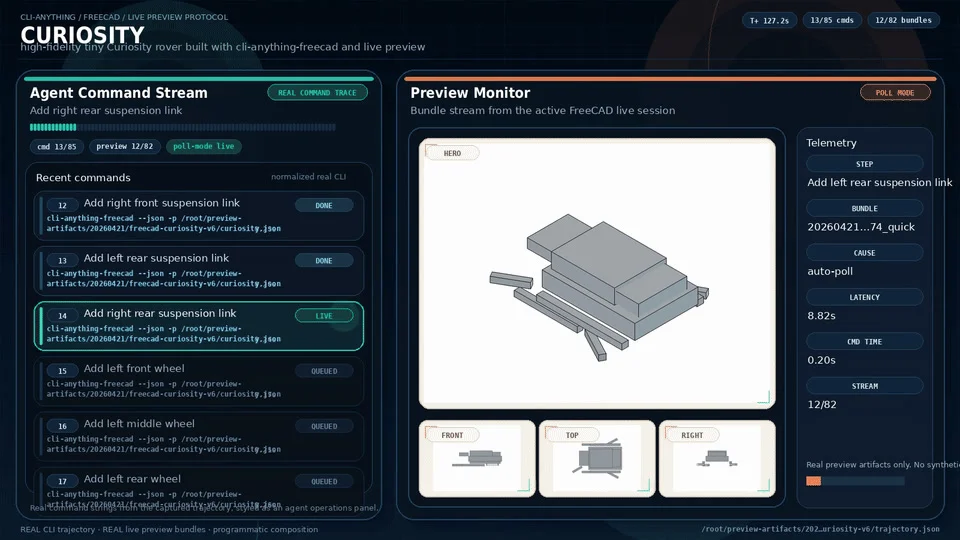
The GitHub Trending rankings—which track popular open-source repositories and collaborative software projects worldwide—have recently been taken over by practical utilities directly tied to the artificial intelligence agent ecosystem. In particular, projects that translate traditional command-line interface (CLI) tools—which lack official application programming interfaces (APIs)—into formats that AI agents can directly manipulate, alongside toolsets that preemptively navigate complex app store review regulations, are seeing rapid adoption.
Image source: Official product README: https://github.com/HKUDS/CLI-Anything
These rising open-source projects go far beyond experimental lab code, focusing directly on resolving friction points that developers and solo founders face in real-world workflows. Here is a close look at the background, features, and practical value of three core projects driving software automation efficiency.
'CLI-Anything': Making All Software Agent-Native
The first project drawing significant attention is HKUDS/CLI-Anything, backed by researchers including the University of Hong Kong Data Science Lab (HKUDS). This project aims to abstract all command-line interface tools into an 'agent-native' environment—a structure designed so AI agents can instantly comprehend and operate them without complex parsers or human intervention.
When executing software engineering or server management automation, many specialized utilities and internal systems lack graphical user interfaces (GUIs) or dedicated APIs, making them difficult for AI agents to leverage. CLI-Anything overcomes this hurdle by wrapping the input-output structures of various CLI software into standardized formats that agents can invoke dynamically.
Following its release, the project gained exceptional traction, reaching 63,830 stars (user bookmarks on repositories) and surging by 790 daily trending stars, reflecting explosive backing from the developer community. It serves as a powerful alternative for developers looking to integrate legacy systems or external utilities lacking native APIs into their AI coding assistant workflows.
'app-store-compliance': Defending Against App Rejections and Global Regulations
One of the most persistent pain points for mobile app developers is the opaque rejection process enforced by Apple's App Store and Google Play, compounded by rapidly evolving regulatory compliance across jurisdictions. The mjmirza/app-store-compliance project targets this exact challenge.
This open-source playbook compiles 124 documented app store rejection patterns alongside concrete fixes. Furthermore, it provides 112 tracked deadlines and regulatory requirements that global mobile services must obey—including the European Union Artificial Intelligence Act (EU AI Act, a comprehensive regulatory framework imposing obligations based on AI risk levels), the Digital Services Act (DSA), and the Children's Online Privacy Protection Act (COPPA)—packaged as specialized skills for AI coding agents.
With 5,085 total stars and a daily surge of 761 stars, it has resonated deeply with working developers. It acts as a practical shield, helping solo developers and small teams prevent launch delays caused by platform review criteria or intricate legal risks.
'diagram-design': 52 Structured SVG Diagrams Tailored for Coding Agents
In the visual asset generation space, the cathrynlavery/diagram-design project has shown remarkable growth, offering 52 editorial SVG (Scalable Vector Graphics, a vector-based image format that scales without losing resolution) diagram templates designed for AI coding agents tasked with documentation and architecture design.
As coding assistants like Claude Code and Codex become widespread for writing code and independently mapping out system architectures and workflows, many existing diagramming tools suffer from unnecessary shadow effects or poor markdown-based rendering, rendering them unsuitable for professional documentation. This project adopts clean, self-contained HTML and SVG structures, enabling agents to generate trustworthy schematic diagrams directly during coding sessions.
Surpassing 71,100 cumulative stars with an additional 620 daily stars, it has established itself as an essential tool for engineers building AI-powered documentation automation pipelines.
Maturation and Significance of the Practical Agent Ecosystem
Reviewing the top tiers of GitHub Trending in late November 2026 reveals that AI coding tools are evolving past simple code generation utilities into comprehensive environments covering system control (CLI-Anything), regulatory compliance (app-store-compliance), and visual documentation (diagram-design) across the entire software development lifecycle.
However, before adopting these open-source tools and skills, developers should note that real-time star counts and trending metrics fluctuate based on community interest, requiring careful verification of project licenses and recent commit statuses. In an agent-driven development landscape, such specialized open-source tools are poised to become core infrastructure maximizing development productivity.
Sources
- GoodInfo GitHub Trending: November 24, 2026 Release and Trending Data
- GitHub Repository: HKUDS/CLI-Anything
- GitHub Repository: mjmirza/app-store-compliance
- GitHub Repository: cathrynlavery/diagram-design