FreeVideo: On-Device Video Generation on Consumer PCs with FreeToken Pipeline
FreeVideo enables on-device video and asset generation on consumer PCs. Paired with FreeToken, it automates the pipeline from storyline planning to video render
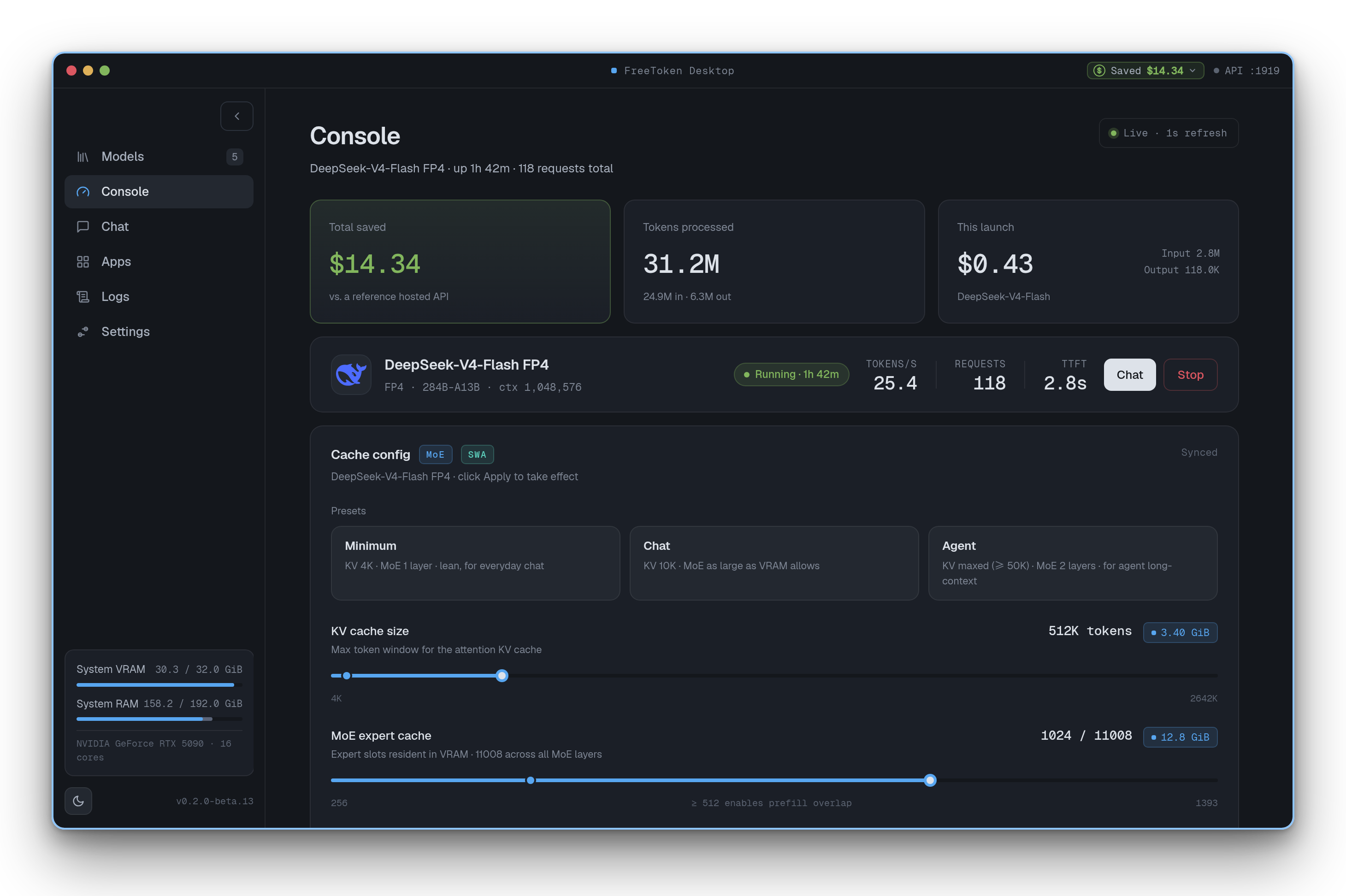
Image source: https://github.com/FlashML-org/FreeToken
FreeVideo, an on-device tooling framework that enables high-quality video generation directly on consumer PC hardware, has been publicly unveiled. By optimizing video synthesis workflows previously tethered to massive datacenter GPU clusters or commercial cloud APIs, FreeVideo makes local video generation accessible on standard personal hardware.
FreeVideo is designed to run video and visual asset synthesis directly within local compute environments. In particular, by integrating with FreeToken—the edge-native Mixture-of-Experts (MoE) serving engine developed by researchers from UC Berkeley and FlashML—it unlocks a fully automated, end-to-end short-drama production pipeline spanning Vision-Language Model (VLM) planning, scene prompting, and on-device video rendering.
On-Device Video Generation on Consumer Hardware
Historically, generative AI video models have demanded extensive compute resources and high-end enterprise GPU infrastructure, posing steep barriers for individual creators and independent developers. FreeVideo is engineered to bring video synthesis capabilities directly to mainstream personal machines.
- Leveraging Owned Hardware: Enables creators to generate videos and visual assets directly on standard consumer PCs and gaming rigs instead of relying on expensive cloud instances.
- High-Quality Video and Asset Synthesis: Supports rendering both standalone video clips and multi-asset visuals required for narrative formats such as short dramas.
- Eliminating Cloud API Dependencies: Removes recurring subscription costs and external API rate limits, allowing continuous local experimentation and pipeline development.
With this approach, developers and artists can maintain complete ownership and privacy over their generative media workflows without transmitting data to external servers.
Automated Short-Drama Production via FreeToken Orchestration
A central capability of FreeVideo is its interoperability with FreeToken, an edge MoE runtime designed to pool heterogeneous edge compute resources—GPUs, CPUs, and host memory—into a cohesive local inference platform for large-scale multimodal models.
When linked together, the two frameworks establish a closed-loop automated media production pipeline on a single personal computer:
- Storyline and Prompt Engineering: A local VLM served through FreeToken drafts narrative scripts, breaks down scenes, and writes optimized video prompts.
- Asset and Video Generation: Prompts are passed to the FreeVideo backend to synthesize consistent visual assets and high-quality video segments.
- End-to-End Orchestration: FreeToken's built-in tool-calling interface bridges script execution, prompt routing, and video rendering without requiring cumbersome manual glue code.
This unified architecture enables solo creators and small teams to prototype, generate, and iterate on multi-scene narrative content entirely on local infrastructure without recurring API transit costs.
Hardware Considerations and Practical Constraints
Deploying generative video models on edge hardware involves specific technical considerations that practitioners should anticipate:
- Local Resource and Memory Bandwidth Bounds: Compared to dedicated enterprise accelerators, consumer PC hardware features lower memory bandwidth and compute limits, requiring balanced scheduling when rendering multi-scene or higher-resolution sequences.
- Prompt and Consistency Design: In autonomous VLM-driven pipelines, maintaining visual and narrative coherence across multiple scenes demands disciplined prompt engineering and structured workflow orchestration.
Despite these edge constraints, FreeVideo represents a meaningful step toward democratizing local video generation, demonstrating how edge VLM agents and optimized inference runtimes can come together to power decentralized media creation.
Sources
- Shuo Yang Official X (@Andy_ShuoYang): FreeVideo + FreeToken Automated Video Pipeline Announcement
- FlashML / FreeToken Official Repository: FlashML-org/FreeToken