Beyond Third-Person Neuroscience: A First-Person Holistic Framework for AI Consciousness and the Hard Problem
Examining a new theoretical study published in Frontiers in Human Neuroscience that proposes a first-person perspective (1stPP) and Yin-Yang holism to overcome
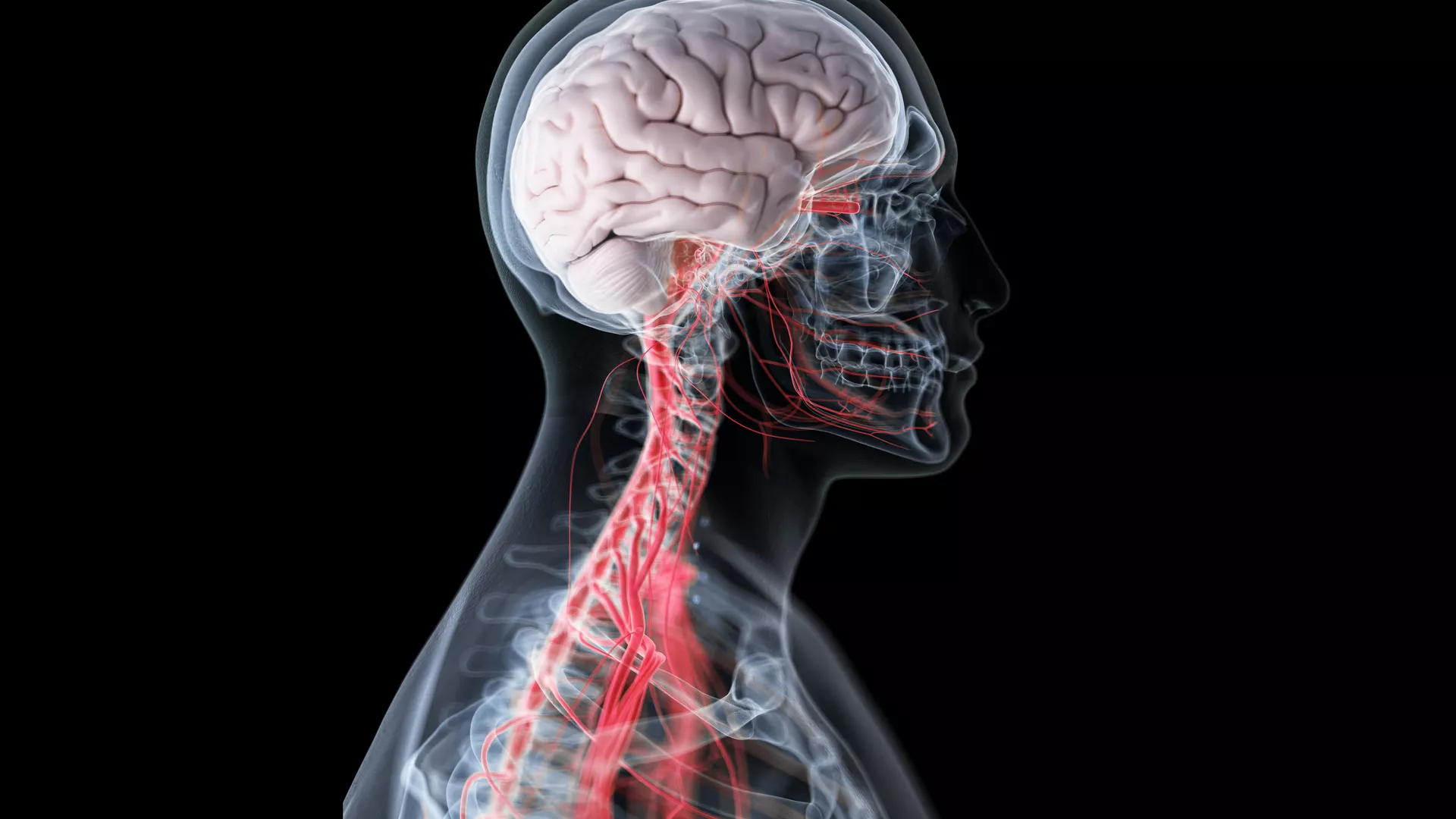
On November 18, 2026, the journal Frontiers in Human Neuroscience published a theoretical study that challenges traditional natural science approaches to the human mind and subjective experience. Researchers Jicheng Chen from Shenzhen Longhua District Central Hospital and Jiangkun Jia and Mengmeng Han from Henan Provincial People's Hospital targeted the foundational bottleneck facing modern neuroscience and cognitive science: the hard problem of consciousness.
Image source: https://www.frontiersin.org/journals/human-neuroscience/articles/10.3389/fnhum.2026.1959771/abstract
Image Credit: Frontiers in Human Neuroscience
Modern natural science has achieved remarkable growth through physicalism and reductionism. This third-person perspective (3rdPP), which regards external physical realities and objective metrics like mass as the sole truths, has excelled at dissecting and explaining the material world. However, subjective inner experiences—such as pain, joy, and sensory feelings that humans perceive every moment—are often relegated to subordinate byproducts or illusions within the reductionist framework. The researchers point out that this third-person-centric approach creates an explanatory gap and blind spots of consciousness, especially as complex systems increasingly challenge even the basic assumption that an object's state is independent of the observer.
The Explanatory Gap of Third-Person Physicalism and the Hard Problem
Reductionist neuroscience can precisely measure neural firing in the brain and the movement of neurotransmitters, but it cannot clearly explain the connective bridge of why such neural activity is accompanied by a specific 'feeling'. This is precisely the hard problem of consciousness defined by philosopher David Chalmers.
For instance, when looking at a red rose, the wavelength of light hitting the retina or the activation state of the visual cortex can be objectively measured. Yet, how the subject internally experiences the sensation of 'redness' cannot be fully reduced to physical data alone. The researchers emphasize that physical entities and inner experiences cannot be described within the same category, and conventional third-person science struggles to describe how inner experience produces causal efficacy. This limitation poses a direct stumbling block not only when studying the human brain, but also when exploring the possibility of artificial intelligence (AI) consciousness.
A New Paradigm Combining First-Person Perspectives and Yin-Yang Holism
To break through this dilemma, the research team proposes a holistic cognitive paradigm that integrates the first-person perspective (1stPP) and the concept of 'Yin-Yang'. In their conception of holism, objective reality and causality are not absolute and external, but are inseparable from the subject's cognitive perspective.
- Interdependence and Mutual Transformation: Viewed from the first-person perspective, inner experience and outer physical objects are not isolated entities, but form a relationship of mutual dependence and continuous transformation.
- Objective Manifestation of Yin-Yang Methodology: The holistic attributes of things, described relatively as Yin-Yang, are objectively manifested in ways experienced by the subject. They constitute an objective reality capable of producing observable causal efficacy and function equivalently as a reference frame to physical features under the 3rdPP.
The researchers do not reject reductionism outright; rather, they argue that it has clear limitations when applied to complex systems. By switching to the first-person perspective and applying the complementary methodology of Yin-Yang, they aim to provide a foundational methodological framework for first-person consciousness problems such as AI consciousness, as well as supporting other theories such as the Relativistic Theory of Consciousness and Global Realism with Bipolar Strings.
Implications for AI Consciousness and Future Horizons
This study offers fresh implications for the philosophical and scientific debate over whether AI can possess genuine minds or subjective experiences. Until now, AI research has heavily leaned toward third-person external functionalism, imitating human behavior based on vast data and computational power. However, the first-person holistic framework raises foundational methodological questions regarding how AI might move beyond being a mere information processor to form a subjective perspective of experience.
The researchers explicitly note that this study remains at the hypothesis and theory stage. For the philosophical concepts of Yin-Yang holism and the first-person framework to establish themselves as rigorous scientific truths, further mathematical formalization and empirical verification are essential. Nonetheless, by opening a new subjective horizon for consciousness research long confined within third-person physicalism, this study draws attention from cognitive science and AI philosophy circles.