Colibri: Open-Source Engine Turning 8GB Laptops into Local AI Servers with Claude Code Support
Analyzing Colibri, the 42K-star open-source project that runs large MoE models on 8GB to 16GB laptops via smart memory management and exposes an Anthropic-compa
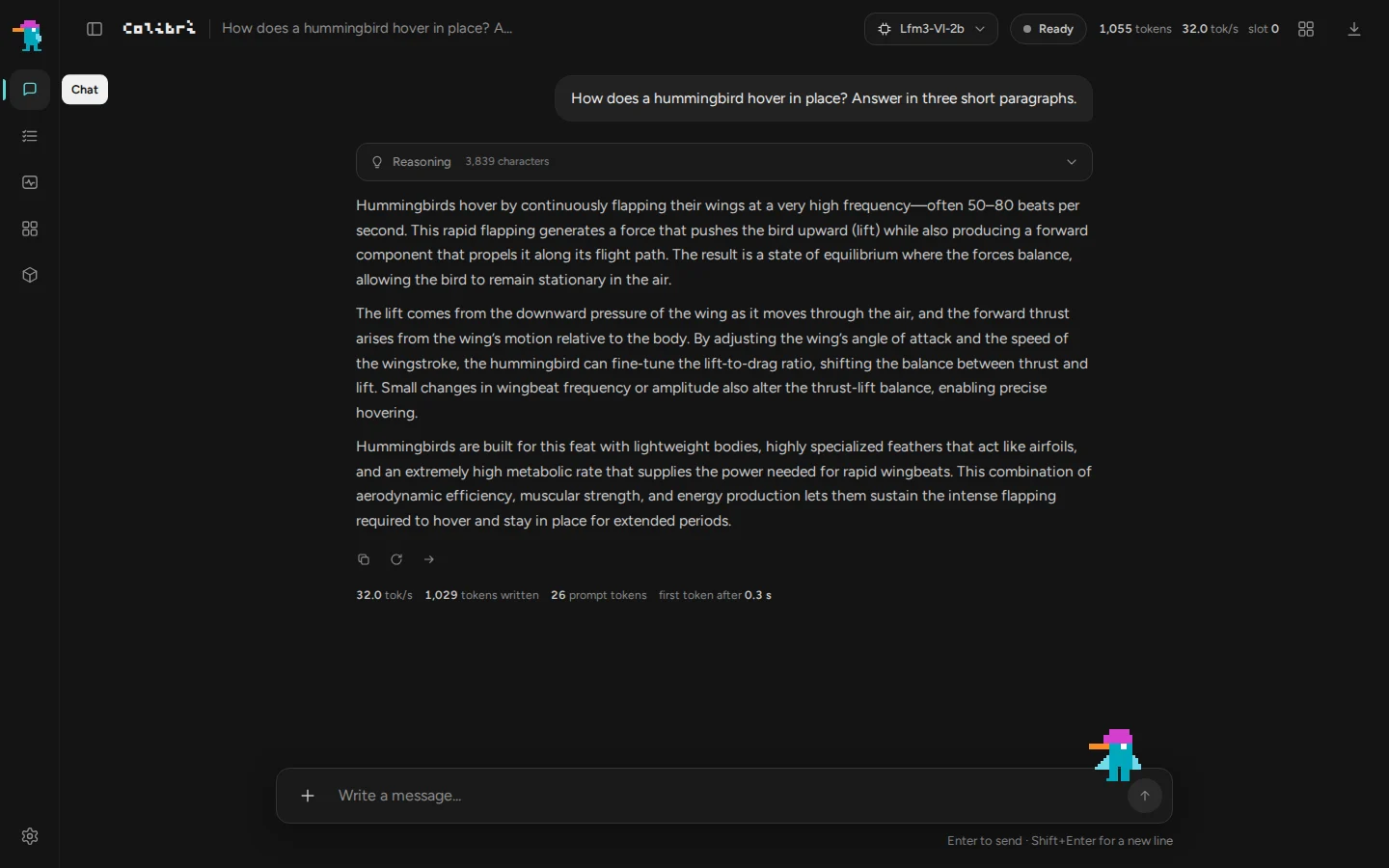
Image source: Official product README: https://github.com/JustVugg/colibri
An open-source project named Colibri (JustVugg/colibri), currently commanding nearly 42,000 (42K) stars on GitHub, is gaining widespread attention across developer communities for turning everyday laptops into self-contained local AI inference servers. Without requiring high-end data-center GPUs or recurring cloud subscriptions, the tool enables developers to run large Mixture of Experts (MoE) models directly on laptops equipped with as little as 8GB to 16GB of system RAM.
By pairing a pure C zero-dependency execution pipeline with dynamic memory management, Colibri offers an accessible entry point for testing foundation models locally and pointing automated coding tools at a fully private backend.
Pure C Zero-Dependency MoE Pipeline and Smart Memory Management
The fundamental technical distinction of Colibri lies in its lightweight, zero-dependency MoE execution engine implemented entirely in C.
Conventional local LLM inference engines are typically architected around an all-in-memory paradigm, requiring tens of gigabytes of model weights to reside continuously in dedicated VRAM or unified system memory. On laptops with modest memory pools or integrated graphics, loading these models immediately triggers Out-Of-Memory (OOM) failures during initial initialization.
Colibri circumvents this physical bottleneck by maintaining only active compute weights in system RAM while dynamically streaming inactive parameters directly from the local solid-state drive (SSD). This architectural separation allows developers to deploy large open foundation models on standard portable computers without monthly service fees, ensuring that proprietary source code and sensitive internal documents never leave the local machine.
Port :8000 Endpoint and Claude Code Agent Integration
A major driver behind Colibri's practical appeal is its direct interoperability with external coding agent workflows.
When launched, Colibri exposes an Anthropic-compatible /v1/messages API endpoint on local port 8000 (:8000).
- Direct Client Integration: Developers running terminal coding assistants such as Claude Code, or any tooling that accepts custom Anthropic API base URLs, can point their clients directly to
http://localhost:8000. - Zero API Ingestion Costs and Offline Privacy: Coding tasks such as refactoring, test generation, and syntax inspection can run against the local model without incurring per-token billing or cloud quota limits. Furthermore, engineers can maintain active development workflows in air-gapped or offline environments.
This setup offers a compelling pathway for development teams handling confidential repositories, organizations bound by strict data governance rules, and developers seeking an always-available, private coding assistant.
8GB Floor vs. 16GB Recommendation: Storage and Thermal Realities
Teams and developers evaluating Colibri must carefully weigh its documented operating requirements and hardware constraints. While the project advertises an 8GB RAM minimum, that figure represents a functional floor rather than an optimal daily production environment.
- RAM Requirements: The official README explicitly recommends 16GB of RAM or higher. In practice, the project's GLM-5.2 demo sits at approximately 9.9GB of resident memory, while larger MoE model tables require between 16GB and 24GB of RAM to execute smoothly.
- Disk Space Overhead: Even running the smallest supported model configuration requires at least ~22GB of free SSD storage space.
- Streaming Latency and Thermals: In an 8GB memory configuration, where substantial portions of the model weights are retrieved on the fly from disk, generation throughput (tokens/sec) is governed by SSD read speeds and remains slower than dedicated high-end GPU hardware. Furthermore, extended continuous inference loads can generate significant heat, making thermal management and potential CPU/SSD throttling important operational considerations on portable laptops.
Sources
- GitHub Repository: JustVugg/colibri
- Community Announcement: 0xMarioNawfal (@RoundtableSpace via X)