Critical RCE and Argument Injection Vulnerabilities Discovered in Code Review and Kubeshark MCP Servers
Details and security recommendations for CVSS 8.7 remote code execution (RCE) and cluster admin privilege takeover vulnerabilities discovered in code-review-mcp
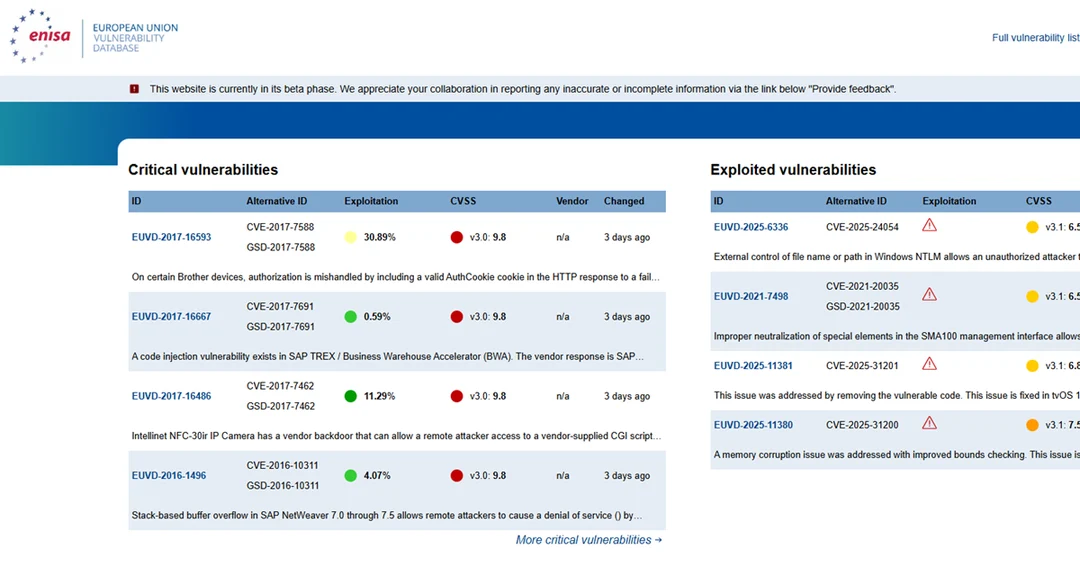
Critical security vulnerabilities have been disclosed within the ecosystem connecting artificial intelligence assistants to external developer tooling. According to security advisories published on November 25, 2026, remote code execution (RCE) and argument injection flaws were identified in integration servers for automated code review and Kubernetes monitoring tools.
Image source: https://euvd.enisa.europa.eu/vulnerability/EUVD-2026-126705
The affected components are MCP (Model Context Protocol) servers, which allow AI models to interact with local environments and development infrastructure. While MCP enables AI assistants to seamlessly access file systems, Git repositories, and cluster management tools, inadequate input validation can turn these integration layers into entry points that compromise entire systems.
The Role of MCP Ecosystems and Emerging Security Risks
In modern development workflows, it is increasingly common for AI agents to review code, suggest terminal commands, or diagnose cluster health. MCP servers serve as the critical bridge enabling these capabilities.
However, when natural language inputs or user-supplied parameters from AI models are passed directly into operating system command construction without rigorous sanitization, malicious actors can execute unintended system commands. The two vulnerabilities recently disclosed highlight the severe risks inherent in such unvalidated integration structures.
Remote Code Execution Vulnerability in Code Review MCP Server (CVE-2026-68934)
The first vulnerability was identified in code-review-mcp-server, a tool used for automated pull request (PR) reviews.
- Affected Versions:
code-review-mcp-server < 1.5.3 - Vulnerability Details: User-supplied input parameters
folderPathandbaseBranchwere passed directly to the/bin/shshell without proper filtering or sanitization. - Severity: Classified as a high-severity Remote Code Execution (RCE) vulnerability with a CVSS score of 8.7 (
CVE-2026-68934).
If exploited, an attacker could execute arbitrary shell commands on the host environment running the code review server, potentially seizing system privileges or exfiltrating internal repository data.
Argument Injection and Cluster Admin Takeover in Kubeshark MCP Server
The second vulnerability was discovered in the MCP integration server for Kubeshark, a real-time traffic monitoring and visualization tool for Kubernetes.
- Affected Versions:
Kubeshark MCP < v53.4.0 - Vulnerability Details: An argument injection vulnerability (
GHSA-8vf2-hxg5-crqh) was confirmed during the processing of thepod_regexparameter used for filtering cluster pods. - Impact: Beyond simple information disclosure, this flaw can lead to malicious container image redirection attacks, ultimately escalating to the takeover of cluster administrator privileges across the entire Kubernetes deployment.
Because monitoring tool integration servers operate deeply within container infrastructure, compromising them can expose all internal cluster services and secrets.
Urgent Security Recommendations and Upgrade Guide
Developers and infrastructure administrators must take immediate action to secure their environments:
- Code Review Server: Projects utilizing
code-review-mcp-servermust immediately upgrade to version 1.5.3 or higher. - Kubeshark MCP Server:
Kubeshark MCPdeployments must be updated immediately to version v53.4.0 or higher to mitigate the argument injection vector.
As AI-driven automation tools and infrastructure integrations offer unprecedented convenience, they simultaneously introduce novel attack vectors. Maintaining up-to-date packages and auditing input validation paths is paramount.
Sources
- European Vulnerability Database (EUVD): EUVD-2026-126705 Vulnerability Advisory