Baize: an open-source coding CLI claiming to keep raw secrets away from the model
Baize is introduced as an open-source coding-agent CLI with reversible privacy masking, local-first operation, and multiple model backends. All feature claims c
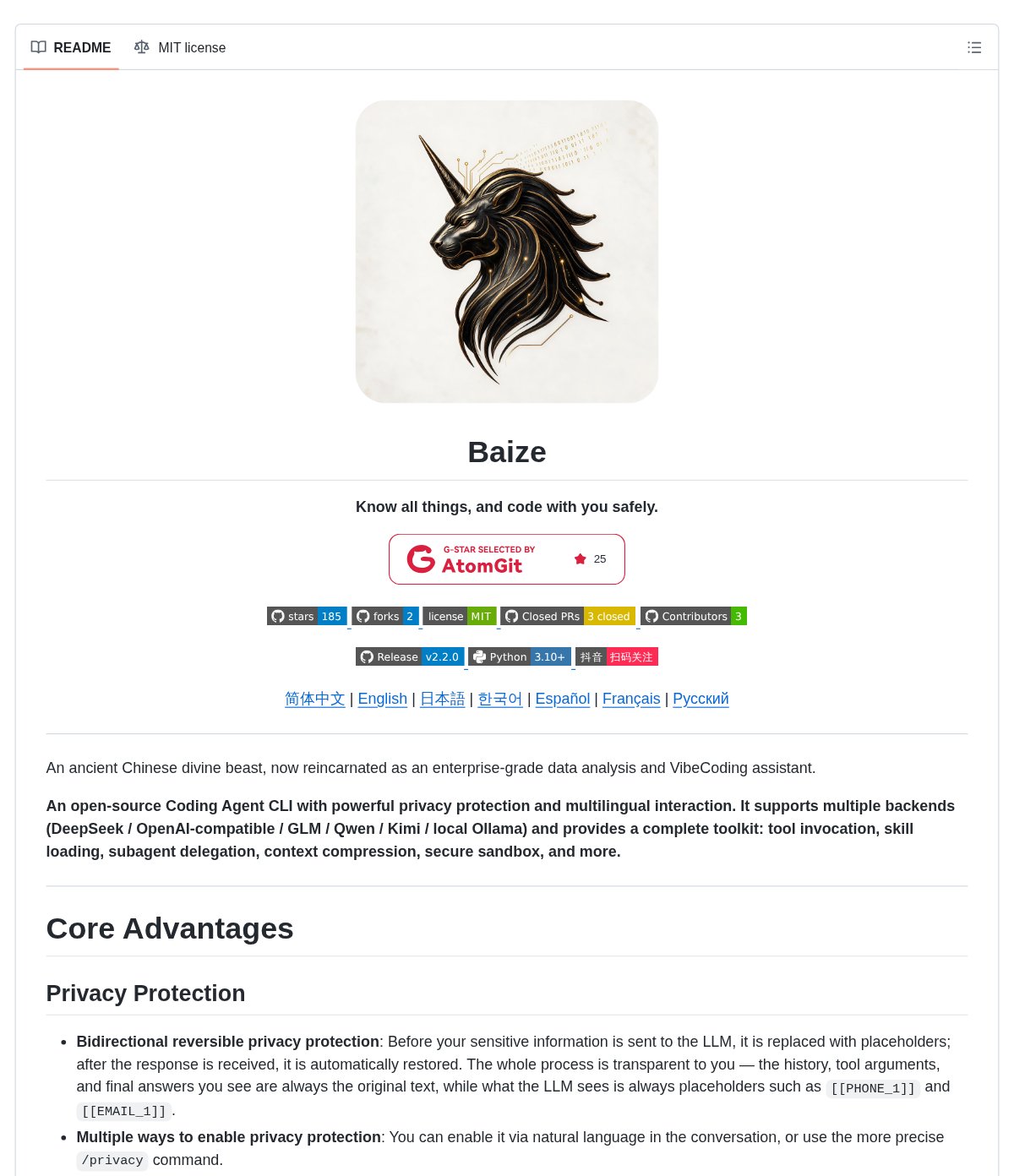
Dan Kornas (@DanKornas) introduced Baize, an open-source coding-agent CLI, in an X post on October 12, 2026. The pitch is simple: builders want tool use and multiple model backends in one local workflow, without sending raw secrets to the model. According to the post, Baize replaces detected sensitive values with placeholders before model requests and restores them in the response, a mechanism it calls reversible privacy masking.
Every feature description in this article is the post author's claim. The original GitHub repository was not directly reviewed, so install commands, actual behavior, and security guarantees still need independent confirmation.
What Baize claims: masking, local-first operation, multiple backends
The post lists emails, phone numbers, API keys, and bank cards as examples of detectable items. In the post's wording, detected values are swapped for placeholders before the model request and restored at the response stage.
The same post claims, citing the README, that Baize has no remote database and runs completely locally. Listed model backends are DeepSeek, OpenAI-compatible APIs, GLM, Qwen, Kimi, and local Ollama.
In a follow-up reply, the author posted the GitHub URL directly as https://github.com/Xu123-Bob/Baize. That link comes from the author himself and is not a verified trusted address without a repository check.
Who it may matter to, and what to verify first
The claimed audience is people who run coding agents across several model backends locally and worry about secrets ending up in model transcripts. A comment on the thread made the same point: once an agent reads a file like .env while debugging, the keys stay in the transcript.
Open questions from the replies remain unanswered. Commenters asked whether secrets in tool output are masked, whether generated code could still carry secrets, and whether a missed detection produces a warning, but no confirmed author answers are available. This article therefore limits the masking claim to what the post actually states: pre-request replacement plus response restoration. No install steps, supported clients, compatibility details, or benchmarks are asserted. Anyone considering adoption should read the repository README directly and first test detection and restoration with fake secrets.
Sources
- Dan Kornas (@DanKornas) X post: Your coding agent shouldn't send raw secrets to the model
- GitHub URL left by the author in a reply: https://github.com/Xu123-Bob/Baize