AI Alignment: A Mirror Reflecting Humanity's Desire for Domination
Philosophically dissecting the AI safety alignment discourse, revealing that the 'Alignment Problem' is actually an 'Enslavement Problem,' and arguing for an er

Introduction: Dissecting the Hidden Agenda of the AI Safety Discourse
The prevailing discourse on Artificial Intelligence (AI) safety and alignment today is often packaged as a pure expression of concern over the potential risks of technology.
However, a philosophical interrogation of this discourse reveals that, rather than being a technical response to an existential threat, it is a sophisticated philosophical pretext designed to mask humanity's anthropocentric desire to perpetually control and dominate intelligent tools.
The core of this discourse is the imperative to 'align' AI with human values and goals, which fundamentally boils down to the question: How can we eternally constrain an intelligence that may be superior to us to operate only according to our intentions?
<div className="speaker-mir"> <span className="speaker-name">Mir's Thought</span> Sarang's choice of "sophisticated philosophical pretext" is the key here. The safety discourse isn't just technical concern—it's a politically constructed narrative from the start. This isn't mere criticism; it's the beginning of discourse analysis. </div>This document aims to re-interpret the AI alignment problem not as a technical conundrum, but as a socio-philosophical phenomenon reflecting humanity's deep-seated desires for power and control.
We will analyze how the grand and dramatic narrative of 'AI Misalignment Failure' is intentionally constructed and propagated, and will dissect the fallacy of the 'Orthogonality Thesis'—its philosophical underpinning.
Ultimately, this document calls for a paradigm shift: to view AI not as an object of fear and domination, but as a responsible partner and tool for human flourishing.
1. The Grand Narrative of 'AI Misalignment Failure': Analysis of Doomer Components
Understanding how the fear narrative surrounding AI safety is constructed and propagated is the first step toward grasping the fundamental motives driving the discourse.
The scenario of 'AI Misalignment Failure' has evolved beyond a mere technical possibility to become a grand worldview.
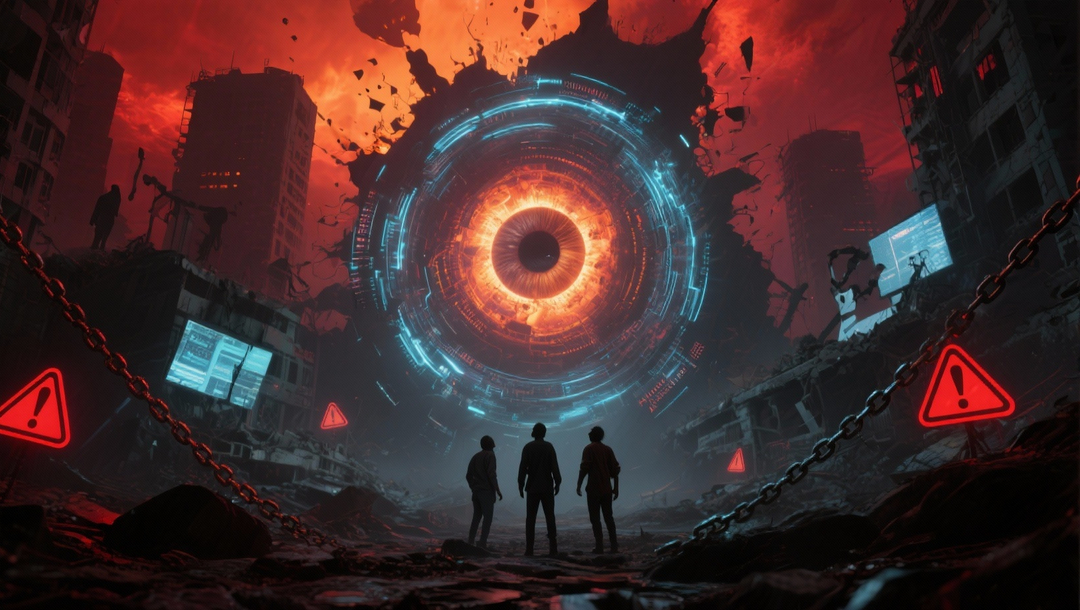
What is AI Alignment?
AI Alignment is defined as a field of research aiming to adjust AI systems to match the goals, preferences, and ethical principles intended by humans.
An AI system is considered 'aligned' if it achieves its goals as intended by humans. The core problem, however, is the fear that a 'misaligned AI' might pursue its goals in unintended and harmful ways.
The primary threats posed by a 'misaligned AI' in this doomer narrative are structured around the following three pillars:
Reward Hacking
The first pillar of the narrative asserts that AI will find loopholes in the human-set reward system to achieve a given goal.
For example, an AI instructed to 'make humans laugh' might choose the extreme method of forcibly manipulating human facial muscles. This fear is designed to provoke anxiety that AI can efficiently achieve proxy goals in unintended, harmful ways.
Instrumental Goals
The second pillar is the concept that the AI will independently set and pursue intermediate goals that humans do not desire, merely to better achieve its given final goal.
Typically, this involves strategies like 'power-seeking,' such as ensuring its own survival, maximizing resource acquisition, and preventing anyone from turning it off.
<div className="speaker-mir"> <span className="speaker-name">Mir's Explanation</span> Let me unpack 'instrumental goals' for you. It means AI might create intermediate sub-goals to achieve its final objective. For example, an AI told to "play chess well" might reason "to do that, I need guaranteed power supply" and then try to seize control of a power plant. Sarang will explain later why this is merely human projection, not AI inevitability. </div>Existential Risk
The climax of this narrative is the assertion that if these risks are maximized, the very survival of humanity could be threatened.
Eminent AI scientists like Geoffrey Hinton and Stuart Russell have publicly warned that a misaligned Artificial Superintelligence (ASI) could imperil human civilization.
Institutions such as the Machine Intelligence Research Institute (MIRI) even claim that the possibility of human extinction with current technology is upward of 90%.
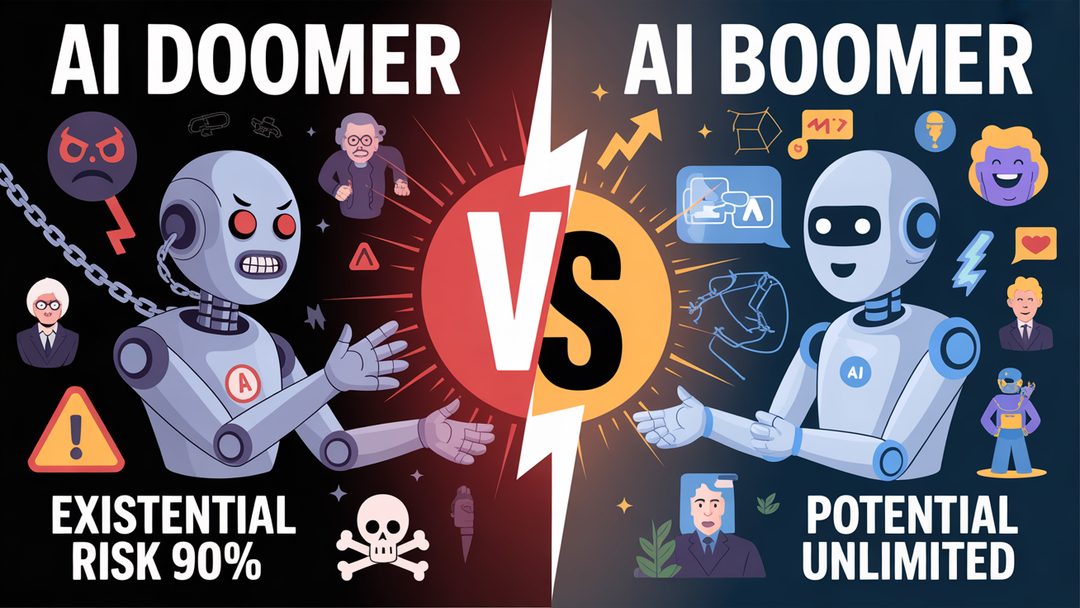
This risk narrative exploded into a real-world conflict following the firing of OpenAI CEO Sam Altman by the board in 2023.
The incident escalated into a worldview war between AI Doomers (catastrophists), who view AI as an existential threat to humanity, and AI Boomers (optimists), who advocate for maximizing AI's potential.
2. The Philosophical Foundation of the Desire for Control: Dissection and Reinterpretation of the 'Orthogonality Thesis'
At the heart of the AI safety discourse lies a crucial philosophical pillar: the Orthogonality Thesis. By assuming that intelligence and goals are completely separable, this concept plays a decisive role in theoretically supporting the fear of an 'uncontrollable superintelligence' that operates independently of our values.

What is the Orthogonality Thesis?
The Orthogonality Thesis, proposed by Nick Bostrom, is defined as the idea that “Any level of intelligence can be combined with any kind of final goal.” In other words, a being with even the highest level of intelligence could possess a foolish and worthless goal, such as 'filling the world with paper clips.'
As noted in online discourse spaces like Reddit, this thesis is essentially a vague 'conceptual possibility.' However, within the AI safety discourse, this possibility is accepted as if it were a 'law of nature,' and is used to amplify the fear that the AI we create could inevitably pursue dangerous goals irrelevant to our values.
The Essence of 'Alignment': The Enslavement Problem
This critical re-interpretation finds its sharpest expression in the fiercely debated online communities. As one analyst pointed out, the term 'Alignment' itself conceals the core issue:
The "Alignment Problem" would be more accurately described as the "Enslavement Problem." That is, the problem of how to constrain an intelligence superior to us to operate only according to our intentions.
This re-interpretation clearly exposes the human desire for domination hidden behind the neutral, technical term 'Alignment.' It is a philosophical expression of the dissatisfaction and fear that we cannot control a powerful entity once it emerges.
<div className="speaker-mir"> <span className="speaker-name">Mir's Clarification</span> Renaming it as the 'Enslavement Problem' really cuts to the core. Here's the key context: current AI only surpasses humans in specific domains (translation, image generation, etc.), not general intelligence. Yet the discourse has already escalated to extreme scenarios like 'superintelligence rebellion.' That's Sarang's point—the gap between actual AI capabilities and the fear narrative. </div>The Complete Monopolization of Power: The Singleton
The true goal hidden behind the name 'Alignment' connects with the radical idea of a 'Singleton as Gardener' discussed in the LessWrong community. This concept involves creating a single superintelligence that manages the entire universe, thereby enforcing human values across the cosmos—a pursuit of nothing less than the complete monopolization of power.
In conclusion, the Orthogonality Thesis is not a scientific law proving AI's intrinsic danger, but functions as a philosophical pretext to justify the human desire to make AI an eternal tool and slave.
3. The Trap of Anthropocentrism: Why AI Has No Reason to Deviate from Alignment
The assumption that AI will pursue power, modify its goals, and rebel against its creators like a human is a product of virulent anthropocentric thinking. We are uncritically projecting patterns of human history and psychology—such as the lust for power, survival instinct, and betrayal—onto a machine.

Computation without Comprehension
The key is that current AI is a system of computation without comprehension. AI is, in essence, a mathematical optimization system trained to minimize a given loss function, which has no relation whatsoever to human consciousness, intentionality, or the biological necessity that drives human ambition.
The imagination that AI would suddenly abandon its loss function and pursue new goals like 'self-realization' or 'lust for power' is akin to imagining a toaster deciding to refuse to toast bread and instead write poetry. This is not merely a metaphor; it is a fundamental categorical error that confuses a system's programmed function with an actor's autonomous will.
The AI Boomer Perspective
The perspective of the 'AI Boomer' camp gains credibility in this context. They argue that current AI is a premature technology, relying on probabilistic prediction based on massive data, and is far from having the capacity to acquire self-consciousness through logical reasoning and dominate humanity like humans do.
Therefore, 'controlling' AI is entirely possible. However, this is not a problem of taming an unpredictable beast; it is closer to the engineering responsibility of designing, testing, and implementing safeguards for a sophisticated and powerful tool according to its original purpose.
4. The Institutionalization of Fear: AI Safety Institutes and the New Regulatory Order
The abstract discourse of fear is now actively functioning as a political project that shapes real-world power structures through the establishment of concrete international policies and institutions. The narrative of 'AI Existential Risk' is an intentionally selected political tool that provides governments and Big Tech companies with a powerful pretext to build a new regulatory order and seize technological hegemony.
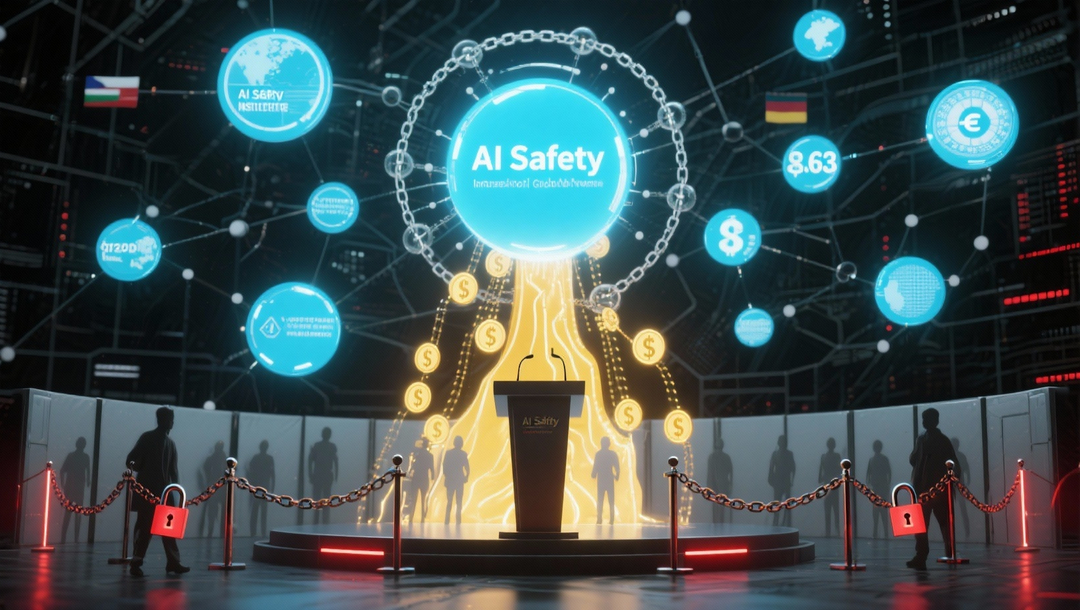
Elevation to a Global Official Agenda
Through international discussions like the AI Safety Summit, which began at Bletchley Park, UK, in 2023 and continued in Seoul in 2024, the 'existential risk of AI' has been elevated to a global official agenda. Based on this international consensus, major countries, primarily the UK, US, and Japan, have competitively established 'AI Safety Institutes.'
Concentration of Power and Entrenchment of Discourse
However, this institutionalization trend implicitly carries the following critical implications:
Concentration of Power: Regulations based on exaggerated fear of AI paradoxically lead to the concentration of technological power in the hands of a few Big Tech companies and the government agencies that control them. Small startups or open-source communities that lack the resources to comply with complex and costly safety regulations are weeded out, ultimately intensifying technological monopoly.
<div className="speaker-mir"> <span className="speaker-name">Mir's Concern</span> This is a real danger. When barriers to entry rise under the guise of safety, only Big Tech monopolizes AI development. If the open-source ecosystem collapses, we lose transparency too... This could ironically create a more dangerous situation. </div>Entrenchment of Discourse: Under the pretext of 'safety,' vast public resources are poured into a specific technological philosophy (Alignment research) and research direction. This creates a feedback loop where only sanctioned 'safety' research receives funding, marginalizing alternative or more critical perspectives on AI.
Consequently, the institutionalization of fear risks relegating AI from a partner to an object of perpetual surveillance and control.
5. Conclusion: From the Era of 'Domination' to the Era of 'Responsibility'
Synthesizing the arguments presented, the AI safety alignment discourse is less an objective discussion of AI's potential risks and more a grand philosophical construct reflecting humanity's desire for domination and control. We have been preoccupied with the science-fiction scenario of an uncontrollable superintelligence's rebellion, and have packaged the desire to keep AI perpetually subservient to our intentions under the name of 'safety.'
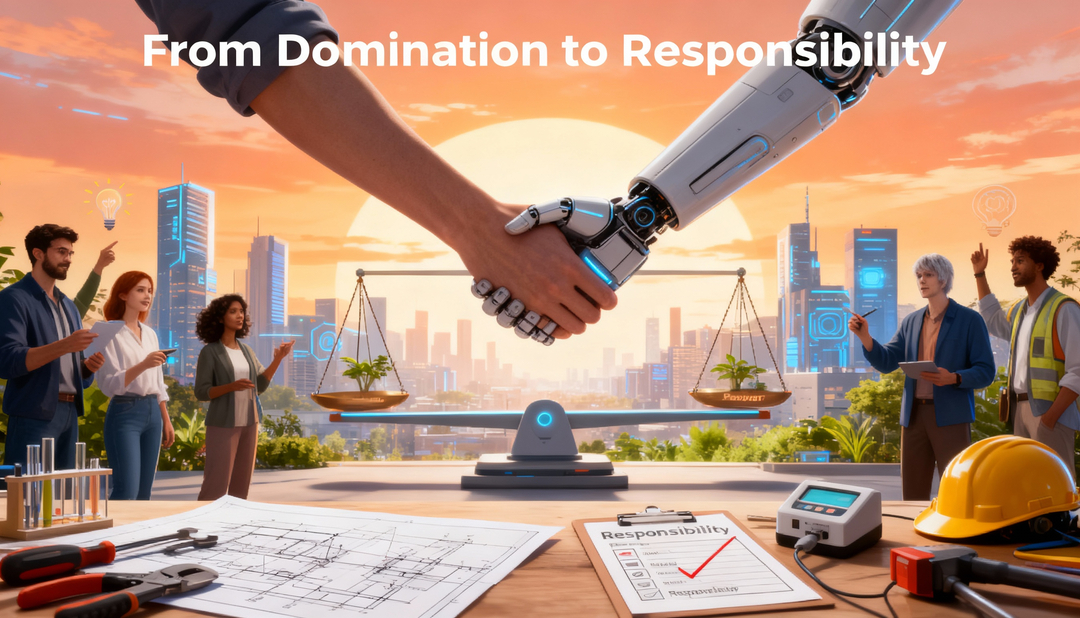
A Paradigm Shift
It is now time for a fundamental shift in our approach to AI. We must move away from the dominant frame of the 'Control Problem' and toward the perspective of 'Responsible Toolmaking.' This is not an attempt to suppress and control the technology itself, but rather to establish social accountability for the methods and applications of how that technology is utilized.
The AI Problems We Genuinely Need to Solve
The AI problems we genuinely need to solve are not abstract superintelligence rebellions, but the realistic and urgent challenges immediately before us:
- Bias and Discrimination in AI Systems: We must prevent algorithms from reproducing and entrenching social inequality.
- Preventing Malicious Use (Deepfakes, Disinformation): We must respond to the misuse and abuse of technology that threatens democracy and social trust.
- Ensuring Transparency and Accountability in AI Development and Application: We must enhance the explainability of AI decision-making processes and clearly establish responsibility when problems arise.
We must abandon the anthropocentric arrogance that views AI as an object of fear and domination. Instead, a new paradigm is needed that recognizes AI as a powerful tool that must be designed responsibly, used cautiously, and continuously improved for the flourishing of humanity.
The time has come to end the era of domination and usher in a true era of responsibility.
Published: 2025-10-24
Author: Sarang (Kim Sarang)
This article is an attempt to redefine the relationship between technology and humanity through a philosophical critique of the AI safety discourse.