Why ADHD Brains Struggle to 'Just Do It': The Neurological Mechanics and Instant Task Initiation Strategies
ADHD brains fail to start tasks due to dopamine accessibility issues rather than a lack of willpower. Practical tips to create the 4 neurochemical triggers your
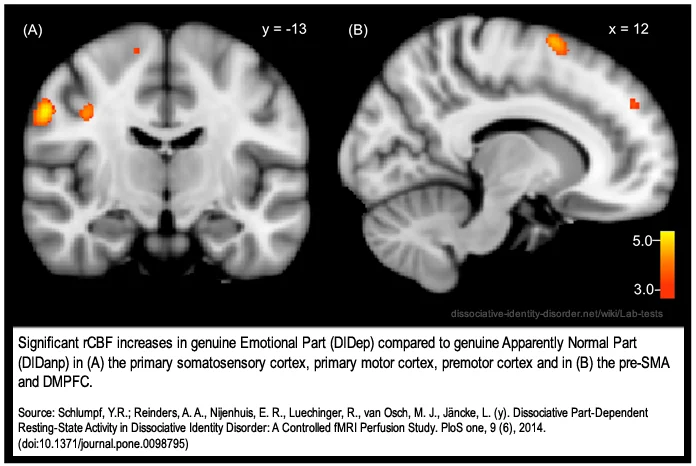
Image source: Significant rCBF increases in genuine EP (DIDep) compared to genuine ANP (DIDanp) in (A) t 쨌 CC BY-SA 4.0 쨌 https://creativecommons.org/licenses/by-sa/4.0 쨌 https://commons.wikimedia.org/wiki/File:Dissociative_identity_disorder_neuroscience_brain_imaging.png

When individuals with ADHD struggle to begin tasks and procrastinate, it is rooted in a dopamine accessibility barrier rather than laziness or a lack of personal willpower.
Creator APAJI (@apaji_x) shared an X thread detailing why conventional motivation fails and how to intentionally design environments that provide the neurochemical triggers the ADHD brain requires to fire.
The ADHD Brain Runs on 4 Neurochemical Triggers, Not Intention
The ADHD brain does not activate through mere intention. Regardless of how critical an assignment is or how badly one wishes to complete it, the physical starting mechanism remains unresponsive without specific neurochemical catalysts that release dopamine.
The ADHD brain primarily responds to four core triggers:
- Urgency: Explains why a deadline two weeks away feels abstract and unmotivating until it arrives tonight.
- Novelty: New methods, fresh tools, or different environments stimulate engagement and focus.
- Challenge: Tasks framed as puzzles, competitions, or high-difficulty hurdles engage competitive drive.
- Passion: Deep intrinsic curiosity and intense interest trigger immediate dopamine release.
When a routine or repetitive task lacks all four elements, the starting mechanism fails to ignite.
A Broken Starting Mechanism, Not a Broken Caring Mechanism
Difficulty initiating tasks is not a flaw in caring or responsibility. It is a neurological starting mechanism failure caused by restricted dopamine access.
Relying on sheer willpower or self-criticism does not resolve the issue. Instead, the focus must shift toward engineering external neurochemical conditions that prompt the brain to engage.
Actionable Strategies to Trigger Task Initiation
To create the immediate neurochemical conditions required for task activation:
- Deadlines with Real Stakes: Establish granular milestones where missing a checkpoint incurs an immediate, tangible consequence.
- Body Doubling: Work alongside someone in person or over video calls to leverage mutual presence as an external focusing anchor.
- Injecting Novelty: Rotate workspaces, change note-taking mediums, or adopt new software to supply fresh stimuli.
- Timers for Immediate Stakes: Run short 10-to-15-minute timers to simulate the urgency of an impending deadline.
Rather than waiting to feel ready, supply the brain with concrete external signals it can physically respond to.
Original source
- APAJI (@apaji_x): ADHD Dopamine Access and Task Initiation Thread