Four Actionable Strategies to Differentiate Your Results with General-Purpose AI
How to generate distinctive value when everyone uses the same models: injecting proprietary context, feeding failure cases upfront, human curation, and prompt a
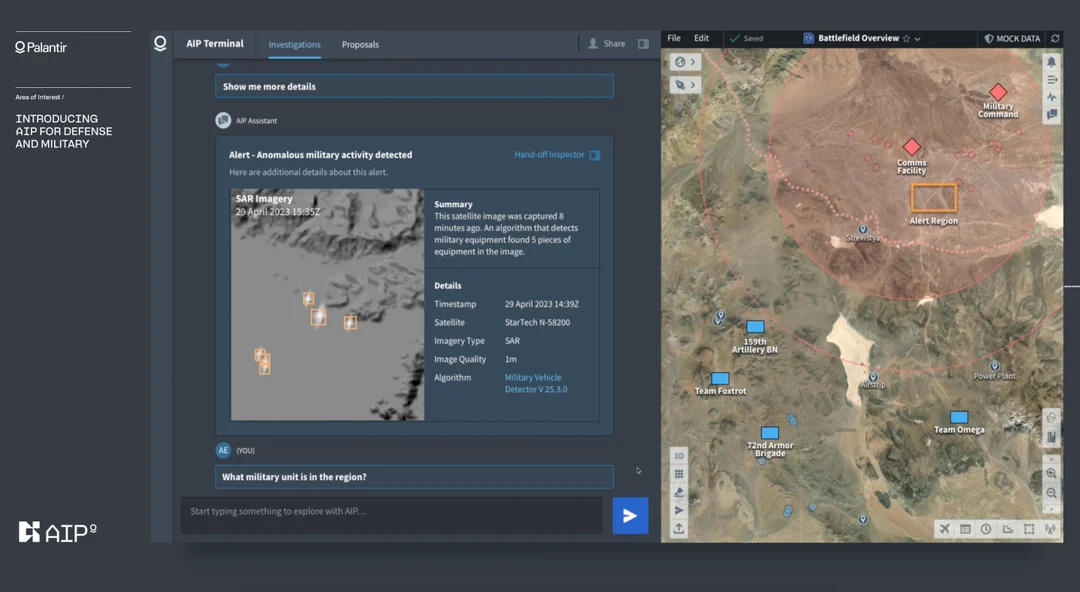
Image source: https://www.palantir.com/platforms/aip/defense/
Tech curation channel OopsUpdate (@OopsUpdate) has shared four practical strategies for knowledge workers to break free from generic outputs and create distinct, high-value outcomes using ubiquitous general-purpose AI models.
As access to cutting-edge large language models (LLMs) becomes increasingly commoditized, virtually anyone can deploy the exact same foundation models in their daily work. However, when every practitioner relies on similar prompts and identical interfaces, the resulting analysis and creative outputs inevitably converge toward an unremarkable, homogenous average. Grounded in observations from enterprise AI leaders, this playbook outlines how to transform commodity AI into an individualized competitive moat by injecting proprietary operational context, supplying failure cases upfront, asserting human editorial discernment, and systematically assetizing effective prompts.
The Palantir Insight: Why Context and Craftsmanship Form the Real Moat
The foundational premise of this guidance stems from an executive dialogue published by enterprise AI and data giant Palantir on October 13, 2026.
During the session, Lewis Robson, who leads Palantir Sovereign, articulated a piercing observation: the moment any capability becomes universally accessible and achievable by any foundation model, its differentiated commercial and operational value completely evaporates.
Palantir framed this dialogue around why 'institutional knowledge' accumulated inside an organization and 'individual craftsmanship' serve as the primary engines of enduring market dominance. Foundation models themselves function merely as baseline commodity compute; the decisive competitive edge emerges from the non-public context, nuanced operational histories, and personal discernment that practitioners inject into the machine.
1. Injecting Proprietary Data and Context Unknown to the Outside World
Actively incorporate proprietary internal data and institutional background into prompt requests.
- Attach Non-Public Nuances: Supplement queries with real project histories, retrospective rationales behind past decisions, and unvarnished customer feedback—the exact data points that foundation models could never encounter during general pre-training.
- Drive Tailored Solutions: Broad, generic questions inevitably yield textbook generalities derived from statistical averages. In contrast, anchoring requests with concrete constraints and operational realities extracts actionable answers precisely calibrated to immediate organizational needs.
2. Defining Success Criteria and Providing Past Failure Cases Upfront
Front-load prompts with explicit domain quality standards and concrete examples of previous failures before asking for solutions.
- Establish High-Water Marks: Clearly articulate what constitutes an exceptional outcome within your specific discipline, defining qualitative metrics and rigorous expectations directly in the prompt.
- Incorporate Negative Examples: Supply documented instances of approaches that failed or fell short of expectations in the past. This prevents the model from recycling obvious, superficial recommendations or re-proposing already-disproven strategies, forcing it to generate deeper, more nuanced alternatives.
3. Delegating the Draft to AI While Reserving Final Discernment for Yourself
Outsource high-volume preliminary drafting and data synthesis to the AI, but retain absolute authority over curation and refinement.
- Intelligent Labor Division: Leverage AI for what it does best—rapid data structuring, synthesizing diverse materials, and generating initial exploratory drafts to eliminate the friction of a blank page.
- Exercise Editorial Taste: Determine which elements survive, which nuances require elevation, and how the final deliverable aligns with broader business objectives and authentic brand voice through human judgment and professional taste.
4. Systematizing Proven Prompts and References into a Proprietary Workflow
Document high-performing prompts, accompanying reference assets, and contextual templates to construct a durable, personalized knowledge asset.
- Curate a Reusable Repository: Systematically catalog queries that yielded breakthrough results, preserving the contextual framing, document structures, and prompt parameters that made them succeed.
- Establish an Inimitable Edge: A structured, battle-tested prompt and context repository becomes a proprietary operational playbook that competitors and external peers cannot effortlessly duplicate.
Critical Security Caveat: Compliance with Internal Data Policies
While injecting proprietary operational context is the core driver of superior AI outputs, data security must remain an absolute prerequisite.
- Adhere to Enterprise Policies: Prior to entering proprietary internal documentation, strategic roadmaps, personally identifiable information (PII), or unreleased codebase snippets into commercial AI interfaces, verify and strictly comply with your organization's internal data governance and confidentiality policies.
- Implement Sensible Masking: In environments lacking dedicated enterprise-grade isolation agreements or on-premises deployment, redact, anonymize, or mask all mission-critical secrets before dispatching prompts to third-party endpoints.
Original source
- OopsUpdate (@OopsUpdate) X Post: 4 Practical Tips to Differentiate Results with General-Purpose AI