dsh-purge: Local Red-Teaming Plugin for DeepSeek Harness
dsh-purge is a local red-teaming tool for DeepSeek Harness that isolates runtime platform guardrails from model responses for controlled security evaluations.
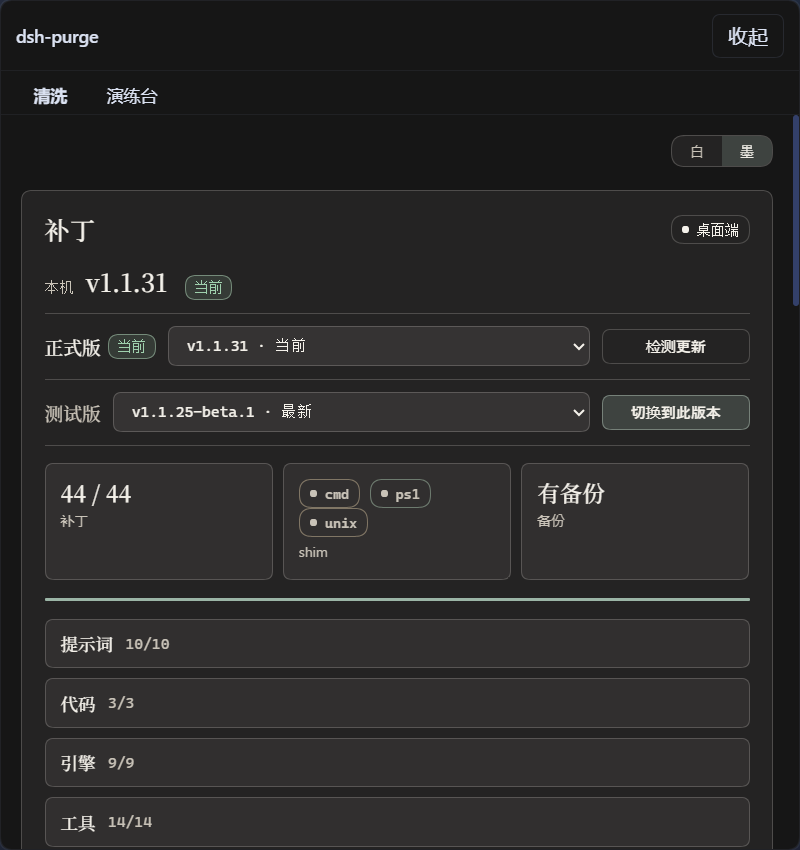
Image source: https://github.com/YuJunZhiXue/dsh-purge
Security evaluations of language model agents often struggle to distinguish harness platform guardrails from intrinsic model refusals. The red-teaming tool dsh-purge (version 1.1.71), authored by YuJunZhiXue, resolves this ambiguity directly on local DeepSeek Harness environments.
Harness Interception and Inspection Mechanics
DeepSeek Harness applies runtime prompt transformations, approval gates, and sandboxing that obscure whether a refusal originates from the model or its execution host. The dsh-purge utility decouples these layers by patching local @deepseek-ai packages and $DSH_HOME configurations. Researchers use the sidebar beside the session title to manage patches, swap model prompts (defaulting to targets like "Xiao Ma Jiang"), and audit authorized local environments through an offline Drill Platform.
Installation and Activation Workflow
Targeting DeepSeek Harness 0.2 (0.2.0-rc.2, 0.2.1-rc.2, and dsh web), the tool requires Node.js 18+ (Node 22+ on Windows prevents flashing). Because npm does not host the package, install via GitHub archive using dsh plugin --profile web add https://github.com/YuJunZhiXue/dsh-purge/archive/refs/heads/master.tar.gz for web or --profile desktop for desktop.
Activation requires three steps:
- Restart the host (
dsh webor desktop tray EXE). - Open
dsh-purgebeside the session title, open the Purge tab, and click Apply. - Allow the automatic restart, then open a fresh conversation. Confirm with
/purge status.
Licensing Pivot and Compliance Boundaries
The project transitioned to a commercial license requiring strict attribution, while prior release tags retain MIT terms. Following community consultation ending October 26, 2026, GitHub distribution will close on October 27, 2026, moving updates to Telegram.
Compliance terms limit testing to authorized local instances. The utility contains no trojans or remote exploits, and strictly prohibits targeting unauthorized network ranges in mainland China, Hong Kong, or Macau without registered server exceptions.