Essential Check for Vibe Coding: GitHub Secret Scanning Adds Lovable, Supabase, and Pydantic Keys
Key security tips for managing Lovable, Supabase, and Pydantic secrets during AI-assisted vibe coding, along with GitHub Secret Scanning partner expansions.
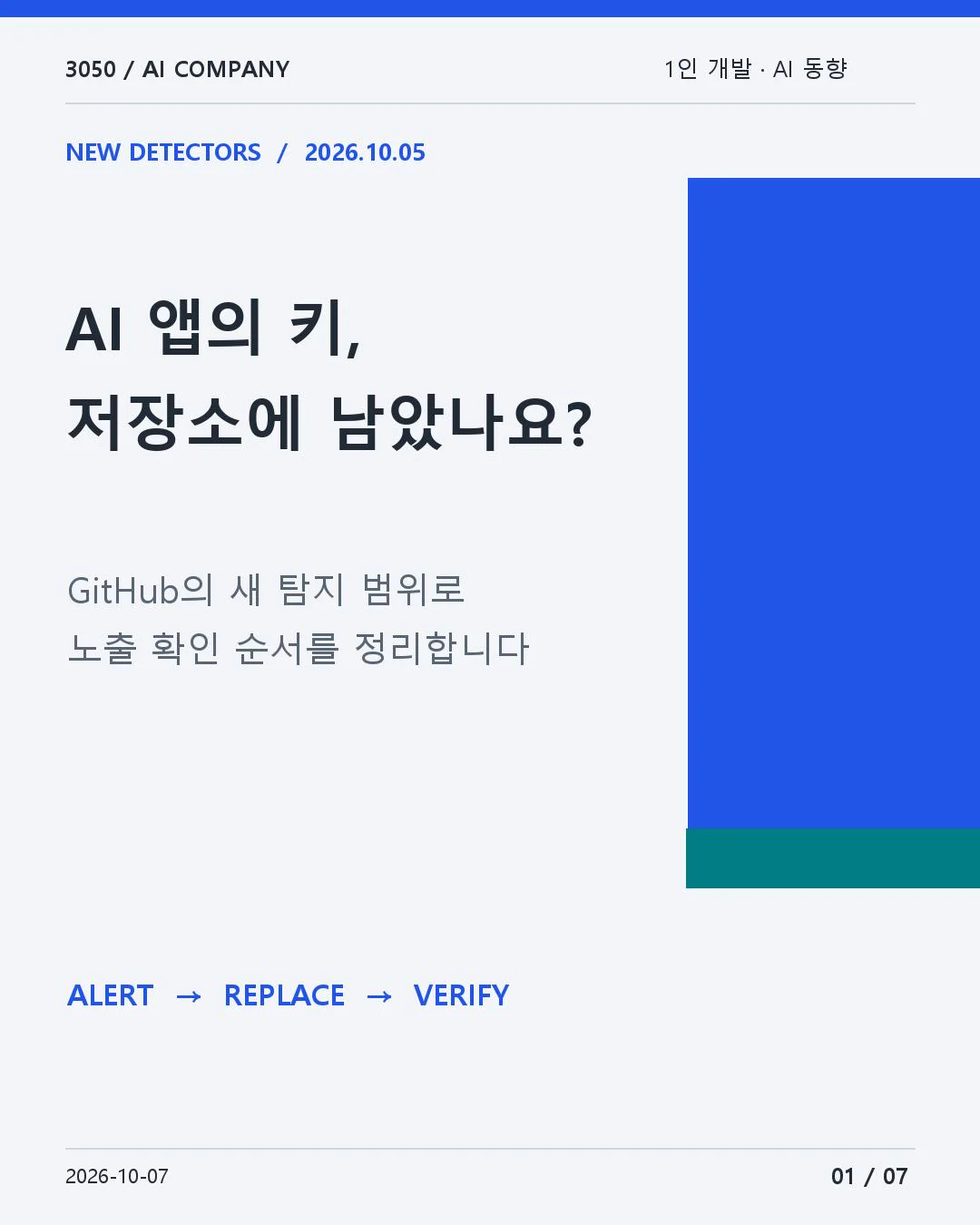
Image source: https://vibecrew.kr/free/10314
Developer @goodtek_xyz on X shared practical security recommendations to prevent unintended secret token leaks during "vibe coding"—rapid application prototyping driven by AI assistants. When developers supply API credentials directly into AI context windows and iteratively generate code, sensitive environment variables frequently end up committed to public or private remote repositories without notice.
While rapidly shipping functional prototypes is compelling, failing to govern secret keys before pushing code exposes projects to severe risks, including catastrophic database breaches and unexpected API billing surges.
GitHub Secret Scanning Expands Partner Detections: Lovable, Supabase, and Pydantic
GitHub Secret Scanning inspects commit histories and pull requests for known credential formats from partner services, alerting owners and enabling automated revocation before credentials can be exploited.
The recent partner detections highlighted in the community update cover:
- Lovable: Token formats generated by the AI full-stack web application builder
- Supabase: Authentication and database access credentials for the backend-as-a-service platform
- Pydantic: Secret keys associated with data validation pipelines and AI framework integrations
When feeding project codebases into AI coding agents, developers often accidentally stage .env files or commit inline hardcoded credentials generated during troubleshooting. GitHub's broader detection scope acts as an essential safety net to catch these oversights quickly.
Critical Supabase Key Discipline: Public anon vs. Server service_role Keys
A frequent vulnerability when wiring Supabase into AI-generated apps is conflating client-facing public keys with privileged backend secret keys:
- Public Key (
anon): Designed for frontend browser clients. Access is strictly constrained by database Row Level Security (RLS) policies. - Server Secret Key (
service_role): An administrative key that entirely bypasses RLS policies, granting unrestricted read and write privileges across all database tables.
During AI-assisted vibe coding, LLMs attempting to resolve client-side database query errors might suggest inserting the service_role key directly into frontend components, or developers might inadvertently bundle root environment files into static assets. Because a compromised service_role key leaves the entire database defenseless, it must remain strictly isolated within server-side environments or secure secret managers.
3 Practical Checkpoints for Secure Vibe Coding
To keep rapid prototyping safe and sustainable, developers should enforce these standard security practices from day one:
- Verify
.gitignoreEarly: Ensure.env,.env.local, and local credential files are ignored before making initial commits. - Enable Secret Scanning and Push Protection: In GitHub repository settings (Settings > Code security and analysis), toggle on Secret Scanning and Push Protection to block suspicious commits before they reach the remote branch.
- Enforce Least Privilege and Token Rotation: Restrict prototyping tokens to minimal necessary scopes and revoke or rotate keys immediately once experimental phases conclude.
Original source
- @goodtek_xyz on X: 2026-10-09 Vibe Coding Secret Management Tips
- VibeCrew community discussion: vibecrew.kr/free/10314